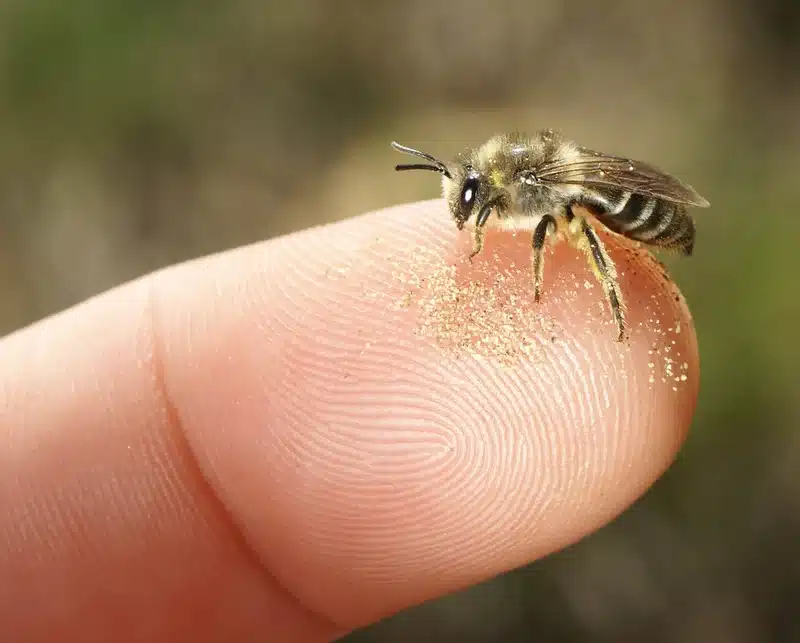

Ground bees often nest in bare soil patches. Their small entrance holes can worry homeowners, especially near walkways and play areas.
As a registered technician since 2015, I’ve handled many stinging insect calls across the DMV. I know the risks and the best approaches for each situation.
What Are Ground Bees?
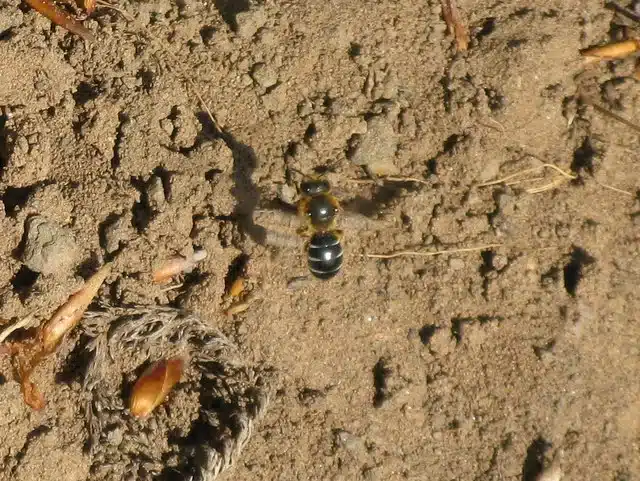
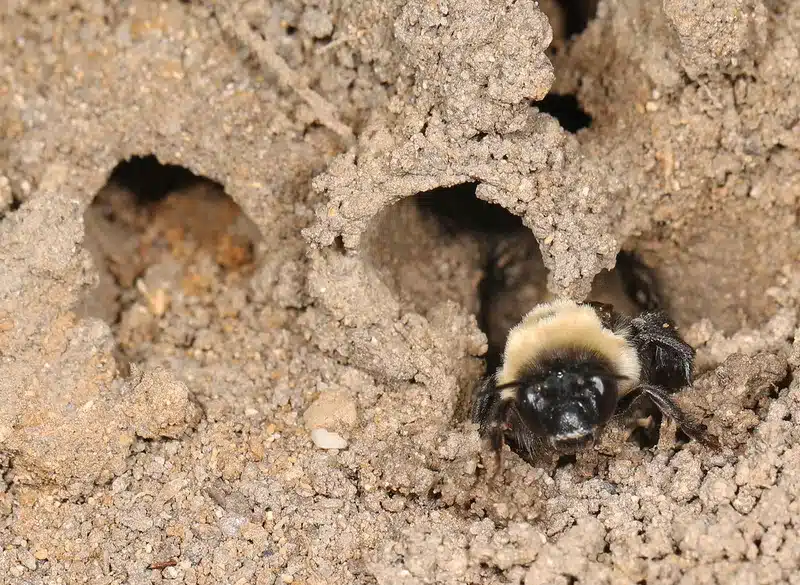
Ground bees include solitary miners, sweat bees, and bumble bees that dig tunnels in soil. Unlike yellowjackets, most don’t guard nests aggressively.
According to the University of Maryland Extension, over 70% of Virginia’s native bees nest in soil.
Common ground-nesting species include:
- Mining bees (genus Andrena)
- Sweat bees (family Halictidae)
- Cellophane bees (genus Colletes)
- Digger bees (subfamily Anthophorinae)
- Bumble bees (genus Bombus), which often use old rodent burrows
Ground-nesting wasps like yellowjackets and bald-faced hornets build paper nests and defend much more fiercely. Getting the ID right matters for picking the best treatment.

Why Homeowners Want Them Removed
Seeing dime-sized mounds in your lawn can spark real worry. Homeowners fear stings and allergic reactions.
CDC data shows 788 U.S. deaths from stings between 2011 and 2021. About 5 to 7% of U.S. residents have venom allergies. This makes proper ID and a careful approach essential.
Knowing how to handle ground bees protects your family and pets.
Identifying Ground Bee Nests
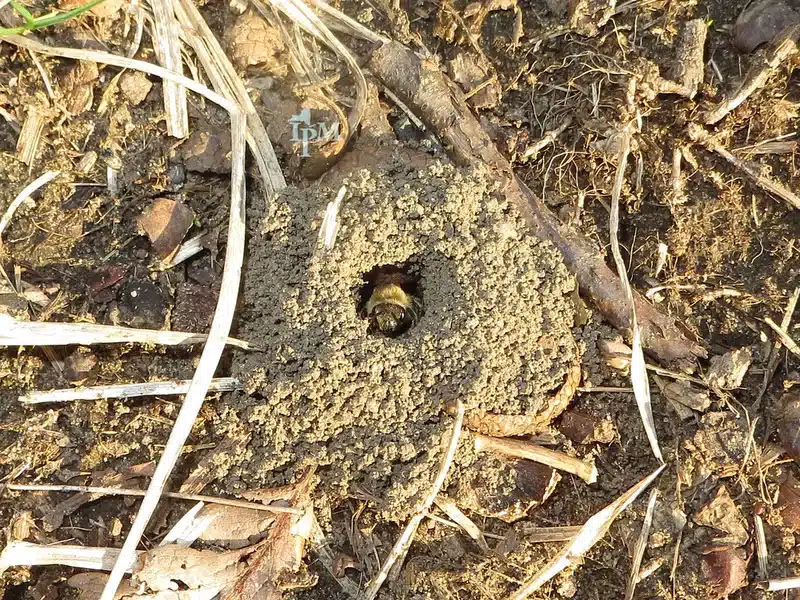
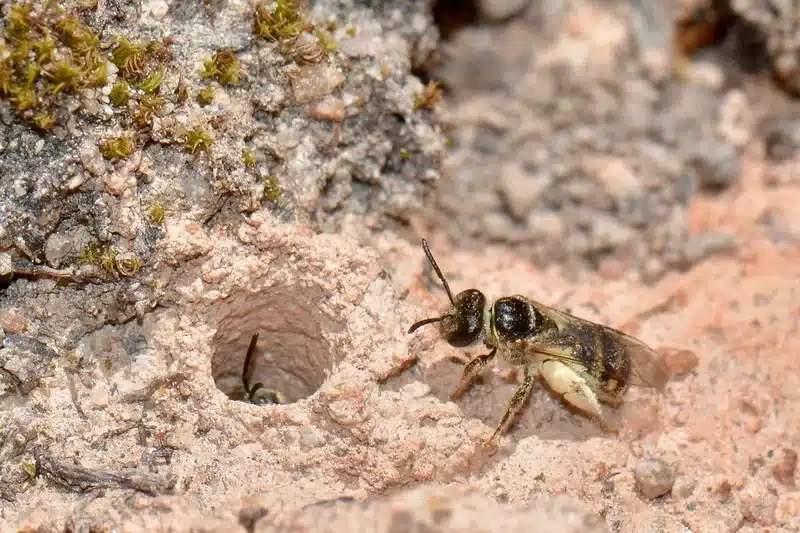
Look for thumb-sized volcano mounds and 3 to 7 mm entrance holes. Several close holes mean a bee group nesting together.
- Bumble bee nests: Show bits of fur or plant fibers at the entrance
- Yellowjacket holes: Larger, with a papery smell
- Ground bee activity: Most species fly for only 2 to 4 weeks in spring, then nests go empty
When to Take Action
Act if nests sit close to walkways, play areas, or spots where people with allergies spend time. Timing control in spring limits risk and effort.
For nests in out-of-the-way spots, most solitary bees leave their nests empty after a few weeks of provisioning.
Non-Chemical Removal Methods
These are the best first options, especially for solitary bees.
- Flood nests with heavy watering in spring evenings
- Cover bare soil with mulch or landscape fabric
- Overseed thin turf for denser grass coverage
- Contact local beekeepers for bumble bee relocation
Virginia Cooperative Extension recommends heavy watering during nesting windows as an effective non-chemical approach.
Keeping Them From Coming Back
Chemical Treatment Options
Use EPA-approved products. Carbaryl 80 WSP and pyrethroid dusts work when applied at dusk. All products we use are vetted by our research team.
Application steps:
- Apply insecticidal dust (bifenthrin, deltamethrin) at nest entrances after sunset
- Reapply water to seal treated soil once activity stops
- Avoid treating blooming plants and follow label directions
Method Comparison
| Non-Chemical | Chemical | Professional | |
|---|---|---|---|
| Cost | Low | Medium | Higher |
| Speed | Slower | Faster | Fastest |
| Best For | Low-risk areas | Moderate activity | High-risk areas, allergies |
Professional Treatment
Our licensed technicians inspect and ID nests accurately. They apply timed dusts and dig out nests if needed.
Service areas include Alexandria, Ashburn, Bethesda, Reston, and Potomac.
Endangered Species Note
Allergy Preparedness
Watch for swelling, hives, or breathing issues after a sting. Treat local swelling with cold packs and antihistamines. For severe reactions (trouble breathing, widespread hives, dizziness), use epinephrine right away and call 911.
Talk to your doctor about venom immunotherapy if you have a known allergy to stinging insects.
Our Approach
We start with a phone consultation with our registered technicians. No phone trees. They build a custom plan based on your yard and your situation.
- 78-point inspection finds every nest and moisture issue
- Research-backed products with 9 harsh chemicals removed from our lineup
- Reduced-risk options like Essentria, Alpine, Sentricon, and borate-based products
- No contracts required. Cancel with 30 days’ notice
Family-owned since 1968, the Schulz team brings over 300 years of combined experience. Call us at 703-683-2000 or email info@bettertermite.com for an estimate.