TLDR: Oriental cockroaches (also called “water bugs”) need moisture to survive. Fix leaks, use dehumidifiers, and seal cracks around pipes and foundations. Remove mulch and leaf litter near your home. Use gel baits and non-repellent sprays in basements and near drains. If you see them during the day or in more than one room, call a professional.
If you’ve seen a shiny black bug near your basement drain or in your crawl space, you likely have oriental cockroaches. As a licensed technician in the DC metro area, I deal with these roaches often. German, oriental, and American roaches are among the most common species in our region. Oriental cockroaches are sometimes called “water bugs” because they depend on damp spaces.
These roaches are bigger and darker than the German roaches you might find in kitchens. They need moisture to survive. Once you know what draws them in, you can get rid of them and keep them out.
How to Identify Oriental Cockroaches
Before you start treatment, make sure you’re dealing with oriental cockroaches. They have features that set them apart from other species.
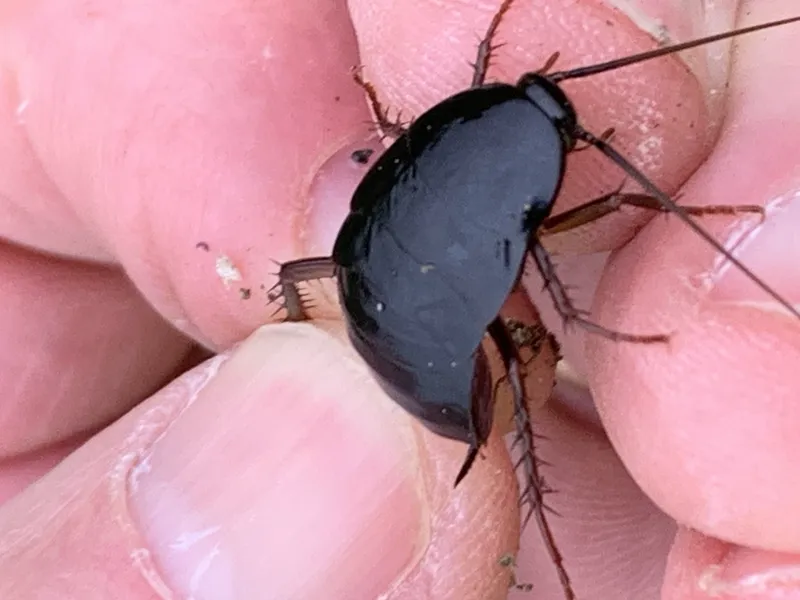
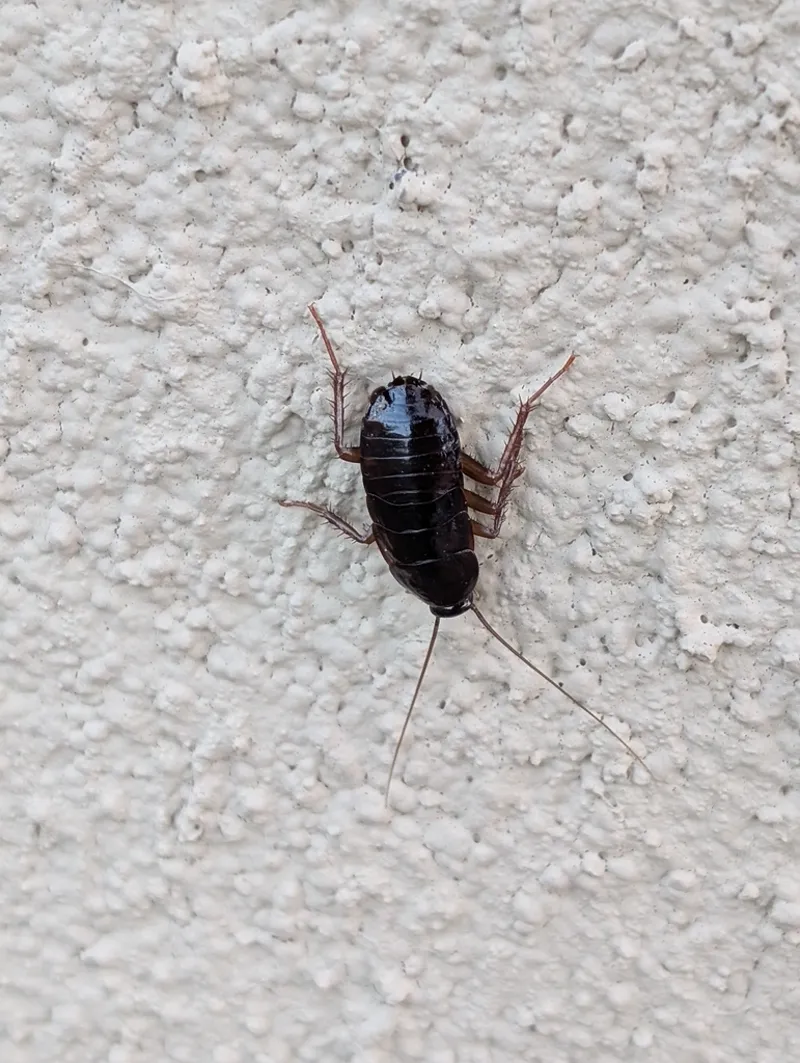
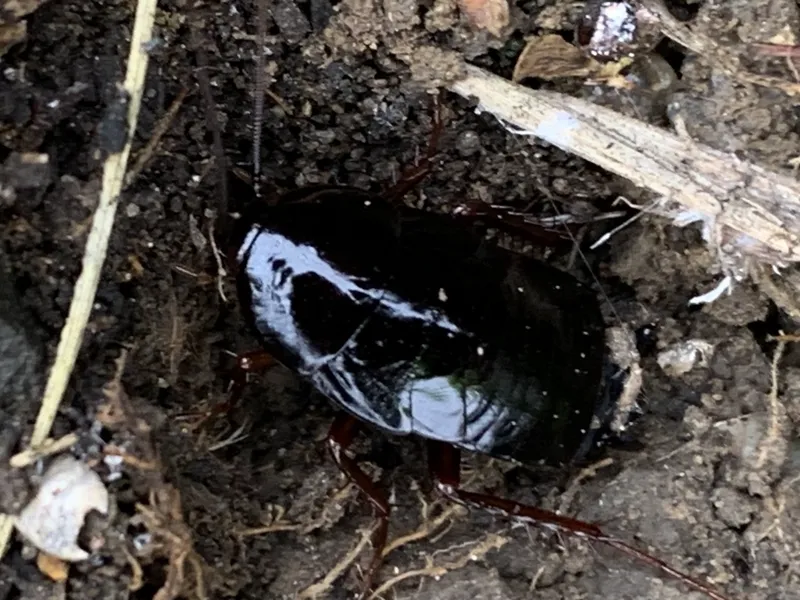
Size and color: Oriental cockroaches are about 1 to 1.25 inches long. They are shiny dark brown to black with an oily, greasy look.
Wings: Males have short wings that cover most of their abdomen. Females have tiny wing stubs. Neither sex can fly.
Movement: Oriental cockroaches move slower than German roaches. This makes them easier to spot, but it also means they stay hidden in one spot for longer.
Smell: These roaches give off a strong, musty odor. If you notice a damp, bad smell in your basement or crawl space, it could point to an infestation.
Oriental cockroaches (Blatta orientalis) are called water bugs because of their strong need for moisture. Penn State Extension notes they can survive only about two weeks without water but can live up to a month without food. This is why they are found so often near drains, pipes, and damp areas.
Where Oriental Cockroaches Hide
These pests need two things: darkness and moisture. Knowing where they hide helps you target your treatment.
Indoor Hiding Spots
- Basements and crawl spaces, their top indoor spots due to humidity
- Around floor drains, since they travel through sewer systems
- Under sinks and around pipes, anywhere with leaks
- Near water heaters, where moisture and warmth meet
- Utility rooms, near washing machines and HVAC units
- Behind baseboards, in rooms with moisture problems
Outdoor Hiding Spots
Oriental cockroaches start outdoors and come inside when conditions are right. Common outdoor spots include:
- Leaf litter and mulch beds near foundations
- Under landscaping stones and pavers
- In storm drains and sewer manholes
- Around outdoor garbage cans
- In compost piles
- Under porches and decks
Why Oriental Cockroaches Enter Your Home
These roaches move indoors for a few reasons:
- Dry weather pushes them toward the dampness inside your home
- Temperature swings drive them in when it gets too hot or too cold outside
- Crowded colonies force some roaches to spread to new areas like your basement
- Sewer lines give them a path straight into your home through floor drains, especially in older homes with dry drain traps
How to Get Rid of Oriental Cockroaches: Step-by-Step
Getting rid of these pests takes several steps. Oriental cockroaches live in hard-to-reach places, so they need more than a single treatment.
Fix all plumbing leaks. Use dehumidifiers to keep basement humidity below 50%. Add vents to crawl spaces. Grade soil away from your foundation. Repair leaky gutters.
Caulk gaps around pipes. Install door sweeps on basement and garage doors. Repair foundation cracks. Screen foundation and dryer vents. Seal gaps around electrical and HVAC lines.
Keep mulch at least 12 inches from your foundation. Clear leaves and debris from around the house. Store firewood at least 20 feet away. Remove rotting wood and old cardboard. Fix areas where water pools near the foundation.
Use gel baits in cracks and along baseboards. Apply boric acid dust in wall voids (keep it dry and light). Use non-repellent sprays around entry points and foundation walls. Learn more about boric acid for roaches.
Place sticky traps near drains and in basements. Check hiding spots monthly. Refresh baits and dusts every few months. Keep humidity low all year.
German, oriental, and American roaches are very common in the DC metro area. Oriental roaches show up most in older homes with basements and crawl spaces. The key to long-term control is fixing the moisture that draws them in. One homeowner tried several DIY treatments with no luck. Once we found and fixed a slow leak under her basement utility sink, the roach numbers dropped fast.
When choosing treatment products, pick the right formula. Not all sprays work the same way on oriental cockroaches.
When to Call a Professional
Some situations need expert help:
- You see roaches during the day. Oriental cockroaches are active at night. Daytime sightings mean the infestation is severe and hiding spots are full.
- DIY treatments haven’t worked after several weeks. The roaches may be coming from sewer lines or wall voids you can’t reach.
- You have a moisture problem you can’t fix. A professional can find and address structural issues.
- Health concerns. If anyone in your home has asthma or allergies, professional treatment gives faster relief.
The American College of Allergy, Asthma & Immunology lists cockroach allergens as a major asthma trigger, especially in cities. Proteins in roach droppings, shed skins, and saliva cause allergic reactions and can make breathing problems worse. Oriental cockroaches also carry bacteria like Salmonella and E. coli from the sewers and decaying matter they crawl through.
How Professionals Get Rid of Oriental Cockroaches
Here’s what to expect when you call a pest control company:
Full inspection. We check beyond the obvious areas to find entry points, moisture sources, and hidden spots that DIY checks miss.
Targeted treatment. For oriental roaches, this usually includes:
- Non-repellent treatments around the foundation
- Dust in wall voids and behind appliances
- Bait in cracks and crevices
- Drain treatments to reach sewer populations
Moisture control guidance. We pinpoint the moisture problems feeding the infestation and suggest fixes.
Follow-up visits. Most oriental roach treatments take 2-3 visits to fully wipe out the population.
At Better Termite & Pest Control, we’ve handled roach problems in the DC metro area for over 57 years. Our licensed technicians know the conditions that cause oriental cockroach issues in Alexandria, Fairfax, Bethesda, and nearby areas.

Preventing Future Problems
Once you’ve gotten rid of oriental cockroaches, these steps keep them from coming back:
- Keep humidity low. Run dehumidifiers in basements year-round. Aim for below 50%.
- Run water through drains. Pour water down floor drains each week to keep the P-trap seal full.
- Landscape with care. Use gravel or stone near your foundation instead of organic mulch.
- Get regular inspections. Annual pest checks catch problems before they grow.
- Fix leaks right away. Small plumbing problems turn into big roach magnets.
Oriental Cockroaches vs. Other Species
Not sure which roach you have? Here’s a quick comparison:
| Feature | Oriental Roach | German Roach | American Roach |
|---|---|---|---|
| Size | 1-1.25 inches | 0.5-0.6 inches | 1.5-2 inches |
| Color | Shiny black/dark brown | Tan/light brown | Reddish-brown |
| Flight | Cannot fly | Cannot fly | Can fly short distances |
| Habitat | Damp basements, drains | Kitchens, bathrooms | Basements, sewers |
| Speed | Slow | Fast | Fast |
Knowing the species helps you pick the right treatment. German roaches need kitchen-focused work, while oriental roaches need basement and drain treatments. See our guide on bugs that look like roaches if you’re not sure.
Get Professional Help Today
Oriental cockroaches are tough pests, but you can control them. Focus on moisture, seal entry points, and use the right products. If DIY methods aren’t working or you want faster results, professional roach control makes a big difference.
Call Better Termite & Pest Control at 703-683-2000 or email info@bettertermite.com. With over 1,100 five-star reviews and 57 years of experience, we know how to get rid of oriental cockroaches for good.