
TLDR: Millipedes don’t bite humans. They lack the mouthparts to pierce skin. When threatened, they curl up or release a mild fluid that can irritate skin. This fluid washes off with soap and water. Millipedes come indoors seeking moisture, especially during heavy rain or drought. To keep them out: fix moisture problems, seal cracks, and clear debris from your foundation.
If you’ve spotted a many-legged creature crawling across your basement floor, your first thought might be: do millipedes bite? The good news is that millipedes don’t bite humans at all. Unlike their look-alike cousins, centipedes, millipedes lack the mouthparts needed to pierce skin.
As a licensed pest control technician with experience since 2015, I’ve fielded many calls from worried homeowners about these slow-moving creatures. While millipedes won’t bite you, they do have an interesting defense mechanism that’s worth understanding. Let me explain what actually happens when you encounter one.
Why Millipedes Can’t Bite
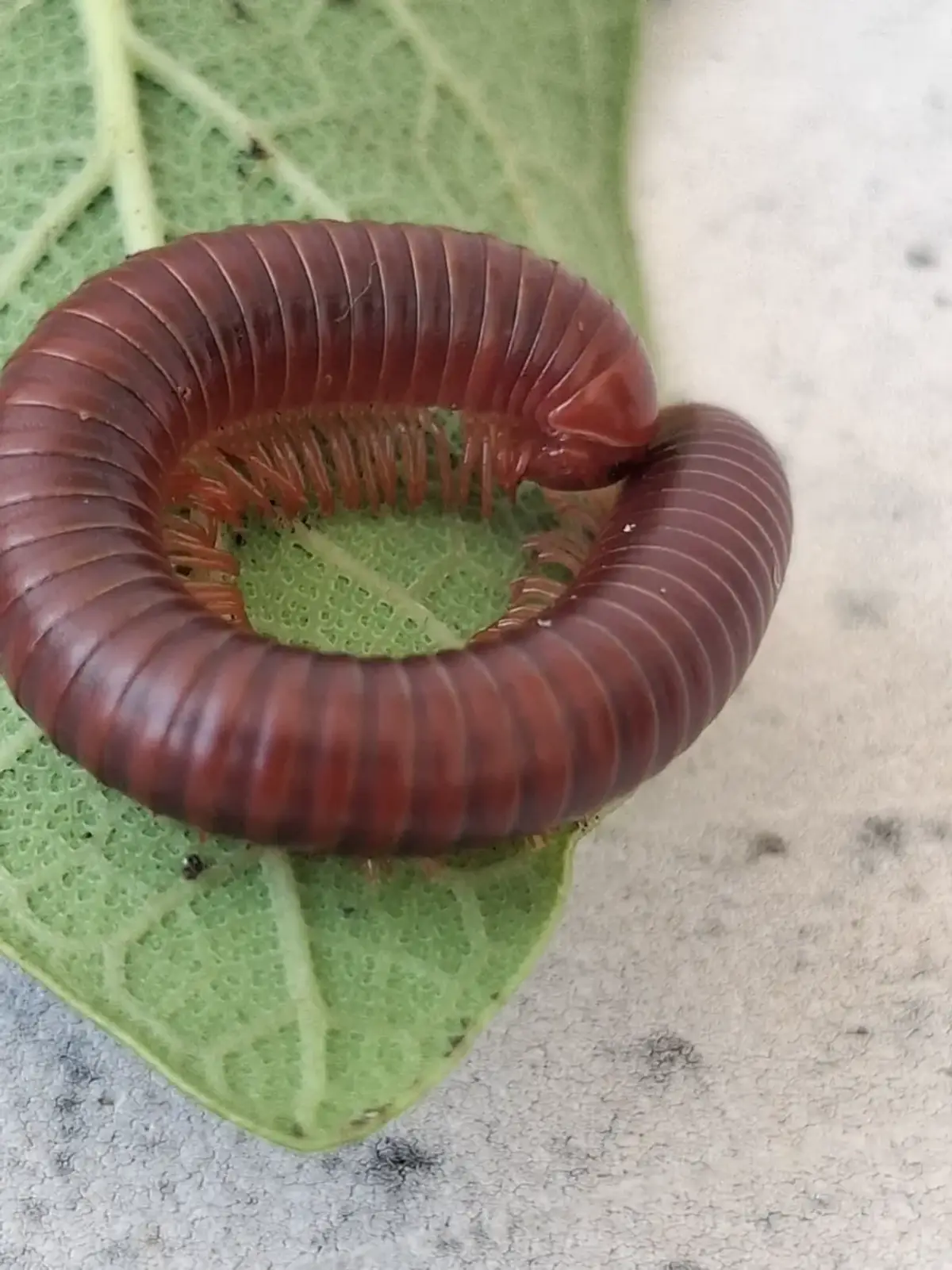
Millipedes are physically unable to bite humans. Millipedes simply don’t have the biting mouthparts that centipedes possess. Their mandibles are designed for chewing decaying plant matter, not piercing skin. To learn about what millipedes eat, see our detailed guide.
Here’s what makes millipedes different from biting pests:
- Weak mandibles designed only for soft, decaying organic material
- No venom glands or injection mechanism
- Slow-moving nature means they rarely feel threatened enough to defend themselves
- Non-predatory diet of decomposing leaves and plant matter
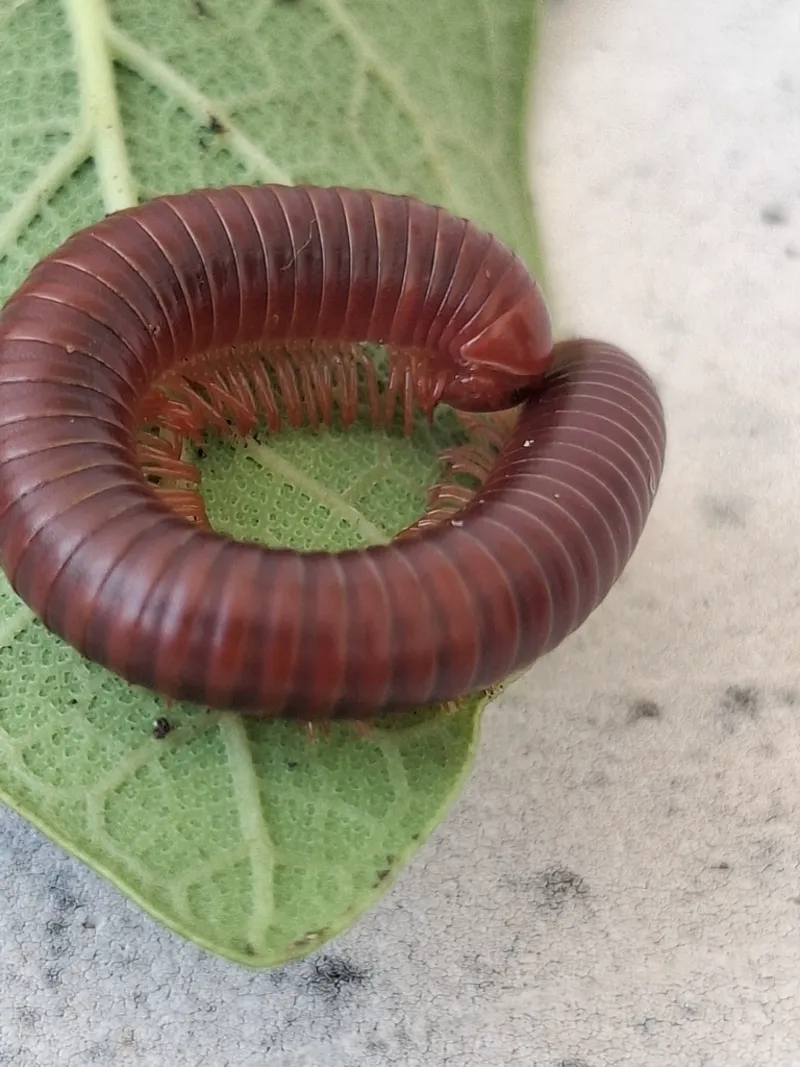
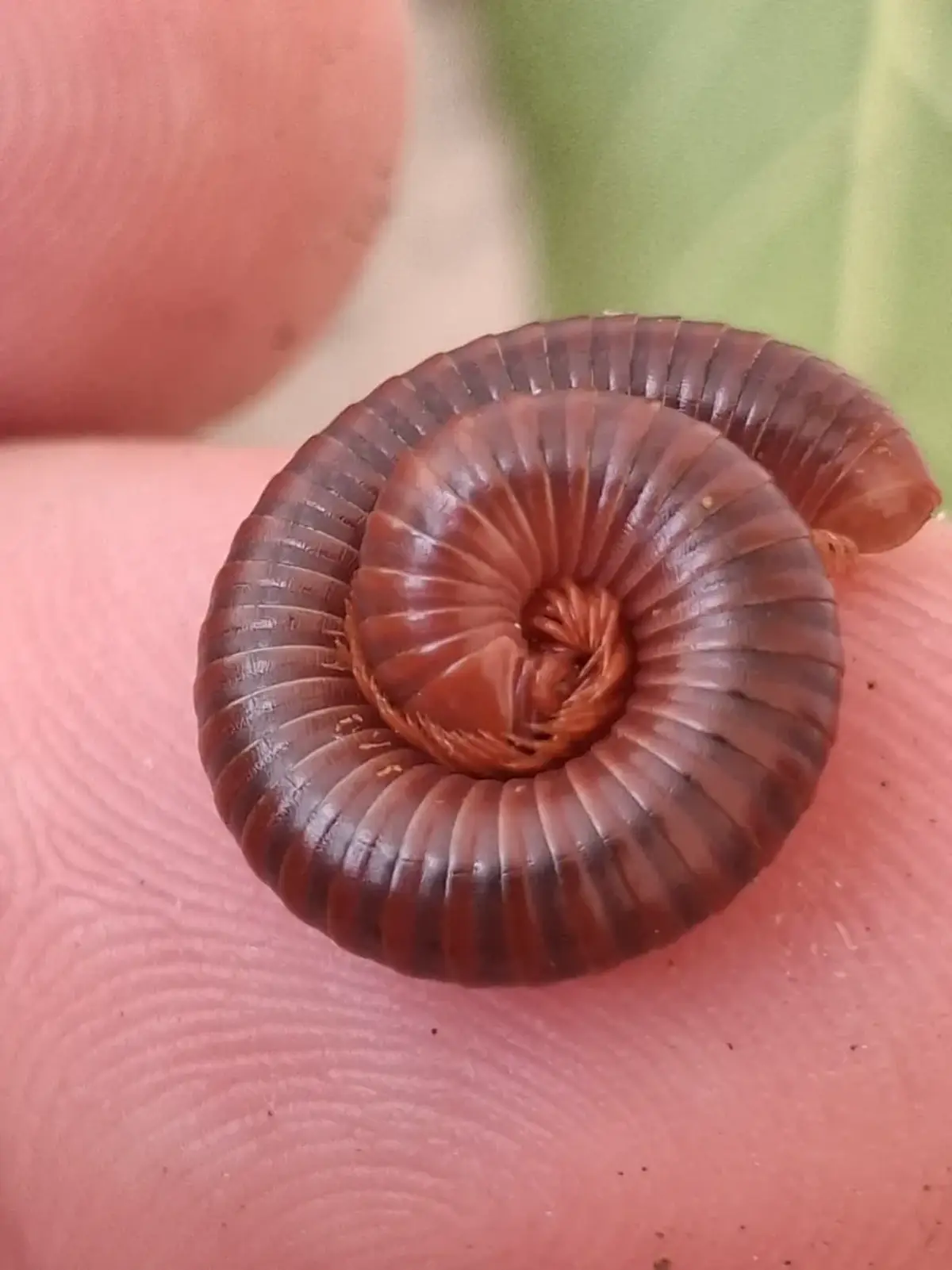
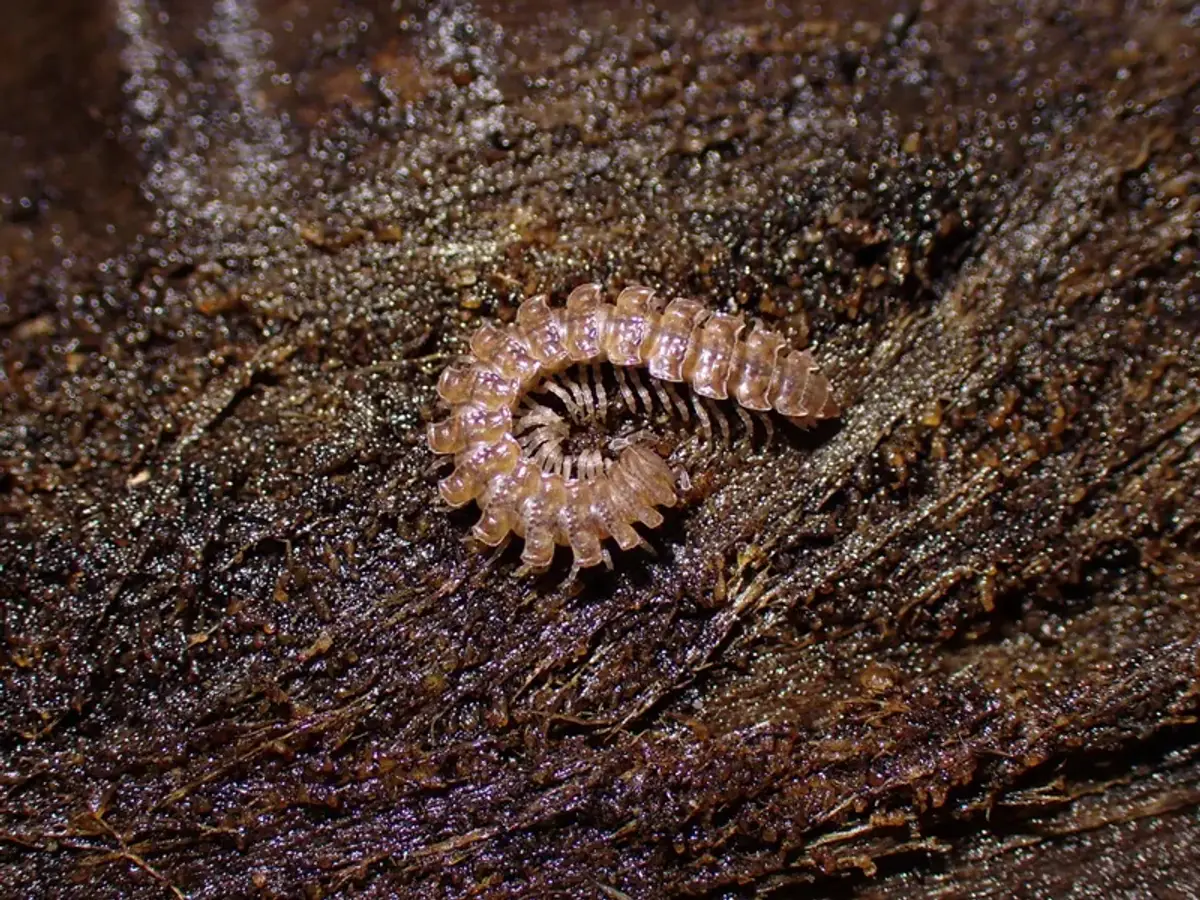
When a millipede feels threatened, its instinct is to curl into a tight ball rather than fight back. This defensive posture protects their soft underbelly and is usually the only response you’ll see from handling one.
What Millipedes Do Instead of Biting
While millipedes won’t bite, they aren’t completely defenseless. Many species release a chemical secretion from glands along their sides when they feel trapped or threatened. This is their primary defense mechanism against predators.
According to the National Center for Biotechnology Information, millipede defensive secretions contain a mixture of chemicals including benzoquinones, phenols, and in some species, small amounts of hydrogen cyanide. These compounds are designed to deter predators but are generally not harmful to humans beyond causing mild skin irritation.
This fluid does a few things:
- Deters predators with an unpleasant smell and taste
- Creates a barrier between the millipede and threats
- Provides time for the millipede to escape
Most people who handle millipedes never notice any secretion at all. The fluid is typically only released when the millipede feels genuinely threatened or trapped.
Can Millipede Secretions Hurt You?
While millipede secretions aren’t dangerous, they can cause some temporary effects worth knowing about. The reaction depends on your skin sensitivity and how much contact occurs.
Common reactions include:
- Skin discoloration - A temporary brown or mahogany stain that fades within days to weeks
- Mild burning sensation - Usually brief and localized
- Slight itching - Particularly in people with sensitive skin
- Minor redness - Called erythema in medical terms
The treatment for skin exposure is simple: wash the area thoroughly with soap and water. This removes the oily secretion and limits both staining and any burning sensation. Most reactions resolve on their own within a few days without any medical treatment.
Millipede vs. Centipede: The Important Difference
One reason people worry about millipede bites is confusion with centipedes. These two creatures look similar at first glance, but they’re very different in terms of biting.
| Feature | Millipede | Centipede |
|---|---|---|
| Legs per segment | Two pairs | One pair |
| Body shape | Rounded | Flat |
| Movement | Slow, deliberate | Fast, darting |
| Biting ability | Cannot bite | Can bite with venomous forcipules |
| Defense | Curls up, secretes fluid | Bites and runs away quickly |
| Danger to humans | Nuisance only | Can cause painful stings (are centipedes dangerous?) |
According to the Forest Preserve District of Will County, if you uncover a many-legged creature and it scatters away quickly, that’s likely a centipede. If it curls into a ball and stays still, it’s a millipede.
Why Millipedes Enter Your Home
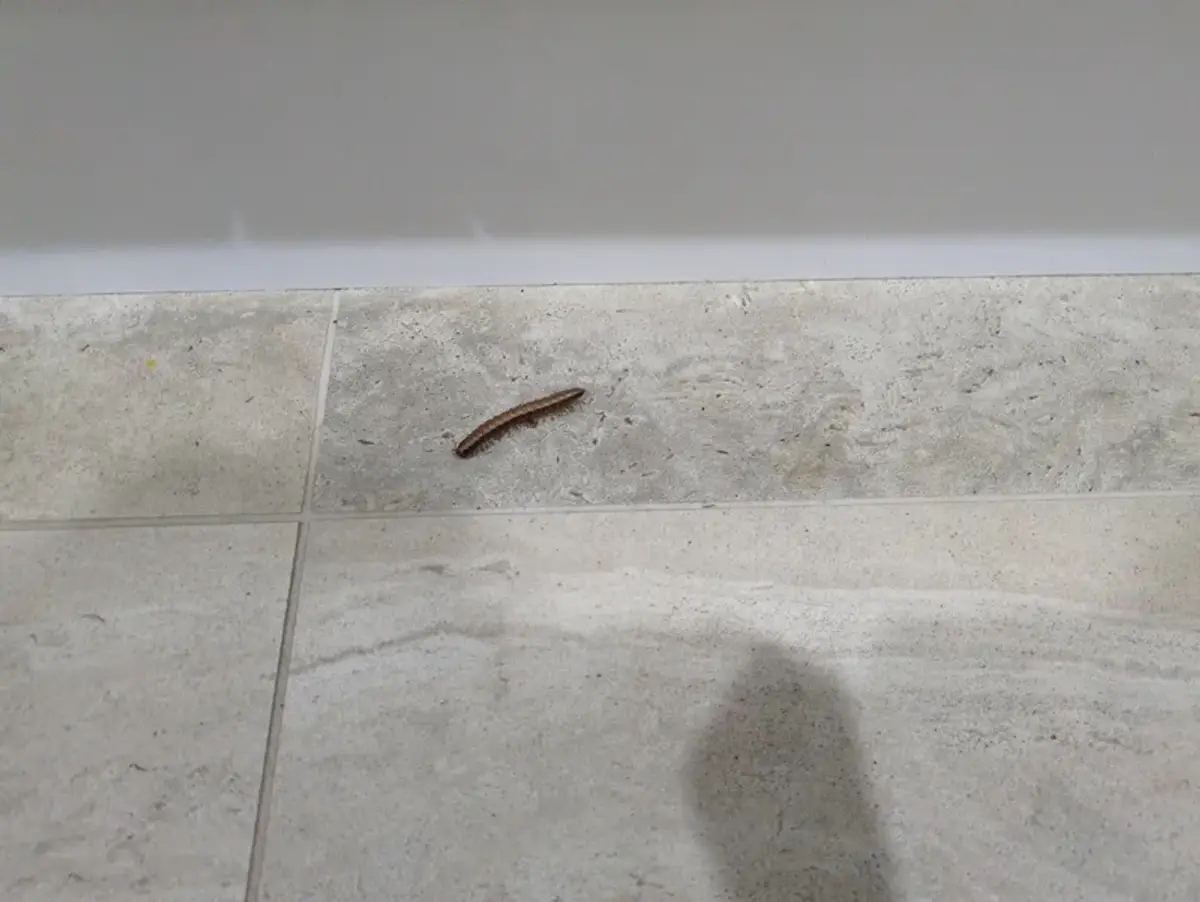
Understanding why millipedes come inside helps with prevention. These creatures don’t enter homes looking for food or to establish colonies. Instead, they’re simply following moisture gradients and seeking comfortable humidity levels.
Common triggers for millipede invasions:
- Extremely dry weather sends them seeking moisture indoors
- Heavy rainfall can flood their outdoor habitats and force them to higher ground
- Seasonal changes particularly in spring and fall
- Soil saturation pushes them out of their normal living spaces
According to NC State Extension, correcting moisture problems is far more important for preventing millipedes than relying on insecticides alone.
One homeowner I spoke with had a persistent problem with millipedes appearing in her basement. After our inspection, we determined that the cause of the issue was the high moisture content of the soil around her home.
The solution involved:
- Improving drainage around the foundation
- Reducing mulch depth near the exterior walls
- Installing a dehumidifier in the basement
- Sealing gaps around basement windows
After addressing the moisture issue, her millipede sightings dropped dramatically without needing extensive chemical treatments.
How to Prevent Millipedes from Coming Inside
Since millipedes don’t bite and are mainly nuisance pests, prevention focuses on making your home less attractive to them. The key is moisture control both inside and outside your home.
Outdoor prevention steps:
- Remove leaf piles, heavy mulch, and debris near your foundation
- Keep mulch at least 6-12 inches away from exterior walls
- Ensure gutters and downspouts direct water away from your home
- Grade soil to slope away from the foundation
- Replace organic mulch with gravel near the house
Indoor prevention steps:
- Use dehumidifiers in damp basements and crawl spaces
- Fix plumbing leaks promptly
- Seal cracks around windows, doors, and the foundation
- Install door sweeps and weatherstripping
- Ensure proper ventilation in bathrooms and basements
If you’re dealing with moisture issues that attract pests like millipedes, our team in Bethesda and throughout the DC metro area can help identify and address the root causes.
What to Do If You Find Millipedes in Your Home
Finding a few millipedes indoors isn’t cause for alarm. These creatures typically die within a day or two indoors because they can’t survive in the dry environment of most homes.
Simple removal methods:
- Vacuum them up - This is the fastest and most effective method
- Sweep them into a dustpan - Release them outdoors away from your foundation
- Leave them alone - They’ll likely dry out and die on their own indoors
However, if you’re seeing large numbers of millipedes in your house, that usually indicates a moisture problem worth investigating. Mass migrations of millipedes often happen after weather changes and can involve hundreds of these creatures.
For ongoing millipede problems, our licensed technicians can evaluate the moisture conditions around your home and recommend targeted solutions. We serve homeowners throughout Northern Virginia and the DC metro area with over 57 years of experience.
When to Call a Pest Control Professional
While millipedes don’t bite and aren’t dangerous, sometimes professional help makes sense:
- Repeated invasions despite DIY prevention efforts
- Hundreds of millipedes appearing at once
- Difficulty identifying whether you have millipedes or centipedes
- Moisture issues you can’t locate or fix yourself
- Other pests appearing alongside millipedes
Our team at Better Termite & Pest Control has helped thousands of homeowners throughout Alexandria, Fairfax, and the surrounding areas deal with occasional invaders like millipedes. With over 1,000 five-star reviews and 300 years of combined experience, we understand how to address the underlying issues that attract these creatures.
The Bottom Line on Millipede Bites
To answer the original question: no, millipedes do not bite humans. They physically can’t. While their defensive secretions can cause temporary skin discoloration or mild irritation, they pose no real threat to you or your family.
If you’re dealing with millipedes in your home, the solution usually involves addressing moisture problems rather than worrying about being bitten. These slow-moving decomposers are just looking for a comfortable environment and typically don’t survive long indoors.
Call us at 703-683-2000 or email info@bettertermite.com for help with millipedes or other pests.