Spotted a small, tan cockroach in or around your home? You might wonder if it’s an Asian cockroach or a German cockroach. They look almost the same but act very differently. Each one also needs a different treatment.
As a licensed tech, I see German, Oriental, and American roaches most in the DC metro area. Asian cockroaches are rare here. But knowing which one you have still matters. The wrong ID leads to wasted time and money on a treatment that won’t work.
Once you know what to look for, telling them apart is easy.
How They Look: Nearly the Same
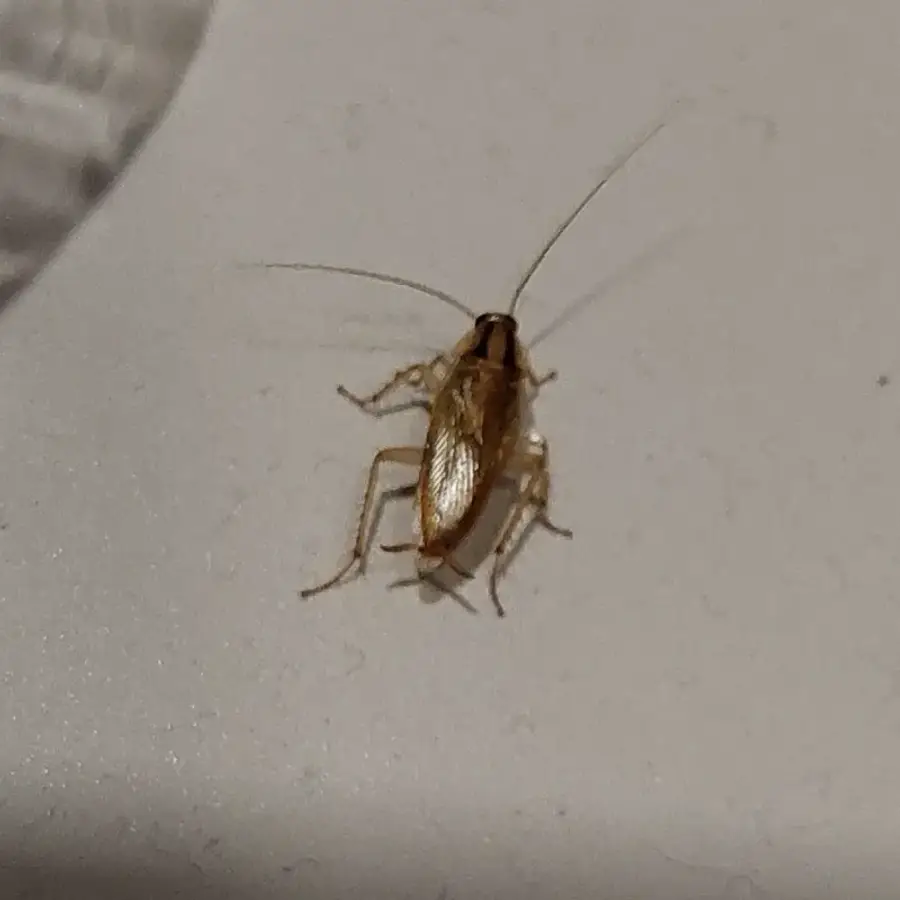
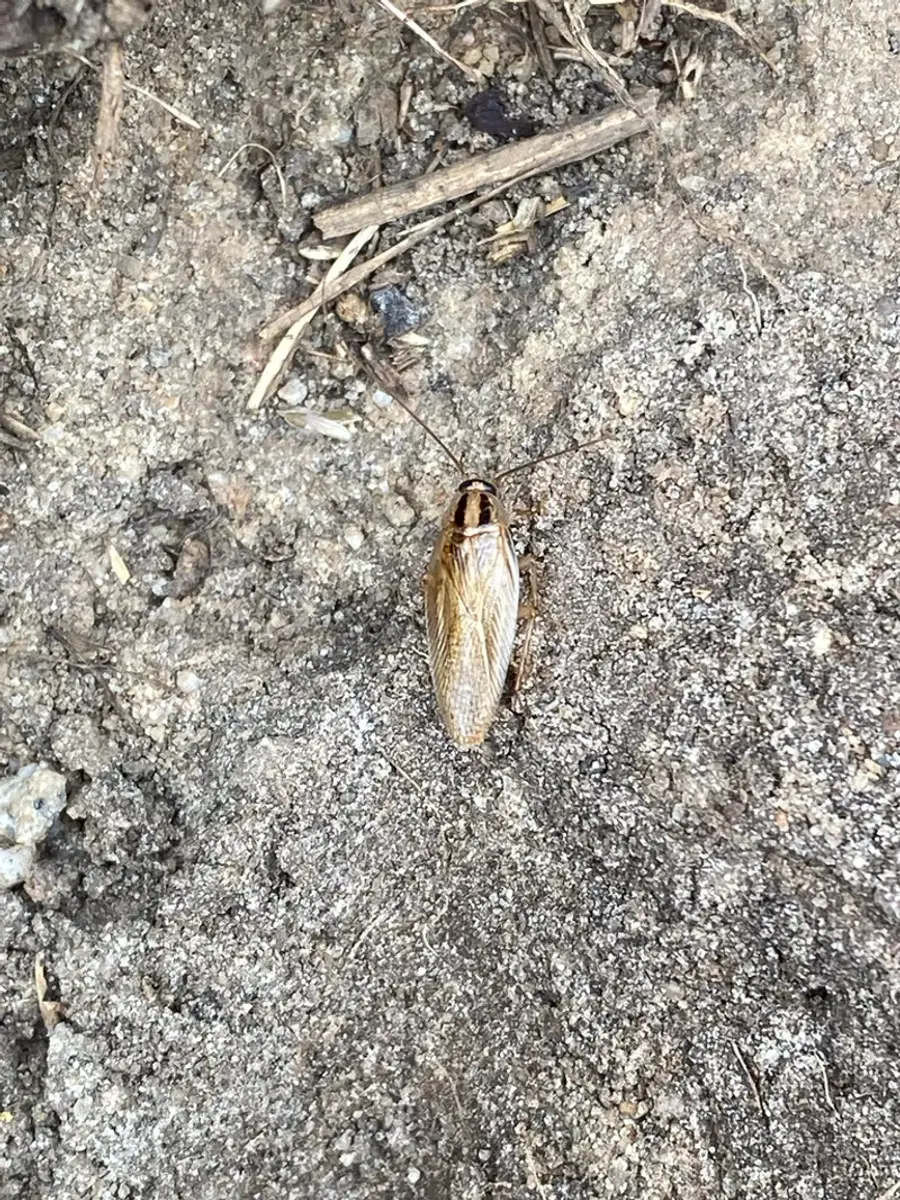
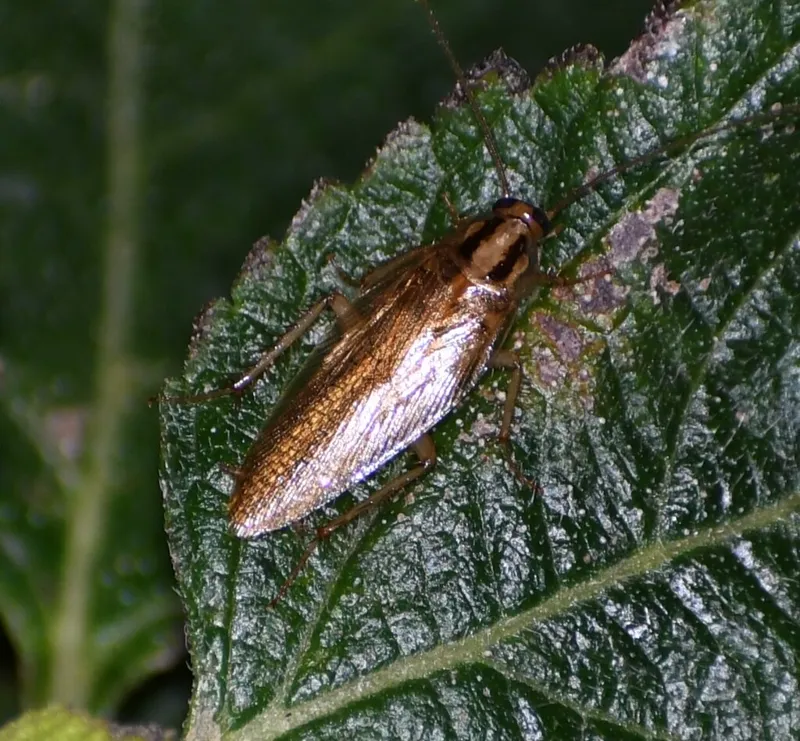
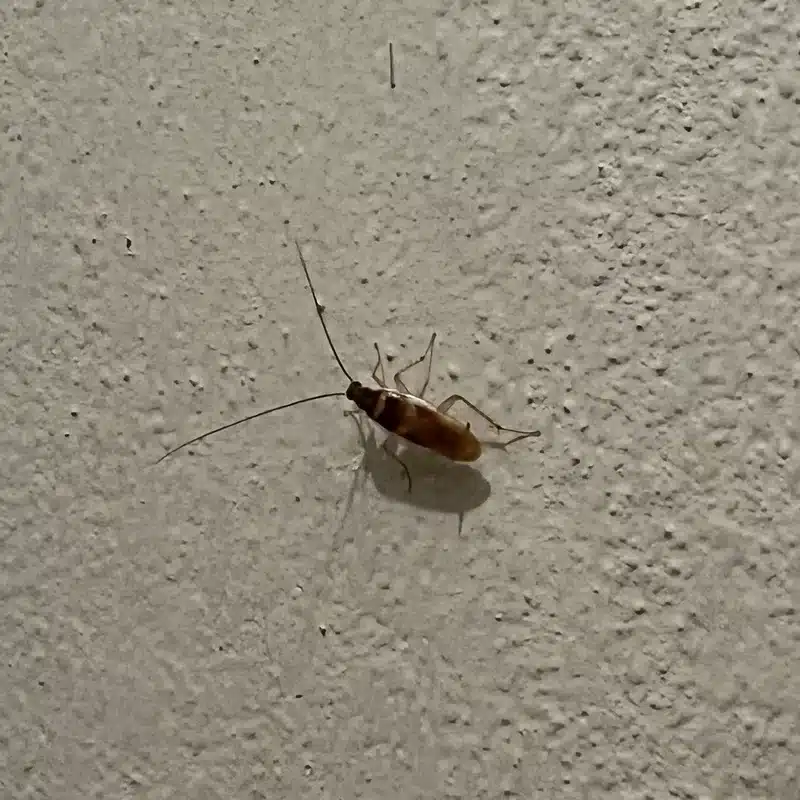
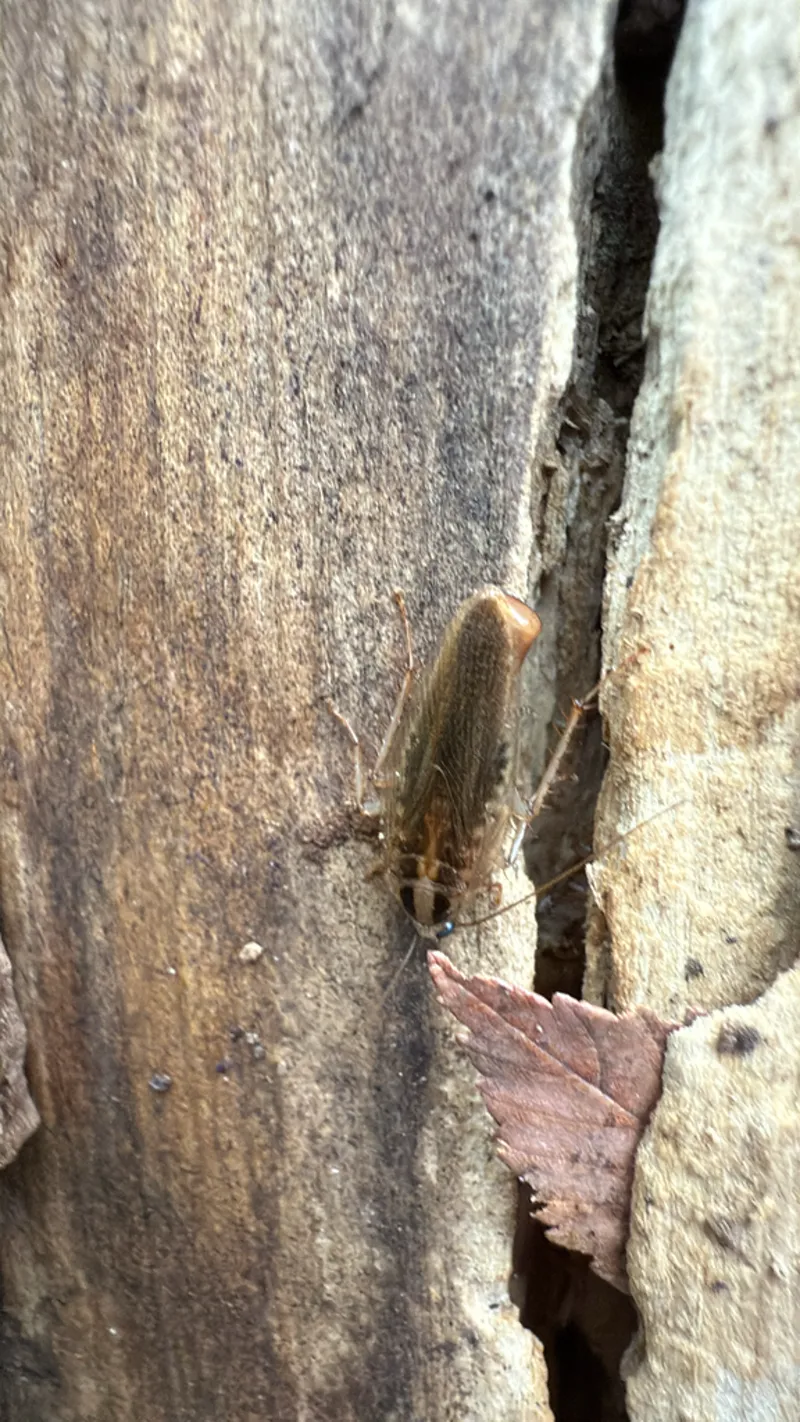
Side by side, these two roaches look very alike. Both are about 1/2 to 5/8 inch long. Both are light brown or tan. Both have two dark stripes behind their heads. If you’re trying to figure out what bug looks like a cockroach, these are real roaches. They’re just different species.
The details that set them apart are small but useful:
- Wing length: Asian roaches have longer wings that go past the tip of their body. German roach wings stop right at the body tip.
- Body shape: Asian roaches look a bit more narrow and long. German roaches are a bit wider.
- Color: Asian roaches tend to be a lighter shade of tan, though this varies.
These physical differences are so slight that even pros have a hard time with them. That’s why behavior is the real key to telling them apart.
The Biggest Difference: Flight and Light
This is where the two species become easy to tell apart. Their behavior is opposite.
Strong fliers that love light. Asian roaches fly well, especially at dusk. They’re drawn to light sources like porch lights, TV screens, and open windows. If you see a small tan roach flying toward your porch light at night, it’s almost certainly Asian.
Research from the University of Florida shows Asian roaches start their peak flight about 30 minutes after sunset. They’ll fly toward any light they can find.
Runners that avoid light. German roaches have wings but rarely fly. When scared, they run fast on foot instead of taking to the air.
More importantly, German roaches hate light. If you flip on the kitchen light at night and see roaches scatter into cracks and dark spots, those are German cockroaches.
The flight and light test is the fastest way to figure out which roach you have.
Where Each Species Lives
Where you find the roach is another strong clue to what you’re dealing with.
Asian cockroaches are outdoor insects. They live in:
- Leaf litter and mulch beds
- Shaded, moist areas around foundations
- Compost piles
- Ground cover plants
- Areas with organic debris
They may come inside at night, drawn by lights, but they don’t set up colonies indoors. An Asian roach inside is usually a stray, not a sign of an infestation.
German cockroaches are indoor-only pests. They can’t survive outside in most climates. You’ll find them:
- In kitchen cabinets and under sinks
- Behind fridges and stoves
- Near dishwashers and garbage disposals
- In bathroom cabinets and around pipes
- Any warm, humid spot near food and water
Rutgers University research shows German roaches rarely go more than 16 feet from their food and water. They build tight colonies in cracks close to these resources.
In my work across Northern Virginia, the habitat almost always tells me which species I’m dealing with before I even see the roach up close.
When homeowners call about “roaches flying toward the lights,” they usually have Asian cockroaches or wood roaches, not German roaches.
German roach problems look different. Customers notice them first in the kitchen or bathroom, often when one runs away after they flip on a light. By then, the group has usually been growing for weeks.
If you’re not sure what you’re dealing with, a pro inspection can clear things up fast.
Where They’re Found in the U.S.
Knowing where each species lives helps with ID, especially here in the DC metro area.
Asian cockroaches first showed up in the U.S. in Florida in 1986. They’ve spread to the Southeast: Florida, Georgia, Alabama, Louisiana, and the Texas Gulf Coast. They need warm, wet weather and can’t handle cold winters. Asian cockroaches are rare in Northern Virginia because our winters are too cold for them.
German cockroaches live across the entire U.S. and the world. They thrive wherever people live because they need our heated buildings, food, and water. In our area, German roaches are one of the most common indoor pests. They’re very common in apartments, restaurants, and buildings with shared walls.
A 2019 study found that Asian roaches mostly live in areas with mild winters and at least 50 inches of rain per year. The DC metro area gets about 40 inches per year and has winters too cold for Asian roaches. That’s why they’re rare here.
Health Risks
Both species can affect your health, but German roaches are a bigger concern because they live indoors.
German roaches live right next to your food, so they pose serious health risks:
- They spread bacteria like Salmonella and E. coli on food and surfaces
- Their droppings, shed skins, and body parts trigger allergies and asthma
- NIH research shows roach allergens raise childhood asthma hospital visits by 3.7 times
- They can carry over 30 types of bacteria
Asian roaches are less of a health threat because they mostly stay outside:
- Less contact with your food
- Allergens still present but not as built up indoors
- Can still carry germs on their bodies
- More of a nuisance than a health risk
German roaches pose the bigger health threat by far because they live where you cook and eat.
Treatment: Two Very Different Plans
Correct ID is critical for treatment. Each species needs its own plan. The wrong one wastes time and money.
German roach control needs heavy indoor treatment. Learn more in our guide on how to get rid of German roaches:
- Gel baits in cracks and hiding spots
- Growth regulators to stop breeding
- Dust treatments in wall voids and behind appliances
- Multiple follow-up visits over 2-4 months
- Better cleaning habits to cut off food and water
A single female can produce 200-250 babies in her lifetime. Even a few survivors can restart the whole group.
Asian roach control focuses on outdoor management:
- Perimeter treatments around the foundation
- Thinning mulch and clearing leaf litter near the home
- Exterior barrier sprays
- Switching to yellow “bug light” bulbs outdoors
- Sealing gaps around doors and windows
Since Asian roaches don’t build indoor colonies, indoor baits won’t help much. You have to treat their outdoor habitat.
Our team at Better Termite & Pest Control has over 57 years of experience treating cockroach problems in the DC metro area.
Prevention Tips
German roaches usually enter homes through:
- Grocery bags and delivery boxes
- Used appliances and furniture
- Visitors’ belongings
- Shared walls in multi-unit buildings
To keep them out:
- Check bags and boxes before bringing them inside
- Never bring used appliances home without looking them over
- Keep kitchens clean and grease-free
- Fix leaky pipes and cut down on moisture
- Seal cracks around cabinets and plumbing
- Store food in airtight containers
Asian roaches come inside because they’re drawn to lights. To reduce them:
- Turn off extra outdoor lights at night
- Use yellow “bug lights” on your porch
- Keep doors shut in the evening
- Install tight door sweeps
- Keep mulch under 2 inches deep
- Clear leaves from around your foundation
- Trim plants away from the house
The good news is that both species can be controlled. The key is using the right approach for the right roach.
When to Call a Professional
For Asian roaches, most homeowners can fix the problem by changing their yard and lights. Call a pro when large numbers are in your yard or keep getting inside.
For German cockroaches, you almost always need a pro. They breed fast and hide in tiny cracks. DIY methods rarely work. By the time you see one, many more are hidden nearby.
Our licensed techs have the right products and know where German roaches hide. We’ve served Northern Virginia families for over 57 years with more than 1,000 five-star reviews.

Get Expert Help with Your Roach Problem
A wrong ID wastes time and money. Whether you have Asian roaches, German roaches, or another species, our techs will figure out what’s going on and build a plan that works.
We’ve helped Northern Virginia families for over 57 years. Call 703-683-2000 or email info@bettertermite.com for a free inspection.