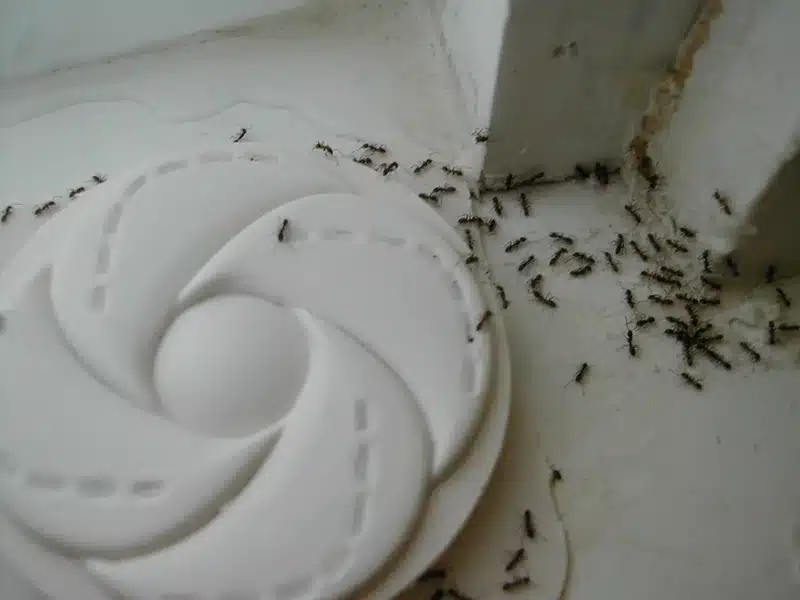

TLDR: Ants invade kitchens for three reasons: food, water, and shelter. Scout ants find crumbs or moisture, then leave scent trails for the rest of the colony. The best fix combines thorough cleaning, sealing entry points, and using baits that kill the whole colony (not just the ants you see). Different ant species need different treatments, so proper ID matters. If ants keep coming back despite your efforts, call a professional.
Finding ants in your kitchen is frustrating, especially when they seem to appear out of nowhere. In my years as a licensed pest control technician, ant season brings one of the most common complaints from homeowners.
Most people first spot these tiny invaders around sinks or marching along countertops. What starts as a few scouts can quickly turn into a bigger problem if you don’t act. Small gaps, stray crumbs, or pet food left out can draw these persistent insects indoors.
The key is knowing why they’re there and taking the right steps to stop them.
Why Ants Come to Your Kitchen
Your kitchen has everything ants need: food, water, and shelter. Scout ants search for resources, and once they find your kitchen, they leave chemical trails for others to follow.
Several things make kitchens attractive. Food crumbs around appliances, sticky spills on counters, and pet food bowls create a feast. Moisture from leaky pipes, dishwashers, or condensation provides the water they need.
Ants get in through surprisingly small spaces. Gaps around utility lines, foundation cracks, or worn door sweeps give them easy access. Once inside, they set up trails between outdoor nests and your kitchen’s food and water.
Common Kitchen Ant Species
Knowing which ants you have helps pick the best treatment.
Odorous House Ants
The odorous house ant is one of the most common kitchen invaders in our area. These tiny insects are about 1/8 inch long and release a coconut-like smell when crushed. They form large colonies with multiple queens, making them hard to get rid of.
They nest in wall spaces, around leaky pipes, or under mulch outside. Their small size lets them squeeze through the tiniest cracks.
Pavement and Pharaoh Ants
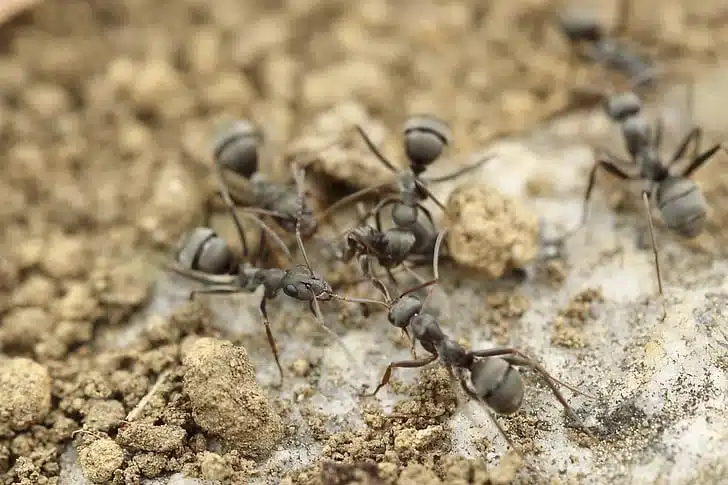
Pavement ants are brown-black with grooves on their heads. They nest under concrete and along foundations, often foraging indoors during winter when outdoor food runs low.
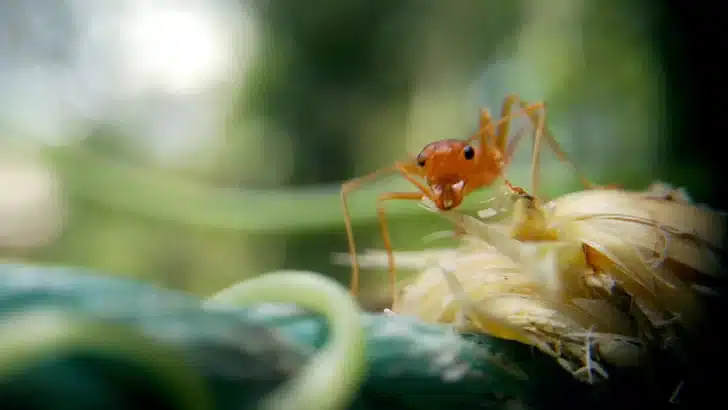
Pharaoh ants are yellowish and thrive in heated buildings. These tiny ants are documented disease carriers that can contaminate food and surfaces.
Carpenter Ants
Carpenter ants are much larger at 1/4 to 1/2 inch long. They don’t eat wood but carve out wet or decayed timber for nests. Finding them often means you have a moisture problem. Look for the telltale signs of carpenter ants like sawdust piles near baseboards.
What Draws Ants to Your Kitchen
Food Sources
Scout ants lay chemical trails to guide others to food in your kitchen. Even tiny food particles can attract them. Grease behind stoves, crumbs in toasters, or sticky spots on cabinet handles give them enough to feed on.
Moisture
Water matters just as much as food. Leaky pipes under sinks, dishwasher moisture, or pet water bowls create conditions ants love.
Entry Points
Cracks around pipe holes, gaps under door sweeps, or areas where foundations meet siding all provide access routes. Too much mulch against your foundation also creates nesting sites close to your home.
Seasonal Patterns
Spring brings more activity as carpenter ants come out to forage. Summer heat drives many species indoors when soil temps get above 100 degrees. Late winter sees pavement ants from foundation nests searching heated rooms for food.
Health Risks From Kitchen Ants
Many people see ants as just annoying, but they pose real health and structural risks.
Disease Transmission
Research shows that household ants carry serious germs that can get on your food and surfaces. Studies found coliforms on 52% of tested ants, E. coli on 18%, and Salmonella on 8%. The 70% transfer rate means these bacteria move fast from ants to food surfaces.
Structural Damage
Carpenter ants cause real structural damage by carving galleries in wet or decayed wood. Large colonies can contain thousands of workers, each expanding the tunnel systems. Finding them in your kitchen often means water damage in nearby framing.
Stinging Risks
Fire ants cause painful stings that create pustules and can lead to infections. Some people develop severe allergic reactions that need emergency treatment.
How to Check for Ant Problems
Follow the Trails
Track ant trails at dawn or dusk when activity peaks. Use a flashlight to trace trails from your kitchen to their source. Mark entry points with tape so you can seal them later.
For carpenter ants, listen for rustling in wall spaces during quiet evenings.
Collect Samples
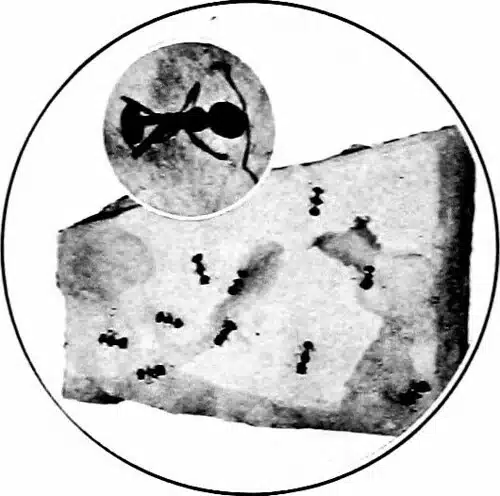
Pick up several worker ants with clear tape for ID. Note their size, color, and waist shape. Crush one to check for the coconut smell of odorous house ants.

Find the Nests
Indoor nests usually hide in wall spaces, around plumbing, or in areas with moisture. Look for small sawdust piles that show carpenter ant activity.
Outdoor nests may be under stones, in mulch, or along foundation walls. Pavement ants often create small dirt mounds between concrete slabs.
Prevention: The Best Defense
Prevention works better than any treatment for long-term ant control.
Clean Thoroughly
Store all food in containers with tight lids. Even packaged foods should go into sealed jars since ants can smell through cardboard and plastic.
Seal Entry Points
Seal any gaps bigger than 1/16 inch with silicone caulk or expanding foam. Focus on areas where pipes enter walls and around electrical outlets. Install door sweeps and fix torn window screens.
Control Moisture and Landscaping
Fix leaky pipes and remove condensation sources. Keep mulch under 3 inches deep and at least 6 inches from your siding. Trim branches that touch your roof, since these become ant highways.
For Virginia-specific advice, see our guide on preventing ants in Virginia.
Treatment Options
When prevention isn’t enough, targeted treatments can eliminate existing colonies.
Bait Systems
Ant baits work best for most species because they target whole colonies. Slow-acting ingredients like boric acid, fipronil, and hydramethylnon let workers share poisoned food with queens and larvae.
Match bait types to the season: sugar-based baits in spring and fall, protein baits during summer. If ants ignore baits after 48 hours, try a different type. Leave baits out for 2-3 weeks until activity stops.
Dusts and Powders
Boric acid dust works as a stomach poison when ants groom it from their bodies. Apply it in cracks and crevices away from children and pets.
Diatomaceous earth dries out ants that walk through it. Both dusts last for months if kept dry.
Spot Treatments
Non-repellent foam products can reach hidden nests in wall spaces. For visible outdoor nests, boiling soapy water poured directly into pavement ant entrances works well.
- Minor problem: Start with cleaning and sealing entry points
- Ongoing issue: Add baits and dust treatments
- Persistent infestation: Use targeted products or call a professional
- Carpenter ants or fire ants: Call a licensed technician right away
Our ant control guide explains when professional treatment becomes the right move.
Professional vs DIY
While minor ant problems respond to DIY methods, some cases need professional help.
What Professional Treatment Includes
Licensed technicians identify entry points, moisture issues, and ant species during thorough property checks. We create custom treatment plans based on your situation.
Tri-Annual Maintenance (Three Times Per Year)
Professional treatments start with both interior and exterior applications using non-repellent products. Tri-annual maintenance visits keep protection in place because most ant control products last about 2-3 months. Regular reapplication keeps barriers strong through changing seasons.
Fire Ant Regulations
Washington DC requires permits for certain outdoor pesticide use. Virginia’s expanding fire ant quarantine zones restrict movement of soil and plant materials. Professional services handle these rules for you.
Our Approach
Our family has served the DC metro area since 1968. Our research team has removed 9 harsh chemicals from our programs, choosing products like Essentria, Alpine, and borate-based solutions that we’d use in our own homes.
Our Better Promise means unlimited callbacks at no extra cost until your ant problem is solved. No binding contracts. Cancel anytime with 30 days’ notice.
Call us at 703-683-2000 or email info@bettertermite.com for a free inspection and treatment plan.