Four-Toothed Mason Wasps Identification Guide
Monobia quadridens
Four-toothed mason wasps are solitary wasps that nest in pre-existing cavities like old carpenter bee holes. These non-aggressive wasps prey on caterpillars and are beneficial to gardens.
Taxonomy
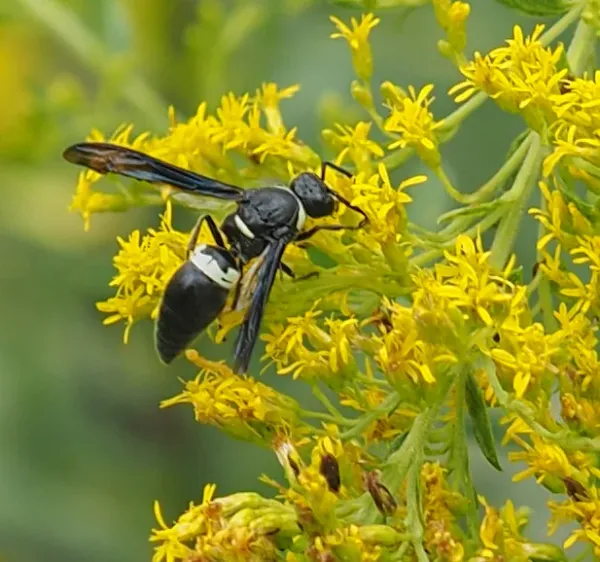
Four-Toothed Mason Wasps Coloration
Common color patterns to help identify four-toothed mason wasps
Four-Toothed Mason Wasps
Seasonal Activity
When four-toothed mason wasps are most active throughout the year
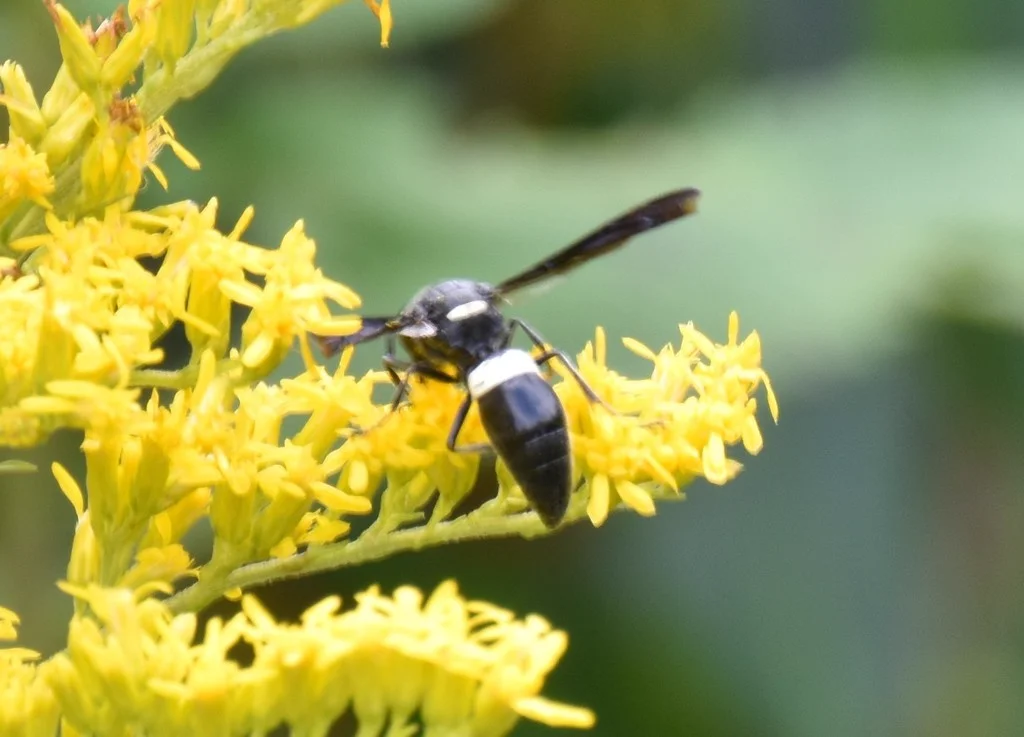
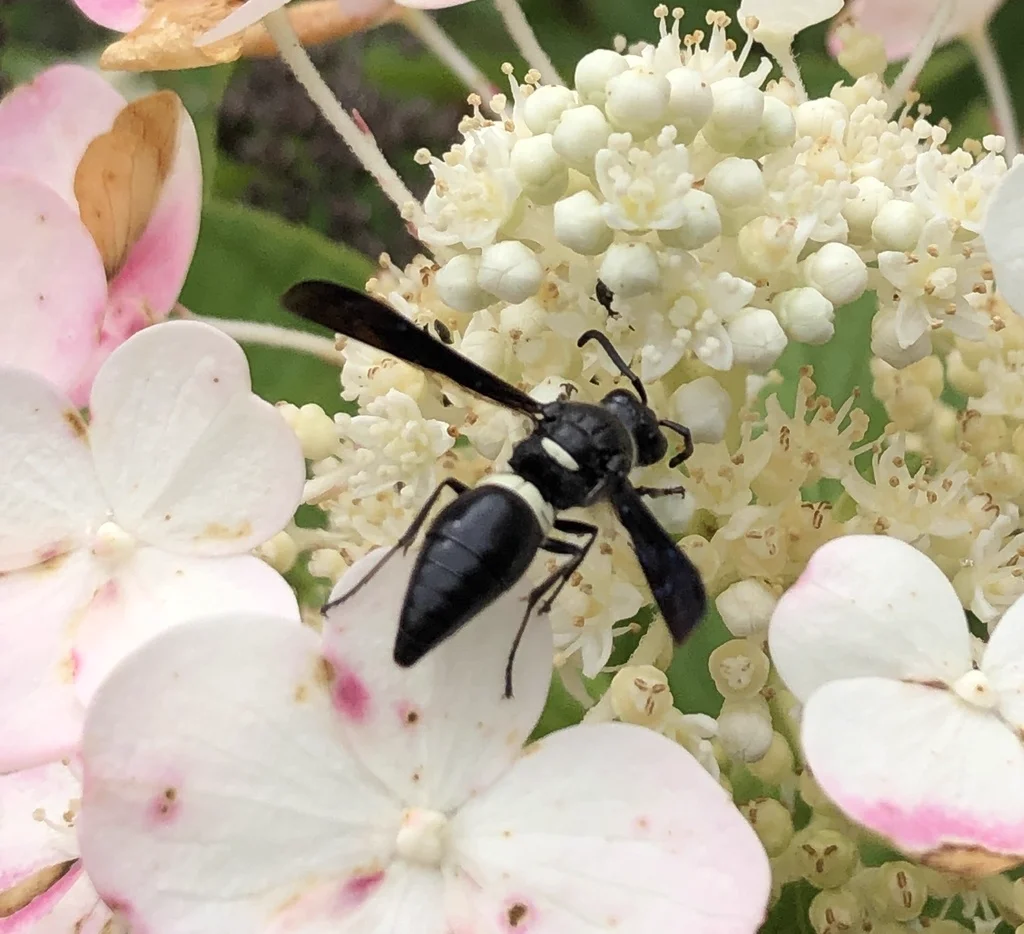
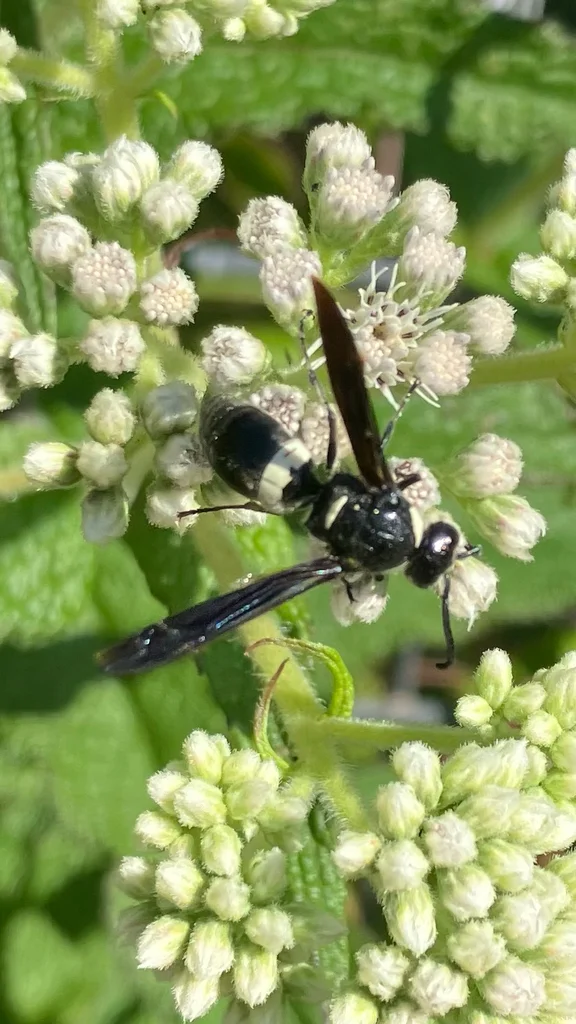

Where Four-Toothed Mason Wasps Are Found
Hover over states to see their names. Green regions indicate where four-toothed mason wasps have been reported.
Four-Toothed Mason Wasp Identification Guide
Physical Characteristics
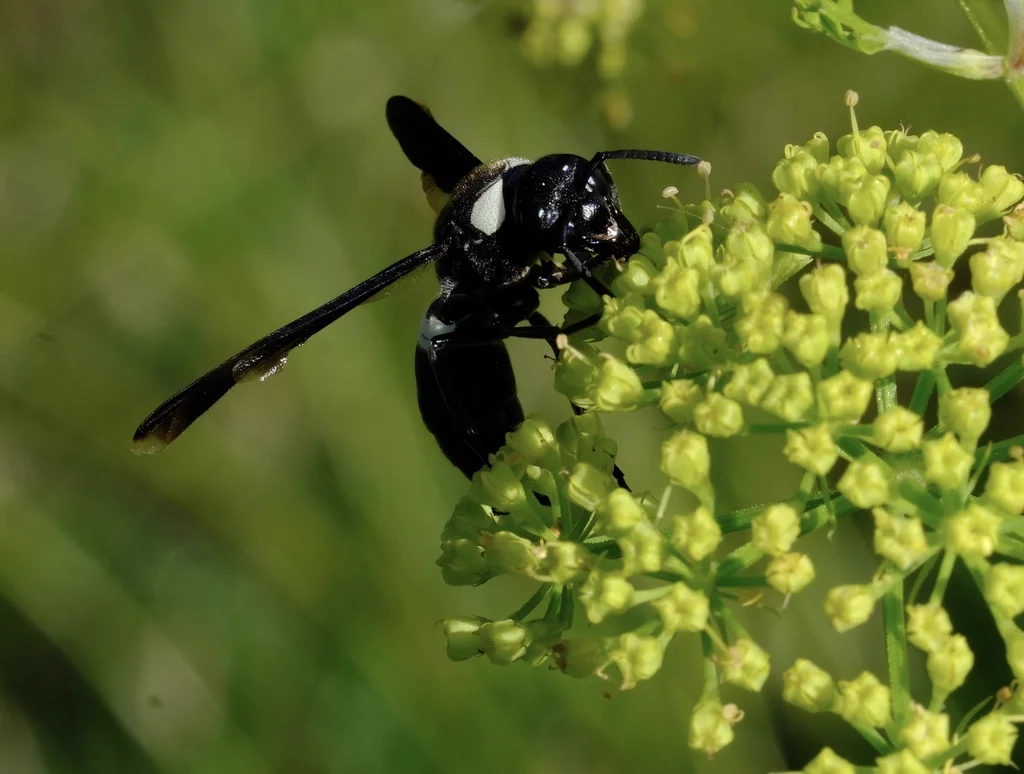
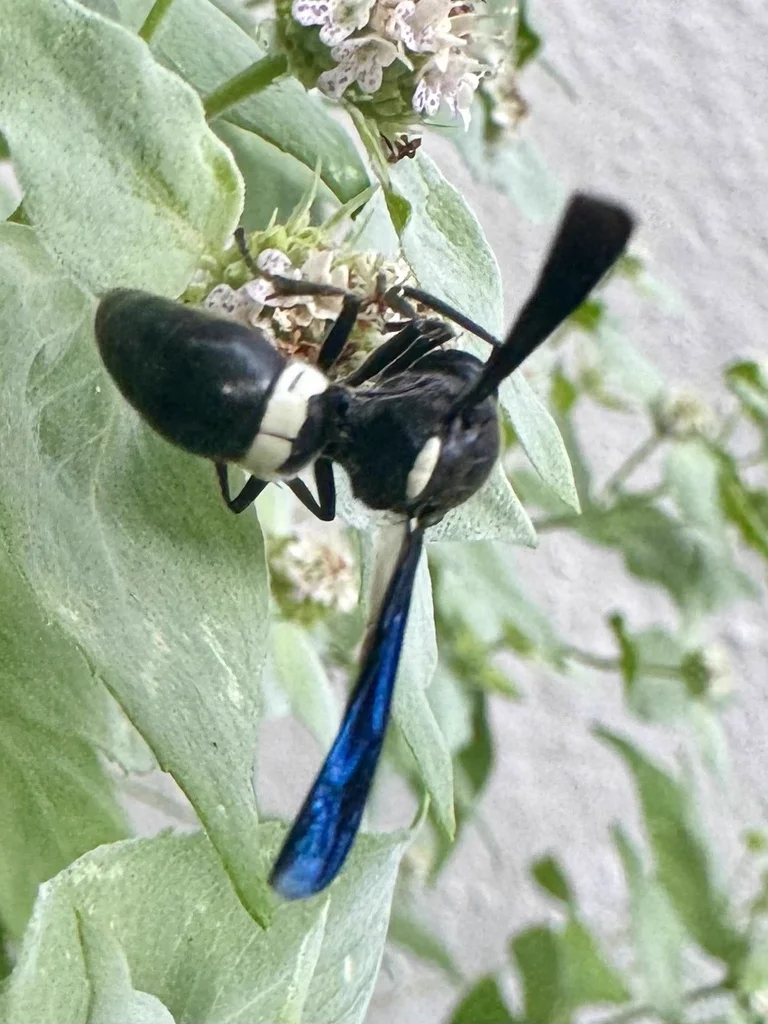
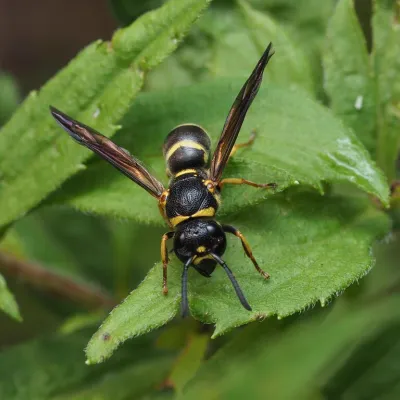
Four-toothed mason wasps are medium-sized solitary wasps measuring 13 to 18 millimeters (about 1/2 to 3/4 inch) in length. They have a robust body compared to other solitary wasps like mud daubers. The most distinctive feature is their coloration: a shiny black body with a prominent ivory or white band on the first segment of the abdomen.
The face has white or cream-colored markings. The wings are dark with a slight bluish iridescent sheen that is visible in bright light. Like all wasps, they have six legs and two antennae. Their name comes from four small tooth-like projections on the lower part of the mandibles, though these are difficult to see without magnification.
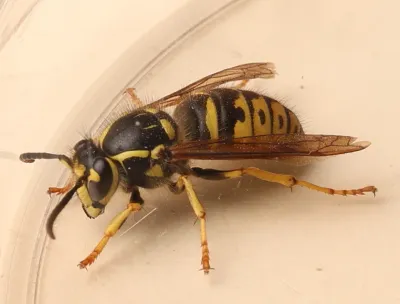
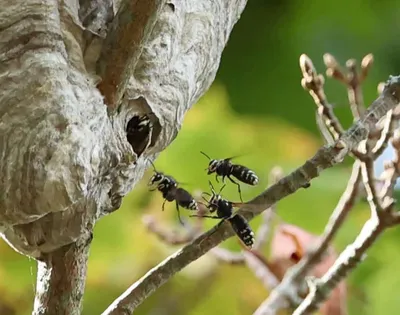
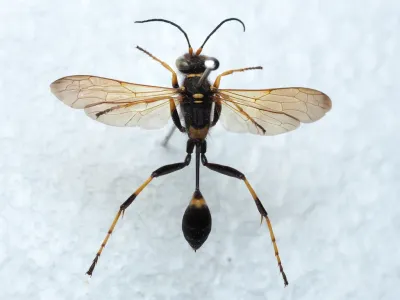
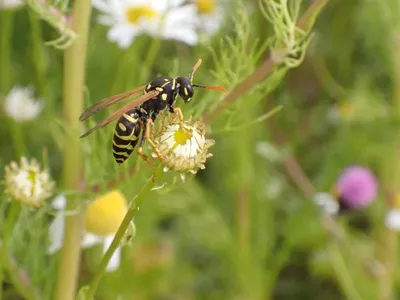
Four-toothed mason wasps are often mistaken for bald-faced hornets due to similar black and white coloring. However, mason wasps are noticeably smaller and have only a single white abdominal band rather than multiple bands. Their solitary behavior and lack of a paper nest also distinguish them from hornets.
Common Species
The four-toothed mason wasp (Monobia quadridens) is the most common mason wasp species in eastern North America. It belongs to the family Vespidae and subfamily Eumeninae, which includes potter wasps and other mason wasps.
Related species you may encounter include:
-
Fraternal Potter Wasp (Eumenes fraternus): Smaller with yellow markings instead of white. Builds free-standing pot-shaped mud nests on twigs and leaves.
-
Ancistrocerus Species: Several mason wasp species in this genus also nest in cavities. They are typically smaller with yellow and black banding patterns.
-
European Tube Wasp (Ancistrocerus gazella): An introduced species now common across North America. Black and yellow with similar cavity-nesting habits.
Four-Toothed Mason Wasp Behavior and Biology
Four-toothed mason wasps are solitary insects. Each female works alone to find a nesting site, hunt prey, and raise her offspring. There are no queens, workers, or colonies. This solitary lifestyle means these wasps have little reason to sting in defense since they have no nest full of larvae to protect.
Nesting Habits
Unlike mud daubers that build their own mud tubes, four-toothed mason wasps are cavity nesters. They seek out pre-existing holes and tunnels to use as nest sites. The most common nesting locations include:
- Abandoned carpenter bee galleries in wood
- Hollow plant stems and twigs
- Old beetle exit holes
- Gaps in window frames and siding
- Nail holes in weathered wood
Once a female finds a suitable cavity, she inspects it carefully. If acceptable, she begins hunting for prey. After collecting and paralyzing caterpillars, she places them in the back of the cavity. She then lays an egg on one of the caterpillars and seals that section with a mud partition. The female may create multiple cells in a long tunnel, each separated by mud walls and each containing one egg with several caterpillars.
Hunting and Reproduction
Female four-toothed mason wasps hunt caterpillars to feed their young. They target moth and butterfly larvae, particularly species that curl into a ball when disturbed. The wasp stings the caterpillar to paralyze it, then carries it back to the nest.
Each nest cell receives between 1 and 6 paralyzed caterpillars depending on their size. The paralyzed caterpillars remain alive but immobile, providing fresh food for the developing wasp larva. After laying her egg, the female seals the cell with mud and begins work on the next one.
A single female can provision multiple nest cavities over her lifetime. The eggs hatch within a few days. The larvae feed on the paralyzed caterpillars for several weeks before pupating. Depending on the season, the new adults either emerge the same year or overwinter as pupae in the sealed cells.
Seasonal Activity
Four-toothed mason wasps emerge in late spring when temperatures warm consistently. Adults are active from May through September in most regions. Females spend the warm months searching for nest sites, hunting caterpillars, and visiting flowers for nectar.
You may see these wasps hovering near wooden fences, decks, or structures where carpenter bees have previously nested. They are inspecting potential cavities. Adult wasps also visit gardens and wildflowers frequently, where they feed on nectar from plants like goldenrod, Queen Anne’s lace, and mountain mint.
By fall, the next generation has developed inside the sealed nest cells. Some emerge before winter, while others remain as pupae until the following spring. Adult wasps from the current season do not survive winter.
Four-Toothed Mason Wasp Sting Risk
Four-toothed mason wasps pose very little sting risk to humans. As solitary wasps, they lack the defensive aggression of social species like yellowjackets and paper wasps. Stings occur only when a wasp is directly handled or trapped against skin.
If you observe a four-toothed mason wasp, simply leave it alone. These wasps are focused on finding nest sites and hunting caterpillars. They have no interest in human food or garbage that attracts more aggressive wasps. Their presence is a sign of a healthy garden ecosystem.
Benefits of Four-Toothed Mason Wasps
Four-toothed mason wasps are considered beneficial insects. Their caterpillar hunting helps control pest populations in gardens and landscapes. A single female may capture dozens of caterpillars over a nesting season.
Common caterpillar prey includes:
- Cutworms that damage garden vegetables
- Corn earworm larvae
- Tobacco budworm caterpillars
- Various moth larvae that feed on foliage
Gardeners and homeowners who notice these wasps on their property are often better off leaving them alone. The pest control benefits outweigh any minor concerns about their presence.
Treatment Considerations for Four-Toothed Mason Wasps
Treatment for four-toothed mason wasps is rarely necessary. These wasps do not damage structures, rarely sting, and provide natural pest control. However, if they are nesting in an inconvenient location, there are several approaches to consider.
When to Leave Them Alone
In most cases, the best response is no response. Four-toothed mason wasps using carpenter bee holes in a fence post, deck railing, or dead tree are simply taking advantage of existing cavities. They cause no additional damage and will finish their nesting activity by fall.
If the wasps are not in a high-traffic area, allowing them to complete their life cycle supports beneficial insect populations. The sealed nest cells pose no hazard once the female is done provisioning.
Nest Exclusion
If four-toothed mason wasps are nesting in an undesirable location, you can exclude them after the current nesting season ends. In late fall or winter, plug the entrance holes with caulk, wood putty, or steel wool. This prevents wasps from using those cavities the following year.
To prevent nesting in carpenter bee holes, address the carpenter bee problem first. Fill abandoned galleries after treating for carpenter bees. Paint or seal exposed wood surfaces to make them less attractive to both carpenter bees and the mason wasps that follow.
When Professional Help May Be Needed
If you are unsure whether you are dealing with four-toothed mason wasps or a more aggressive species, a pest control professional can help with identification. The distinction between a solitary mason wasp and social wasps like yellowjackets or hornets is important for determining the appropriate response.
Homeowners who experience frequent wasp activity around their home may have underlying issues attracting multiple species. A professional inspection can identify attractants and nesting sites for various wasps.
References
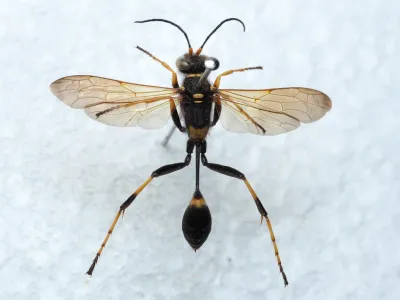
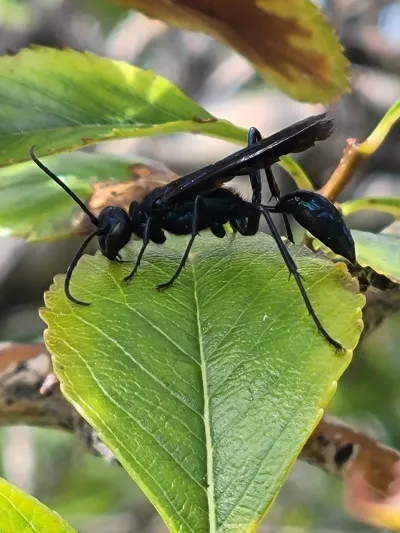
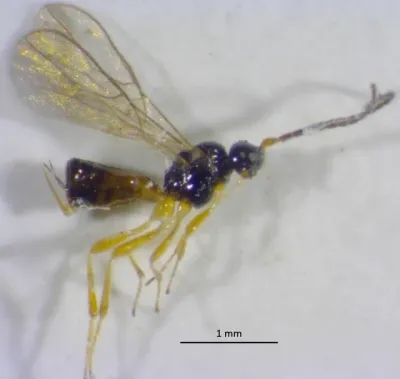
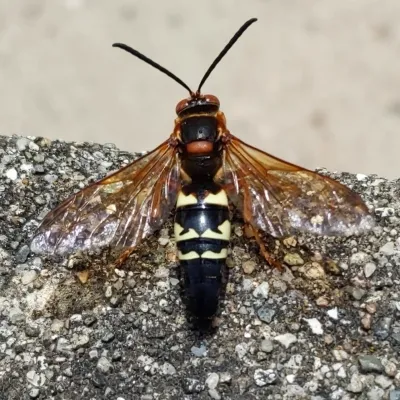
Other Wasps
Explore other species in the wasps family
Commonly Confused With
Four-Toothed Mason Wasps are often mistaken for these similar pests
Where Four-Toothed Mason Wasps Are Found
Hover over states to see their names. Green regions indicate where four-toothed mason wasps have been reported.
Common Questions about Four-Toothed Mason Wasps
Are four-toothed mason wasps dangerous?
+
Four-toothed mason wasps are not dangerous to humans. They are solitary wasps and rarely sting unless directly handled or trapped against skin. They have no colony to defend, so they lack the aggressive behavior seen in social wasps like yellowjackets.
Why are they called four-toothed mason wasps?
+
The name comes from the four small tooth-like projections on their mandibles (jaws). The word 'mason' refers to their habit of using mud to seal nest cavities, similar to how a mason works with mortar.
Where do four-toothed mason wasps nest?
+
These wasps nest in pre-existing cavities rather than building their own structures. Common nesting sites include abandoned carpenter bee holes, hollow plant stems, nail holes in wood, and gaps in siding or window frames.
What do four-toothed mason wasps eat?
+
Adult four-toothed mason wasps feed on flower nectar. They hunt and paralyze caterpillars to provision their nests as food for their developing larvae. A single nest cell may contain several paralyzed caterpillars.
How can I tell a four-toothed mason wasp from a bald-faced hornet?
+
Four-toothed mason wasps are smaller (about 1/2 to 3/4 inch) and have a single white band on the first abdominal segment. Bald-faced hornets are larger (about 3/4 to 1 inch) with white markings on the face and multiple white bands. Hornets are also social insects that build paper nests, while mason wasps are solitary.
Should I remove four-toothed mason wasp nests?
+
Removal is usually unnecessary. These wasps are beneficial predators of caterpillars and pose minimal sting risk. If they are nesting in an inconvenient location, you can plug the entrance hole after the wasp has finished provisioning or wait until fall when activity stops.
Do four-toothed mason wasps damage wood?
+
No, four-toothed mason wasps do not damage wood. They use existing holes and cavities created by other insects like carpenter bees. They may actually draw attention to carpenter bee damage that already exists on your property.
When are four-toothed mason wasps most active?
+
Four-toothed mason wasps are most active from late spring through early fall. Peak activity occurs in summer when females are actively hunting caterpillars and provisioning nest cells. They are daytime fliers and visit flowers frequently.

With five years of hands-on experience in the pest control industry, George Schulz is a registered technician with the Virginia Pest Management Association and a proud third-generation professional in a family business that's been protecting homes for over 57 years. He manages and trains a team of service pros while also leading internal research efforts—recently spearheading a deep-dive review of thousands of documents on pest control materials to hand-pick the most kid and pet friendly, most effective solutions tailored specifically for homes in the DC metro area.