Franklin's Ground Squirrel Identification Guide
Poliocitellus franklinii
Franklin's ground squirrel is a medium-sized burrowing rodent native to the tallgrass prairies of central North America. Named after Arctic explorer Sir John Franklin, this secretive squirrel spends much of its time underground and hibernates for up to eight months each year.
Taxonomy
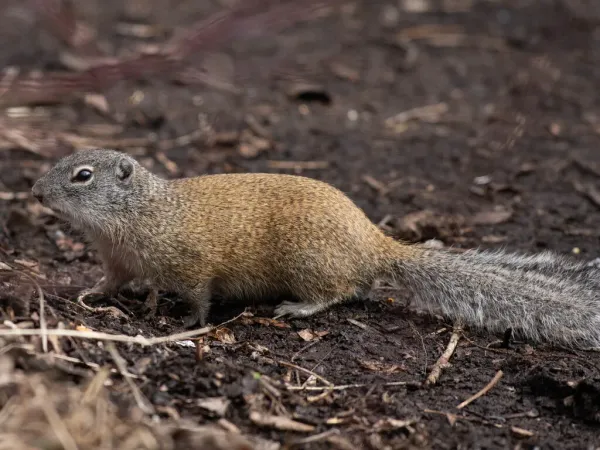
Franklin's Ground Squirrel Coloration
Common color patterns to help identify franklin's ground squirrel
Franklin's Ground Squirrel
Seasonal Activity
When franklin's ground squirrel are most active throughout the year
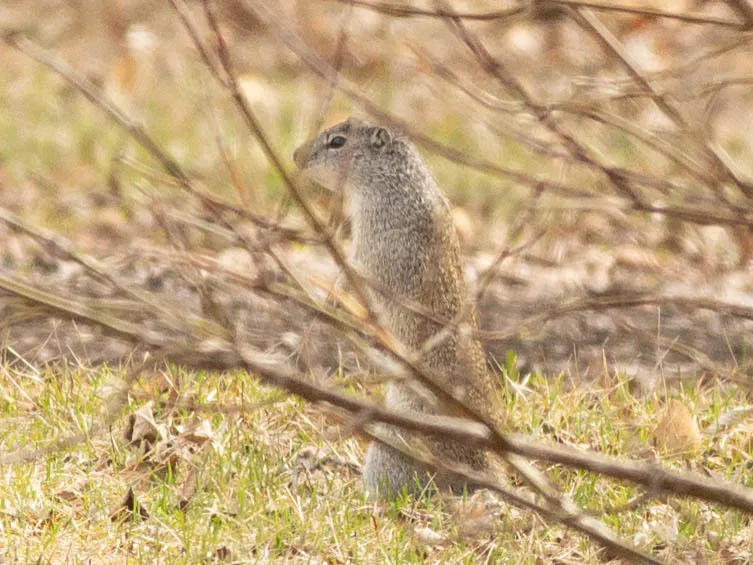

Where Franklin's Ground Squirrel Are Found
Hover over states to see their names. Green regions indicate where franklin's ground squirrel have been reported.
Franklin’s Ground Squirrel Identification Guide
Physical Characteristics
Franklin’s ground squirrel is a medium-sized ground-dwelling rodent measuring 9 to 15 inches in total length, with the bushy tail accounting for roughly half of that measurement. Adults typically weigh between 10 and 25 ounces, with males being slightly larger than females. Their body is stocky and compact, well-suited for their burrowing lifestyle.
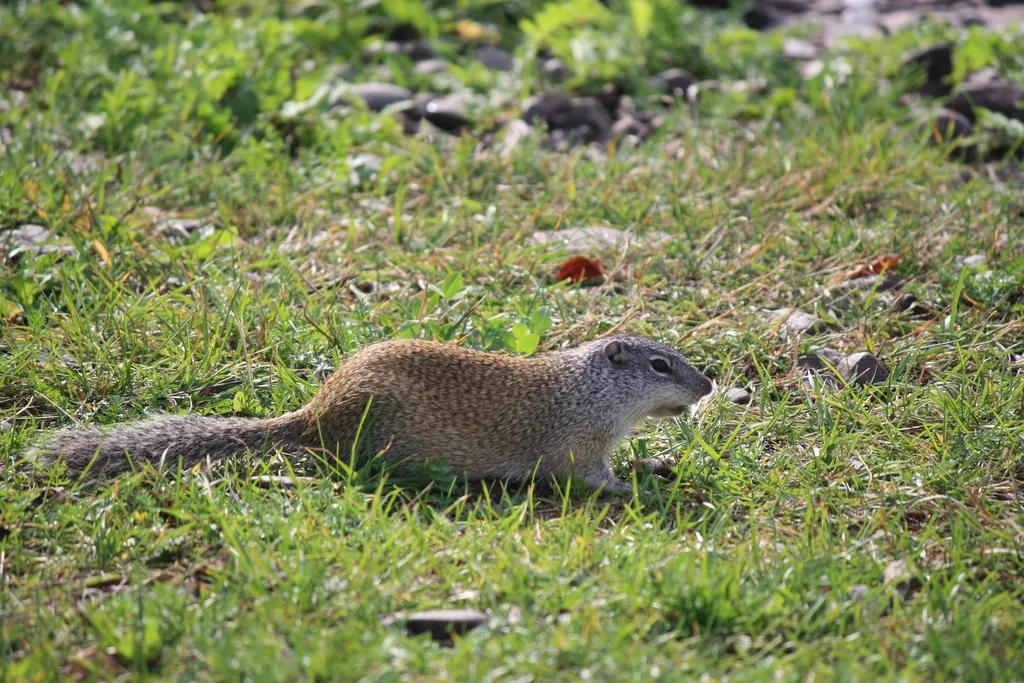
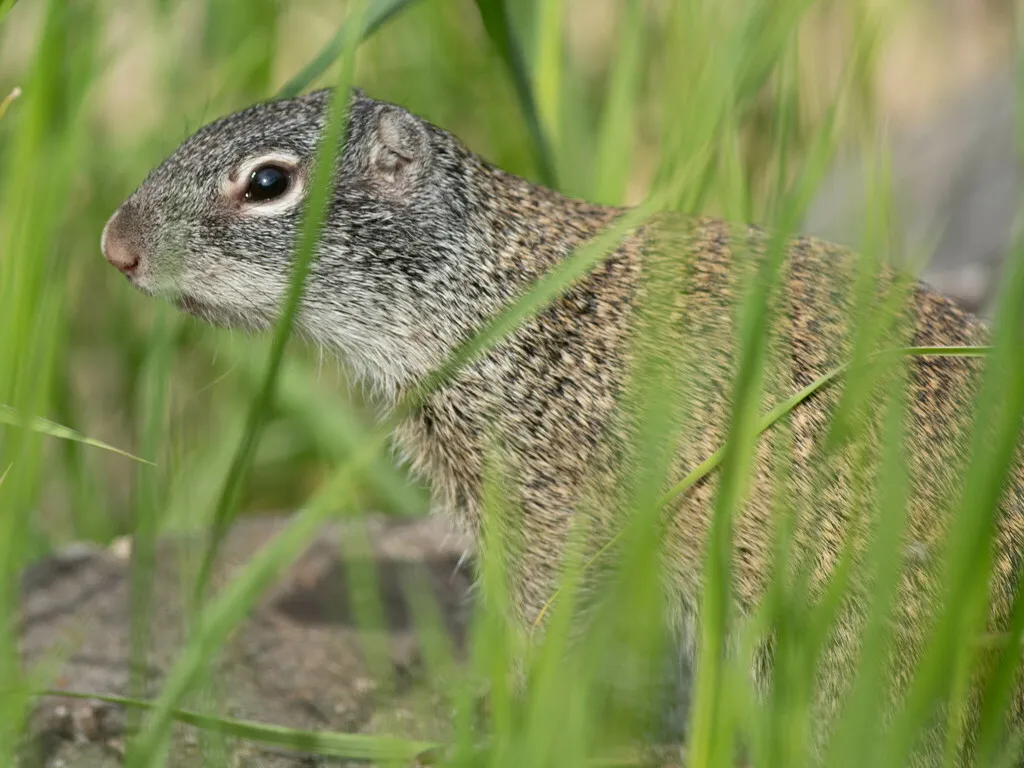
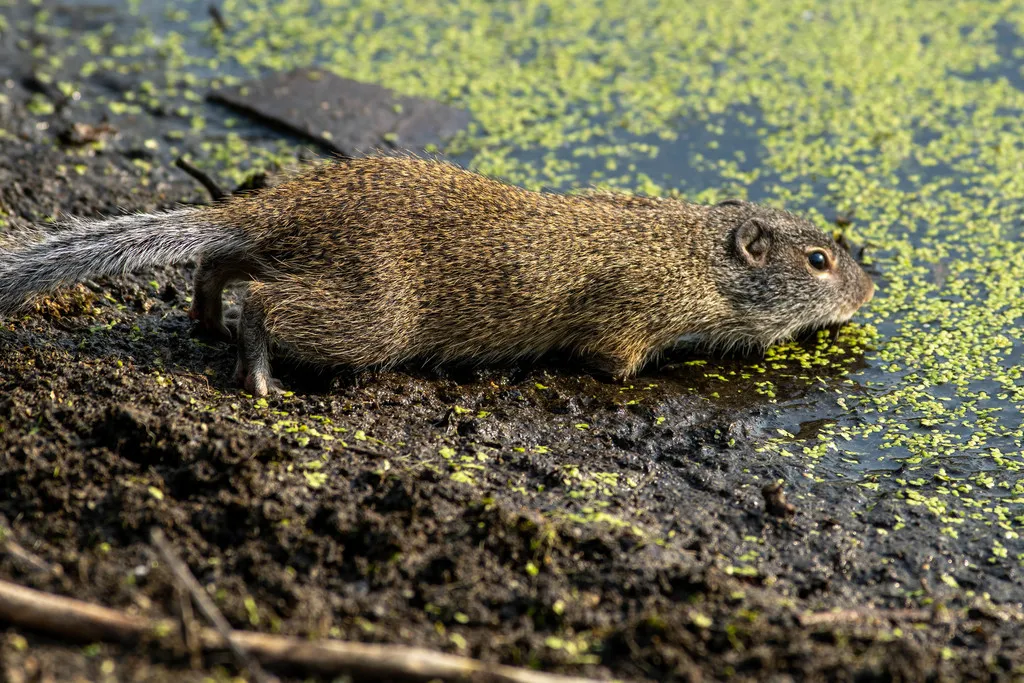
The fur is olive-gray to brownish-gray on the back, with scattered black-tipped hairs that create a speckled or barred appearance, particularly noticeable on the rump. The head is slightly darker than the body, featuring gray hairs tipped with white. The belly is cream to buff colored, and there is often a distinctive yellowish cast to the hindquarters. Unlike tree squirrels, Franklin’s ground squirrel has small, rounded ears that sit close to the head and do not project prominently.
The tail is moderately bushy but shorter and less luxurious than that of tree squirrels. Tail hairs are black and brown with white tips. The front paws have four digits with long, straight claws adapted for digging, while the hind paws have five digits. Like other ground squirrels, they possess internal cheek pouches used to transport food to their burrows.
Distinguishing From Similar Species
Franklin’s ground squirrel can be confused with several other species:
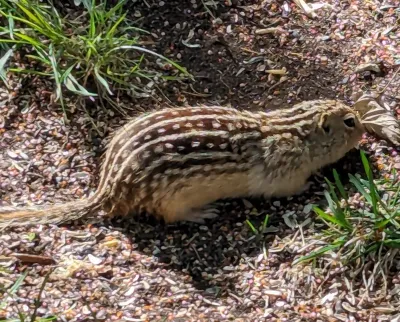
- Thirteen-lined ground squirrel: Much smaller with distinctive alternating light and dark stripes and rows of spots running down the back. Prefers shorter grass habitats.
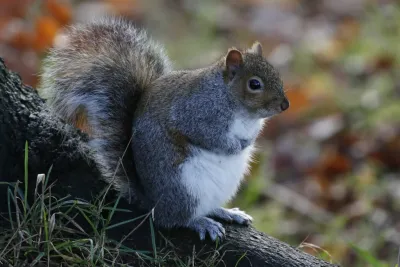
- Eastern gray squirrel: Larger with a much longer, bushier tail and prominent ears. Primarily arboreal rather than ground-dwelling.
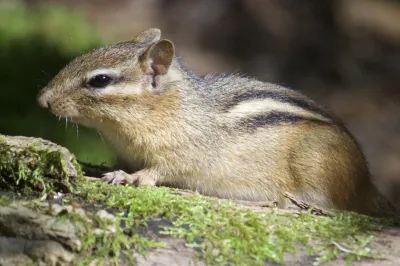
- Eastern chipmunk: Smaller with bold facial stripes and a flat, less bushy tail. Has visible stripes on the sides.
- Woodchuck (groundhog): Much larger and heavier with a shorter tail and no speckling on the fur.
Geographic Range
Franklin’s ground squirrel is endemic to the tallgrass prairie region of central North America. Their range extends from central Alberta, Saskatchewan, and Manitoba in Canada southward through the Dakotas, Minnesota, Wisconsin, Iowa, Illinois, Indiana, Missouri, Kansas, and Nebraska. The species has experienced significant range contraction, particularly in the eastern portions of its historic distribution.
Franklin’s Ground Squirrel Behavior and Biology
Habitat Preferences
Franklin’s ground squirrel occupies a specific ecological niche at the interface between woodlands and open prairies. They prefer tallgrass prairie habitats with vegetation tall enough to provide cover but not so dense that they cannot see over it when standing on their hind legs. This distinguishes them from thirteen-lined ground squirrels, which prefer shorter grass areas.
Ideal habitat includes:
- Tallgrass prairies and prairie remnants
- Brushy woodland edges and forest margins
- Railroad and highway rights-of-way
- Fence rows and hedgerows
- Old fields with mixed grass and shrub cover
- Well-vegetated stream banks and gullies
They typically avoid both dense forest interiors and heavily grazed or mowed areas where cover is insufficient. Their habitat requirements make them particularly vulnerable to agricultural conversion and urban development.
Burrowing Behavior
Franklin’s ground squirrels create extensive underground burrow systems that serve as shelter from predators, extreme weather, and as hibernation chambers. Burrow entrances are typically located under shrubs, brush piles, or along banks and are marked by small mounds of excavated soil.
The burrow system features:
- One or two main entrance holes approximately 3 inches in diameter
- Tunnels extending up to 8 feet deep
- A nest chamber lined with dried grass and leaves located about 2.5 meters below the surface
- Food storage chambers for caching seeds and nuts
- Emergency escape routes
Their movements through tall grass create distinctive runways that can help identify their presence even when the animals themselves are not visible.
Diet and Foraging
Franklin’s ground squirrels are notably omnivorous, with a more varied diet than most ground squirrel species. Their diet includes:
- Plant matter: Seeds, nuts, berries, roots, bulbs, green vegetation, and agricultural crops
- Animal matter: Insects, grasshoppers, caterpillars, bird eggs, nestlings, mice, voles, and carrion
- Fungi: Various mushroom species
This dietary flexibility allows them to exploit a wider range of food sources than strictly herbivorous ground squirrels. They are known to raid ground-nesting bird nests and may occasionally prey on other small mammals, including meadow voles.
Like other ground squirrels, they cache food in their burrows to sustain them during the brief period between emerging from hibernation and when new food sources become available.
Hibernation Cycle
Franklin’s ground squirrel has one of the longest hibernation periods of any North American rodent, spending seven to eight months in dormancy. They typically enter their burrows for hibernation in late September or early October and do not emerge until late April or early May.
During hibernation:
- Body temperature drops to near ambient soil temperature
- Heart rate and breathing slow dramatically
- The animal survives on stored body fat accumulated during summer
- Burrow depth ensures temperatures remain above freezing even during harsh prairie winters
Adult males typically emerge first in spring, followed by adult females, and then juveniles. The brief active season of only four to five months means these squirrels must accomplish breeding, raising young, and accumulating sufficient fat reserves in a compressed timeframe.
Reproduction
Breeding occurs shortly after spring emergence, typically in May. After a gestation period of approximately 28 days, females give birth to litters averaging 7 to 9 young, though litters can range from 4 to 13. Young are born hairless and blind in the underground nest chamber.
Juvenile development is rapid given the short active season:
- Eyes open at about 3 weeks
- Young begin emerging from burrows at 5 to 6 weeks
- Weaning occurs at approximately 6 weeks
- Young disperse and establish their own burrows before hibernation
Franklin’s ground squirrels typically live 4 to 5 years in the wild, though many do not survive their first hibernation period.
Social Behavior
While they may live in loose colonies with overlapping home ranges, Franklin’s ground squirrels are less social than some other ground squirrel species. They are primarily solitary, though multiple individuals may share suitable habitat patches. Home ranges typically span 5 to 15 acres.
Their distinctive alarm call is a clear, musical whistle that is frequently mistaken for a bird call. These whistles alert other squirrels to potential predators and serve as communication within the colony.
Signs of Franklin’s Ground Squirrel Activity
Identifying Franklin’s ground squirrel presence can be challenging due to their secretive nature and the dense vegetation they prefer. Look for:
- Burrow entrances: Holes approximately 3 inches in diameter with small dirt mounds, usually located under shrubs or along banks
- Runways: Paths through tall grass created by repeated travel
- Alarm whistles: Clear, bird-like whistling sounds, especially when disturbed
- Feeding signs: Disturbed vegetation, dug areas, or raided bird nests
- Sightings: Most likely during midday when they are most active
Conservation Status
Franklin’s ground squirrel populations have declined significantly across much of their range due to habitat loss. They are currently listed as:
- Illinois: State Threatened
- Indiana: Species of Special Concern
- Missouri: Species of Conservation Concern
- Wisconsin: Species of Special Concern
The primary threats to Franklin’s ground squirrel include:
- Conversion of tallgrass prairie to agriculture
- Urban and suburban development
- Habitat fragmentation reducing connectivity between populations
- Changes in land management practices
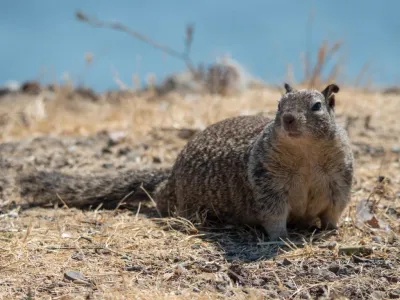
Conservation efforts focus on preserving and restoring tallgrass prairie habitat, maintaining wildlife corridors along roadsides and railroad rights-of-way, and monitoring population trends. Other ground squirrel species that share parts of their range include Richardson’s ground squirrels on the northern Great Plains and California ground squirrels in the western states.
Wildlife Management Approaches
Franklin’s ground squirrels are classified as wildlife in most jurisdictions, and in many states they receive legal protection due to their declining populations. Management approaches focus on habitat modification and exclusion rather than removal:
Prevention and Exclusion
- Install hardware cloth barriers around garden beds
- Use squirrel-proof bird feeders or relocate feeders away from problem areas
- Remove brush piles and dense vegetation near structures if attracting unwanted activity
- Maintain lawn areas to discourage burrowing near buildings
Habitat Modification
- Mow grass shorter in areas where burrows are unwanted
- Remove food attractants such as fallen birdseed or accessible garden vegetables
- Clear dense vegetation from immediate building perimeters
Professional Wildlife Control
For situations where Franklin’s ground squirrels are causing damage, consult with a licensed wildlife control operator who can assess the situation and recommend appropriate, legal management options. In many areas, permits may be required before any control measures can be implemented due to the species’ conservation status.
References
Other Rodents
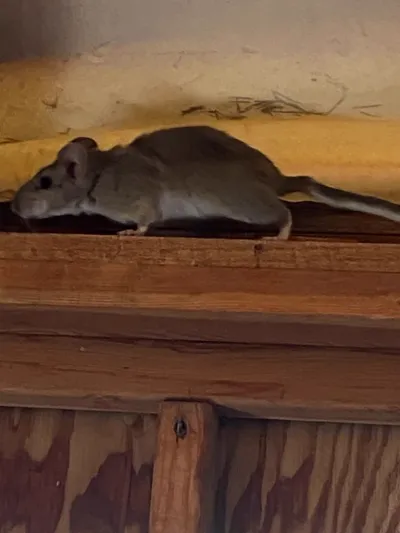
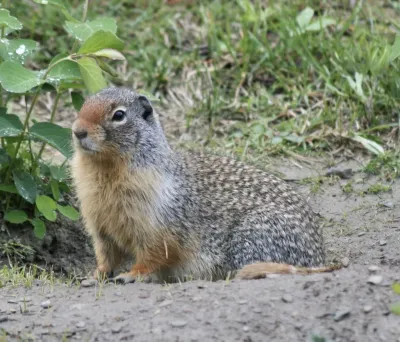
Explore other species in the rodents family
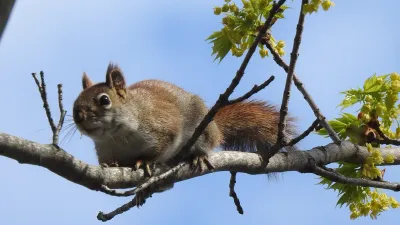
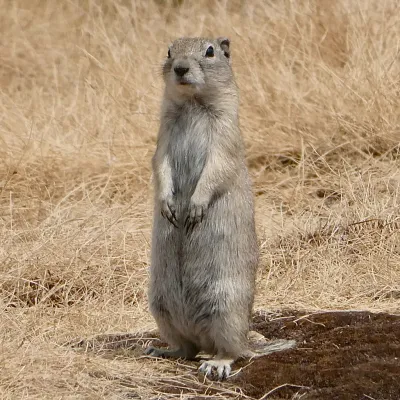
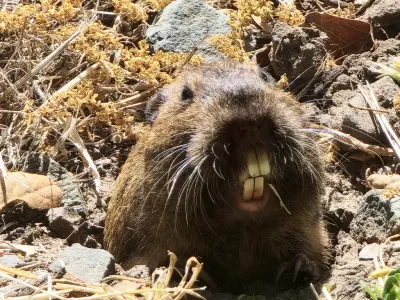
Commonly Confused With
Franklin's Ground Squirrel are often mistaken for these similar pests
Where Franklin's Ground Squirrel Are Found
Hover over states to see their names. Green regions indicate where franklin's ground squirrel have been reported.
Common Questions about Franklin's Ground Squirrel
How do I identify a Franklin's ground squirrel?
+
Franklin's ground squirrels are medium-sized with olive-gray to brownish-gray fur speckled with black, giving a spotted appearance especially on the rump. They have a relatively short bushy tail (about half the length of their body), small rounded ears, and a yellowish cast to the hindquarters. They are larger than thirteen-lined ground squirrels but smaller and less bushy-tailed than eastern gray squirrels.
Where do Franklin's ground squirrels live?
+
Franklin's ground squirrels inhabit tallgrass prairies, forest edges, and the transitional zones between woods and open areas in the central United States and south-central Canada. They are commonly found along roadsides, railroad rights-of-way, fence rows, and brushy areas with taller vegetation than other ground squirrels prefer.
Are Franklin's ground squirrels endangered?
+
Franklin's ground squirrels are listed as threatened or species of concern in several states including Illinois, Indiana, and Missouri. Their populations have declined significantly due to habitat loss from agricultural conversion and prairie destruction. They are particularly vulnerable because they require specific tallgrass prairie habitats.
How long do Franklin's ground squirrels hibernate?
+
Franklin's ground squirrels have one of the longest hibernation periods of any North American ground squirrel, typically hibernating for seven to eight months from late September through April or early May. This extended dormancy helps them survive the harsh winters of their prairie habitat.
What do Franklin's ground squirrels eat?
+
Franklin's ground squirrels are omnivorous and eat a diverse diet including seeds, nuts, berries, green vegetation, insects, bird eggs, small mammals, and carrion. Their varied diet distinguishes them from many other ground squirrels that are primarily herbivorous.
Do Franklin's ground squirrels damage property?
+
Franklin's ground squirrels occasionally become nuisance animals when they burrow near buildings, dig in gardens, or raid bird feeders. However, they are generally secretive and less likely to cause problems than other squirrel species. Their burrows can sometimes affect lawns or agricultural fields.
What sounds do Franklin's ground squirrels make?
+
Franklin's ground squirrels produce remarkably clear, musical whistles that are often mistaken for bird calls. They use these whistles as alarm calls when disturbed and for communication with other squirrels in their colony.

With five years of hands-on experience in the pest control industry, George Schulz is a registered technician with the Virginia Pest Management Association and a proud third-generation professional in a family business that's been protecting homes for over 57 years. He manages and trains a team of service pros while also leading internal research efforts—recently spearheading a deep-dive review of thousands of documents on pest control materials to hand-pick the most kid and pet friendly, most effective solutions tailored specifically for homes in the DC metro area.