Magnolia Leaf-Footed Bug Identification Guide
Leptoglossus fulvicornis
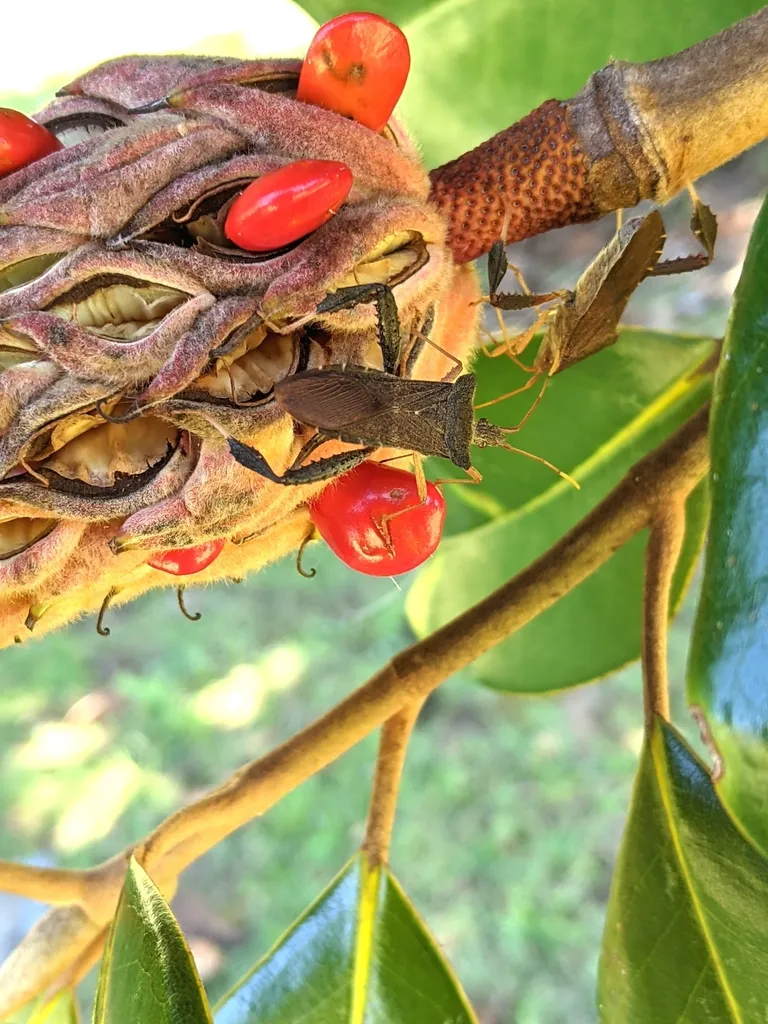
The magnolia leaf-footed bug is a dark brown, plant-feeding insect that specializes in magnolia seed pods and is identified by its flared, tooth-edged pronotal shoulders and leaf-like hind leg expansions.
Taxonomy
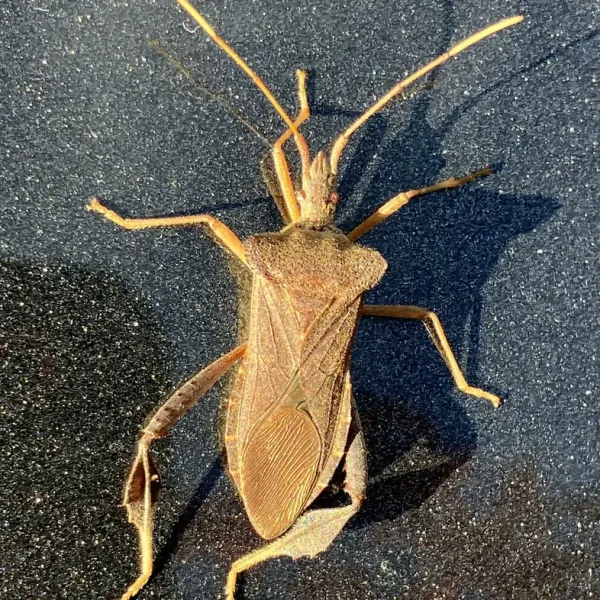
Magnolia Leaf-Footed Bug Coloration
Common color patterns to help identify magnolia leaf-footed bug
Magnolia Leaf-Footed Bug
Seasonal Activity
When magnolia leaf-footed bug are most active throughout the year
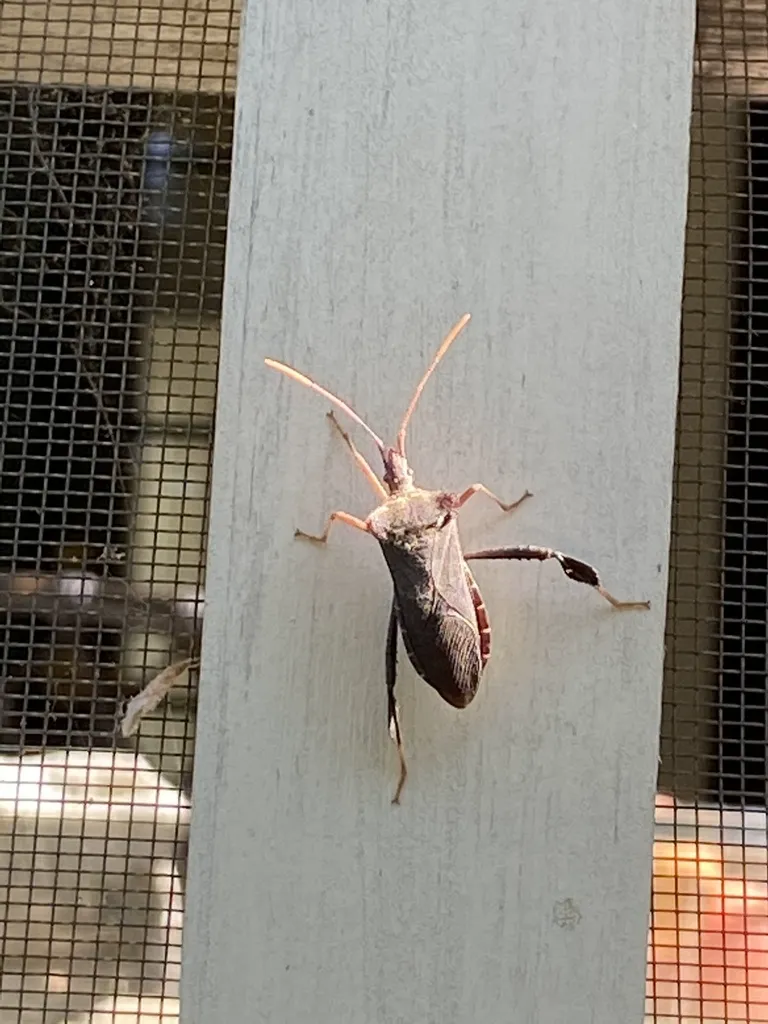
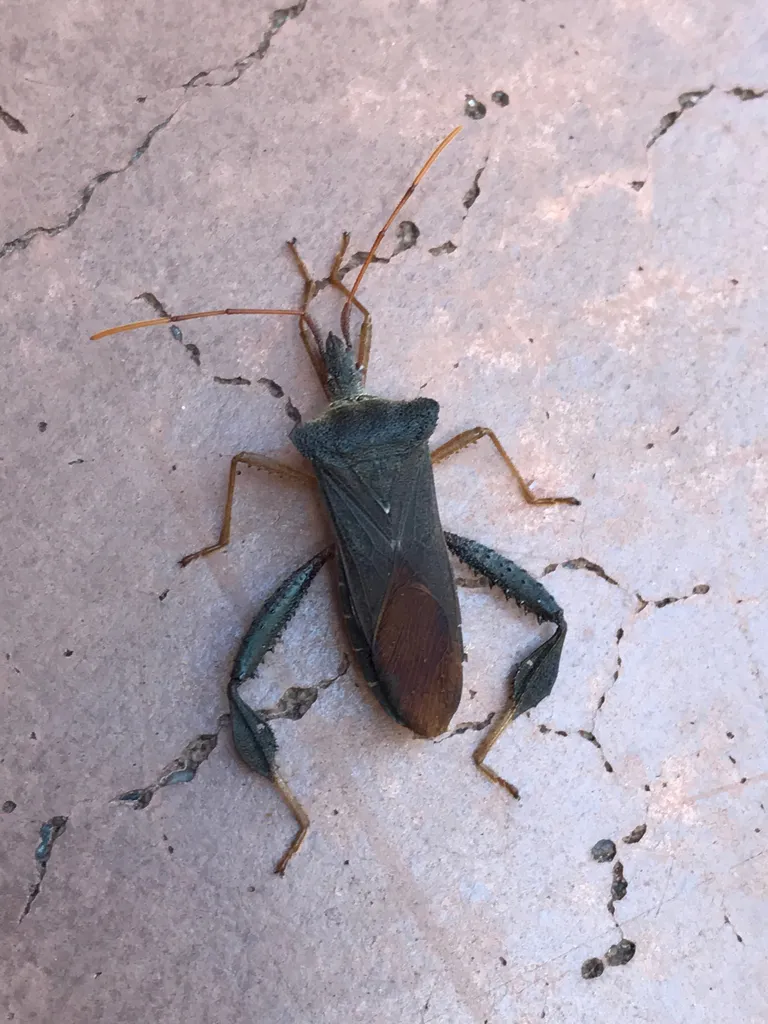
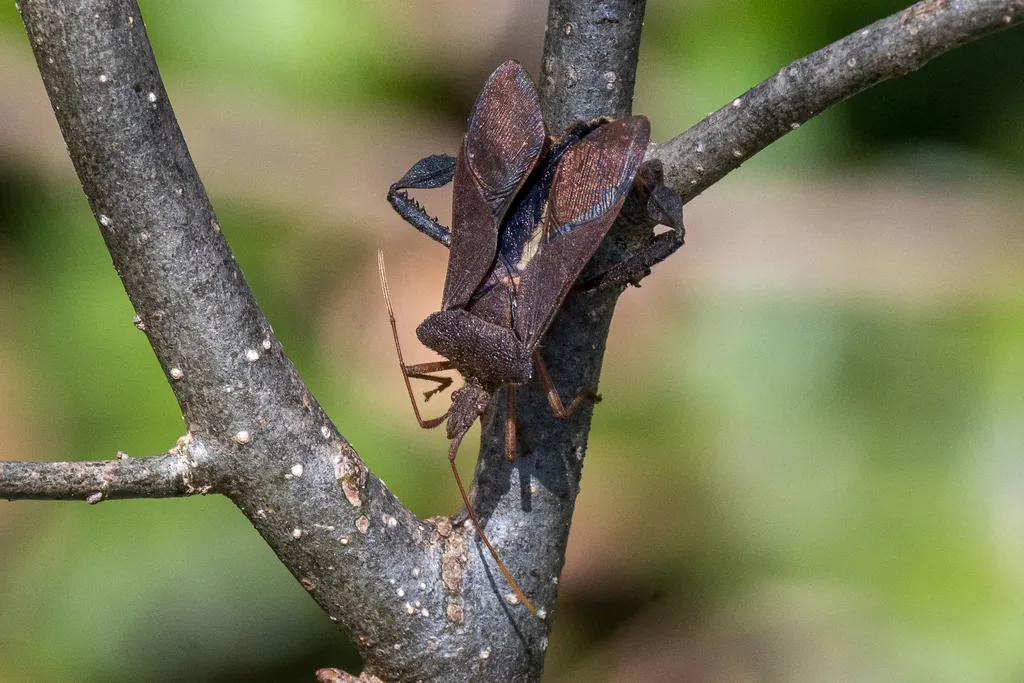

Where Magnolia Leaf-Footed Bug Are Found
Hover over states to see their names. Green regions indicate where magnolia leaf-footed bug have been reported.
Magnolia Leaf-Footed Bug Identification Guide
Physical Characteristics
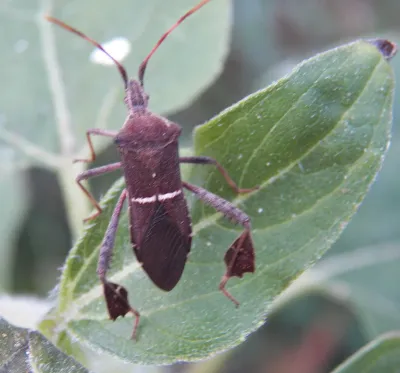
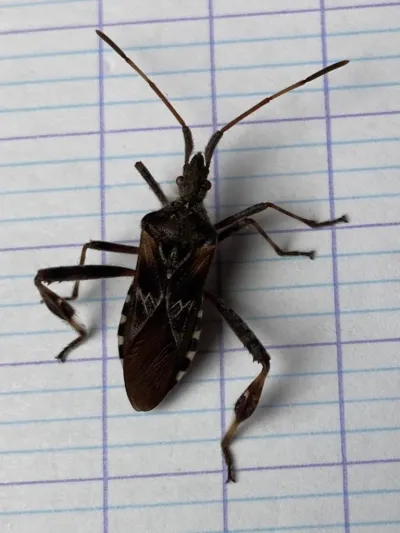
The magnolia leaf-footed bug (Leptoglossus fulvicornis) is a medium-sized true bug measuring roughly 5/8 to 3/4 of an inch (15 to 20 mm) in length. Its body is elongated and narrow with a uniformly dark brown coloration. Unlike many of its relatives in the leaf-footed bug family, this species lacks any white or cream-colored bands across its wings. That plain, unmarked appearance is one of the fastest ways to separate it from similar species.
Two features stand out on close inspection. First, the pronotum (the plate just behind the head) has strongly flared, outward-pointing margins with small tooth-like edges along the shoulders. This gives the bug a slightly angular, “broad-shouldered” look. Second, the hind legs carry the flat, leaf-shaped tibial expansions that give all leaf-footed bugs their common name. On this species, the leaf-like flaps have relatively shallow scalloping compared to some close relatives.
Nymphs are smaller and wingless. Early-stage nymphs can be reddish-orange and lack the expanded hind leg features of adults. As they mature through five growth stages, they darken in color and the leg flaps and wing pads gradually develop. Eggs are small, barrel-shaped, and golden brown, typically laid in neat rows along leaf veins or stems.
Common Look-Alikes
Magnolia leaf-footed bugs are often confused with several related insects:
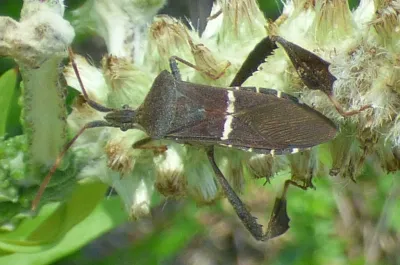
- Eastern leaf-footed bugs (Leptoglossus phyllopus) have a bold white zigzag band across their forewings. They also feed on a much wider range of plants rather than specializing on magnolia.
- Western conifer seed bugs (Leptoglossus occidentalis) carry a pale transverse stripe on their wings and are typically found on pine and spruce cones rather than magnolia pods.
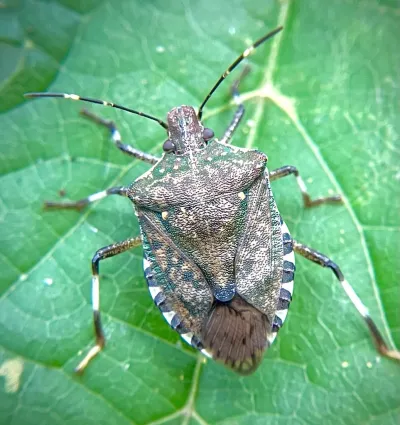
- Brown marmorated stink bugs (Halyomorpha halys) are similar in size and color, but they have a broad shield shape and completely lack the leaf-like hind leg expansions. Their antennae also show alternating light and dark bands.
- Leaf-footed bugs in general share the family-wide trait of expanded hind tibiae, but the magnolia species is distinguished by its plain brown wings and toothed pronotal shoulders.
Magnolia Leaf-Footed Bug Behavior and Biology
The magnolia leaf-footed bug is a host specialist. While many of its Leptoglossus relatives feed on dozens of different fruits, vegetables, and seeds, this species feeds almost exclusively on magnolia trees (Magnolia spp.), particularly the developing seed pods and fruit of southern magnolia (Magnolia grandiflora) and related species. Adults and nymphs use their needle-like mouthparts to pierce the seed pod tissue and extract plant juices. This feeding can damage developing seeds and leave cosmetic marks on the pods, but it generally does not threaten the tree’s health.
Life Cycle
Females lay rows of golden-brown, barrel-shaped eggs on the undersides of magnolia leaves, usually along the midrib. The eggs hatch in about five to seven days. Nymphs cluster on the magnolia fruit and pass through five growth stages over roughly four to five weeks before reaching adulthood. In cooler parts of their range, including the Mid-Atlantic, these bugs likely produce one generation per year. In warmer southern states such as Florida, activity may extend over a longer season, and it is possible for a second generation to develop.
Adults spend the winter in sheltered spots such as leaf litter beneath magnolia trees, under loose bark, or in other protected spaces. When temperatures warm in spring, they emerge and fly to nearby magnolia trees to feed and mate. Peak activity runs from July through September, when adults and late-stage nymphs are most abundant on fruiting magnolias. By October and November, adults begin seeking overwintering sites again.
Habitat and Distribution
Magnolia leaf-footed bugs are found across the eastern and southeastern United States wherever magnolia trees grow. Their documented range extends from New York and southern Ontario south through Florida and west to Missouri and Texas. They are most common in the Southeast, where southern magnolia is widely planted as an ornamental and landscape tree. Records from Florida, Georgia, South Carolina, Virginia, Ohio, and Pennsylvania all confirm their presence. They have not been reliably documented in Mexico.
Because they are tied to magnolia trees, these bugs are most often encountered in residential landscapes, parks, and woodland edges where ornamental magnolias are planted. Homeowners with large magnolia trees in their yard are the most likely to notice them, especially during late summer when populations peak and during fall when adults sometimes wander onto or into buildings.
Treatment Methods for Magnolia Leaf-Footed Bugs
Magnolia leaf-footed bugs are considered a nuisance pest rather than a serious threat to tree health. Management typically focuses on reducing their numbers through practical, low-impact methods rather than aggressive chemical intervention.
-
Sanitation and habitat cleanup. Regularly rake and remove fallen magnolia seed pods, fruit debris, and leaf litter from beneath the tree. These materials provide both food for nymphs and shelter for overwintering adults. Removing them cuts down on the number of bugs that survive from season to season.
-
Physical removal. Hand-picking adults and nymphs off accessible branches and dropping them into a bucket of soapy water is effective for small populations. For bugs that have made their way onto or into your home, vacuuming is the easiest removal method. Avoid crushing them, as they can release a mild, unpleasant odor.
-
Exclusion. To prevent fall entry into your home, seal cracks and gaps around windows, doors, utility lines, and siding. Replace worn weatherstripping and make sure window screens are in good repair. These measures also help keep out other overwintering pests like stink bugs and boxelder bugs.
-
Monitoring. Inspect magnolia trees during the growing season for egg rows on leaves, clusters of orange nymphs on seed pods, and adults resting on branches. Early detection makes it easier to address populations before they build up.
-
Chemical treatment. When populations are heavy enough to warrant it, insecticidal soaps or pyrethroid-based products labeled for leaf-footed bugs can help. Treatments are most effective when targeted at younger nymphs, which are more vulnerable than mobile adults. Always follow the product label for application rates, timing, and any restrictions on use around ornamental trees.
References
Other Plant Bugs
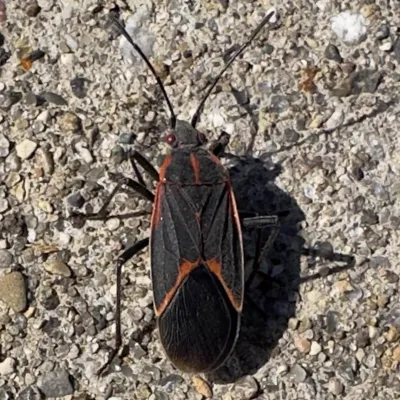
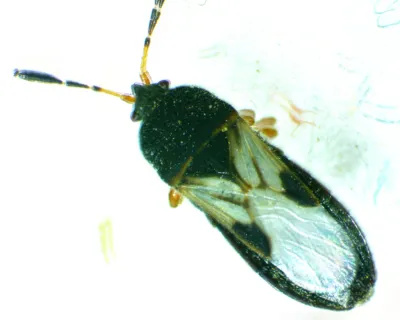
Explore other species in the plant bugs family
Commonly Confused With
Magnolia Leaf-Footed Bug are often mistaken for these similar pests
Where Magnolia Leaf-Footed Bug Are Found
Hover over states to see their names. Green regions indicate where magnolia leaf-footed bug have been reported.
Common Questions about Magnolia Leaf-Footed Bug
Are magnolia leaf-footed bugs harmful to people?
+
No, magnolia leaf-footed bugs do not bite, sting, or pose any health risk to people or pets. They feed only on plant material, mainly magnolia seed pods. If handled, they may release a mild odor similar to stink bugs, but they are otherwise harmless.
Do magnolia leaf-footed bugs damage magnolia trees?
+
They feed on magnolia seed pods and developing fruit by piercing the tissue and sucking out juices. While this can affect seed development and cause cosmetic damage to the pods, it does not generally harm the tree's overall health or vigor.
Why are magnolia leaf-footed bugs on my house?
+
In the fall, adults look for sheltered places to spend the winter. They may gather on the sunny sides of buildings near magnolia trees and occasionally find their way indoors through gaps around windows, doors, or siding. They do not breed or feed indoors.
How can I tell a magnolia leaf-footed bug from a stink bug?
+
The main difference is body shape. Magnolia leaf-footed bugs have an elongated, narrow body with flat, leaf-like flaps on their hind legs. Stink bugs have a broad, shield-shaped body and lack those distinctive leg expansions. Both are brown and roughly the same size, but the hind leg shape is the quickest way to tell them apart.
How do I get rid of magnolia leaf-footed bugs?
+
Start by cleaning up fallen magnolia seed pods and leaf litter beneath the tree, since these provide food and overwintering shelter. Hand-pick bugs and drop them into a bucket of soapy water. Seal cracks around windows and doors to keep them out of your home. For heavy infestations on valued ornamental trees, insecticidal soaps or labeled insecticides targeting nymphs can help reduce numbers.
What is the difference between a magnolia leaf-footed bug and an eastern leaf-footed bug?
+
The magnolia leaf-footed bug (Leptoglossus fulvicornis) is uniformly dark brown with no white markings on its wings. The eastern leaf-footed bug (Leptoglossus phyllopus) has a distinctive white or cream-colored band running across its forewings. The magnolia species also has more pronounced, tooth-edged shoulder margins on its pronotum and is a magnolia specialist, while the eastern leaf-footed bug feeds on a wide range of fruits and vegetables.

With five years of hands-on experience in the pest control industry, George Schulz is a registered technician with the Virginia Pest Management Association and a proud third-generation professional in a family business that's been protecting homes for over 57 years. He manages and trains a team of service pros while also leading internal research efforts—recently spearheading a deep-dive review of thousands of documents on pest control materials to hand-pick the most kid and pet friendly, most effective solutions tailored specifically for homes in the DC metro area.