Saddleback Caterpillars Identification Guide
Acharia stimulea
Saddleback caterpillars are stinging slug caterpillars with a distinctive green saddle-shaped marking on their backs. Their venomous spines deliver a painful sting that can cause welts, swelling, and allergic reactions in some people.
Taxonomy
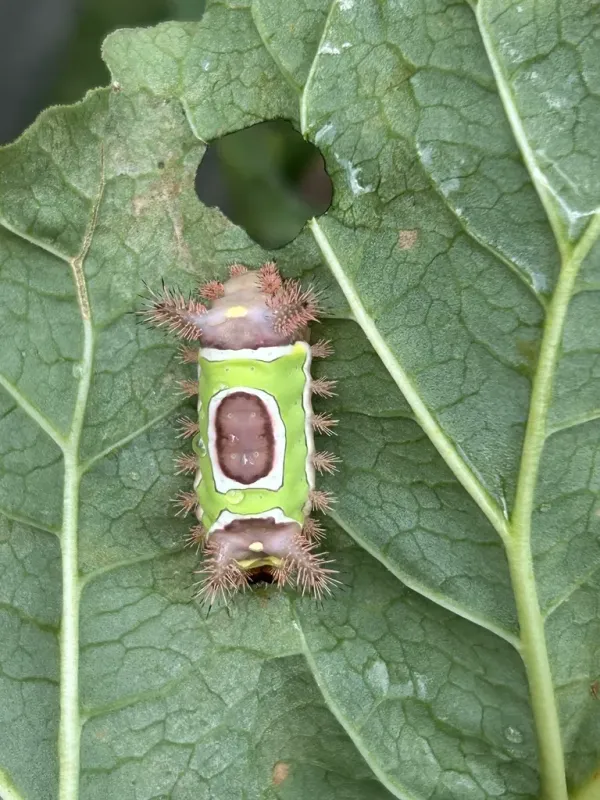
Saddleback Caterpillars Coloration
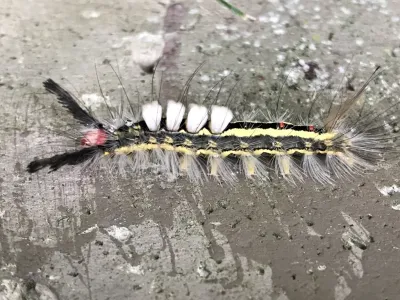
Common color patterns to help identify saddleback caterpillars
Saddleback Caterpillars
Seasonal Activity
When saddleback caterpillars are most active throughout the year

Where Saddleback Caterpillars Are Found
Hover over states to see their names. Green regions indicate where saddleback caterpillars have been reported.
Saddleback Caterpillar Identification Guide
Saddleback caterpillars are one of the easiest stinging caterpillars to spot in eastern North America. They get their name from the saddle-shaped marking on their backs. These moth larvae sting when touched. Learning to identify them can help you avoid painful contact while working in your yard or garden.
Physical Characteristics
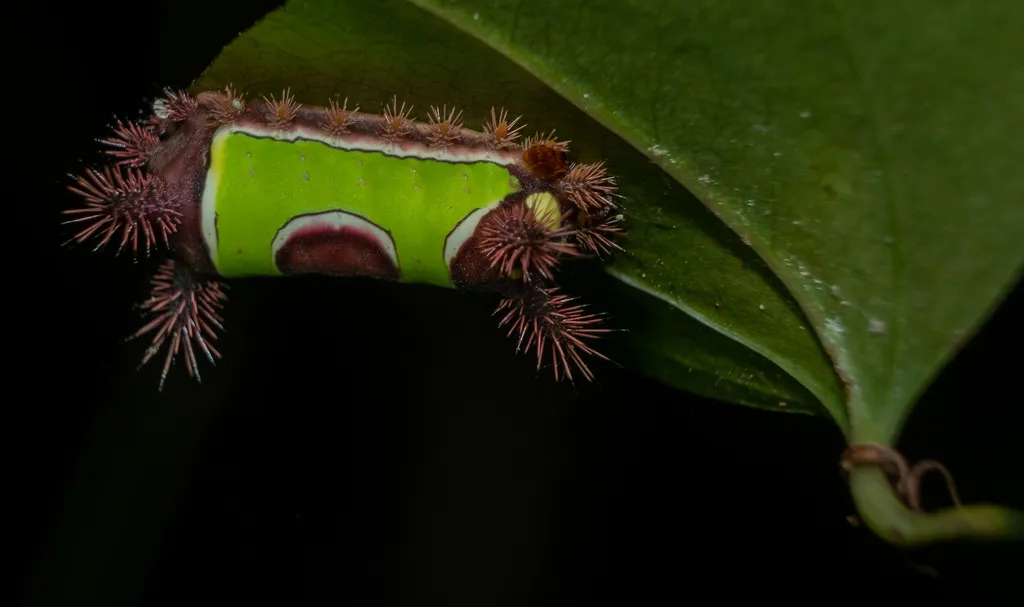
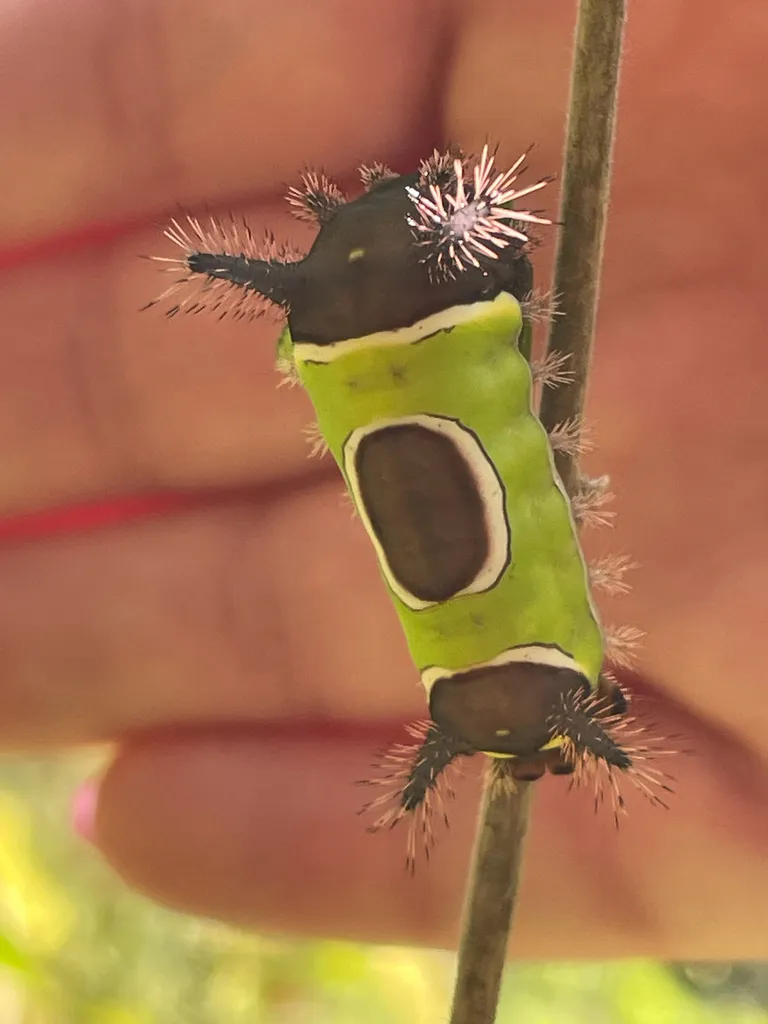
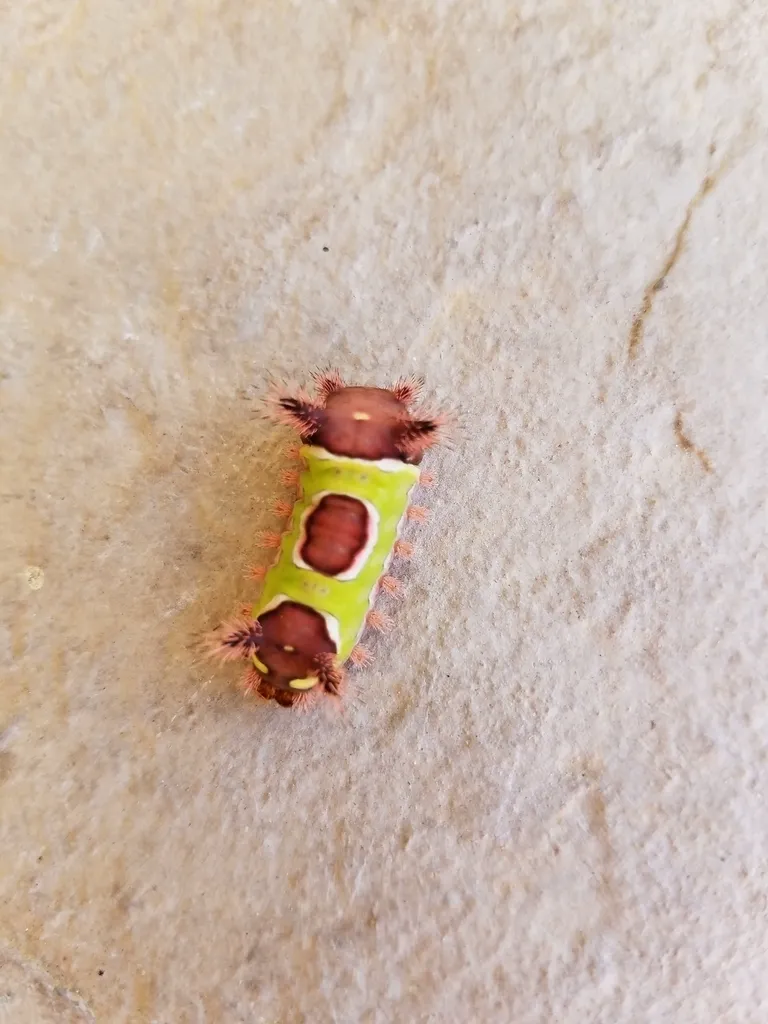
The saddleback caterpillar has a flat, slug-like body about 1 inch long. Its most notable feature is a bright green patch covering the middle of its back. In the center of that green area sits a brown or purple oval spot that looks like a saddle. The front and rear ends of the body are dark brown.
Fleshy, horn-like bumps stick out from both ends of the body. These horns, plus smaller bumps along the sides, are covered in stinging spines. The spines are hollow and linked to venom glands at their base. Even a light touch can break the spines and push venom into the skin.
The underside of the caterpillar is flat. It moves with a smooth gliding motion, much like a slug. It does not have the gripping legs that most caterpillars have. Instead, it uses a flat, sucker-like belly to crawl along leaves and stems.
Adult Moth
Adult saddleback caterpillar moths (Acharia stimulea) are small, thick-bodied moths with dark brown wings. They have a wingspan of about 1 to 1.5 inches. The wings may show a few small white spots near the tips. Adults fly at night and are drawn to lights. The adult moths do not sting.
Similar Stinging Caterpillars
A few other stinging caterpillars live in the same areas as the saddleback:
-
Io moth caterpillar (Automeris io) is green with red and white side stripes and clusters of branching green spines. Its sting is just as painful.
-
Browntail moth caterpillar (Euproctis chrysorrhoea) has irritating hairs that cause rashes and breathing problems. It looks quite different from the saddleback.
-
Puss caterpillar (Megalopyge opercularis) is covered in soft-looking fur that hides venomous spines. Many consider it the most painful stinging caterpillar in North America.
-
Stinging rose caterpillar (Parasa indetermina) belongs to the same slug caterpillar family (Limacodidae). It has colorful spiny bumps but lacks the saddle marking.
Saddleback Caterpillar Behavior and Biology
Habitat and Host Plants
Saddleback caterpillars eat the leaves of many trees, shrubs, and garden plants. Common hosts include oak, maple, cherry, plum, elm, dogwood, linden, and aster. They also feed on corn, blueberry, and many yard shrubs.
You are most likely to find them on the undersides of leaves in gardens, orchards, and wooded areas. They tend to feed alone rather than in groups.
Life Cycle
These moths produce one generation per year in most areas. Adult moths come out in early to midsummer and lay clusters of 30 to 50 eggs on the undersides of host plant leaves. The eggs are flat and clear, and they overlap like fish scales.
After hatching, the larvae feed and grow through late summer and early fall. Young caterpillars start out mostly clear and gain their saddle marking as they grow. Full-grown caterpillars spin a tough, papery brown cocoon. These cocoons are often attached to a twig or tucked into leaf litter. The pupae spend the winter inside and come out as adult moths the next summer.
Stinging Mechanism
The saddleback caterpillar has one of the strongest sting defenses of any caterpillar in North America. The hollow spines work like tiny needles. When they poke the skin, the tips snap off and release venom. The venom contains proteins and other compounds that cause quick pain, swelling, and itching.
Broken spine tips can stay stuck in the skin and keep causing pain after the caterpillar is gone. That is why using tape to pull out spine pieces is an important first step after a sting.
Seasonal Activity
Saddleback caterpillars show up most often from July through October. Activity peaks in August and September. This is when the larvae are at their largest and easiest to spot on garden plants and shade trees. By late fall, they have formed cocoons and are no longer a sting risk.
Treatment Methods for Saddleback Caterpillars
Saddleback caterpillars rarely show up in large enough numbers to cause major plant damage. The main concern is their painful sting, especially in yards where children and pets spend time.
Prevention and Avoidance
The best approach is awareness and caution:
- Wear gloves when pruning shrubs, picking garden produce, or handling firewood during late summer and fall.
- Check leaves before grabbing branches or reaching into thick plants.
- Teach children to look but not touch colorful or spiny caterpillars.
- Shake out clothing and towels left outside, since caterpillars sometimes crawl onto fabric.
Physical Removal
When you find saddleback caterpillars on plants near walkways or play areas, remove them with thick leather gloves or tongs. Drop them into a bucket of soapy water. Never touch them with bare hands. Even dead caterpillars can still sting.
Chemical and Biological Controls
When several caterpillars are present on valued plants, Bacillus thuringiensis var. kurstaki (Btk) is an effective treatment option. This bacterium targets caterpillar digestive systems and works best on young, actively feeding larvae.
Spinosad is another option that controls caterpillars on contact or when eaten. Both Btk and spinosad are sold at most garden centers.
Population Control
Parasitic wasps and tachinid flies lay eggs on or inside saddleback caterpillars, which helps limit their numbers. Birds such as cuckoos also feed on stinging caterpillars. These factors usually keep populations low enough that large outbreaks are rare.
Treating a Sting
This information is for general awareness only. Always consult a doctor or medical professional for advice about treating stings and allergic reactions.
If someone is stung by a saddleback caterpillar:
- Remove spines by pressing tape firmly against the sting site and peeling it away. Repeat several times.
- Wash the area with soap and water.
- Apply ice wrapped in a cloth to reduce swelling and pain.
- Use antihistamines or hydrocortisone cream to manage itching and swelling.
- Seek medical attention if symptoms get worse, spread past the sting site, or include trouble breathing, nausea, or dizziness. People with known venom allergies should carry an epinephrine auto-injector and get help right away.
References
Other Moths
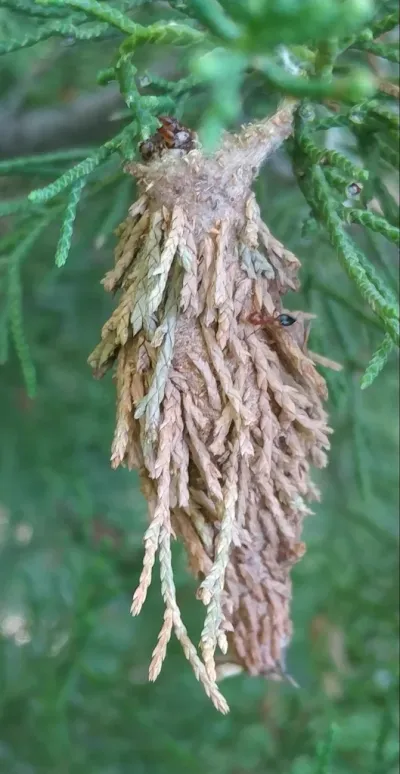
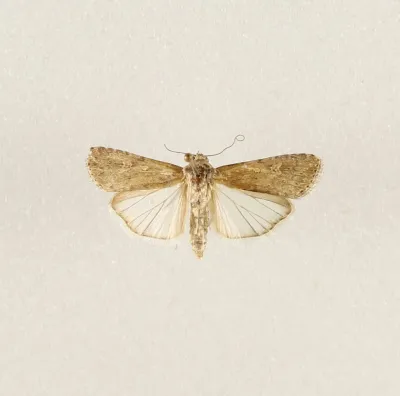
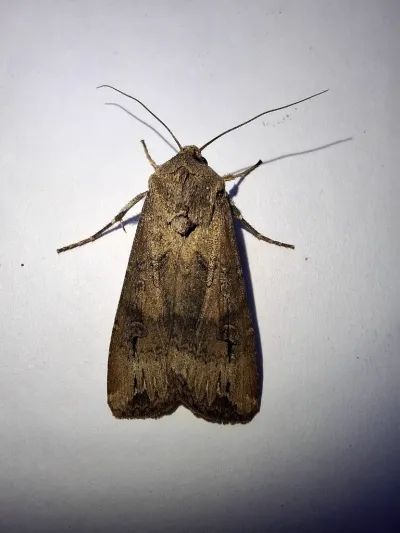
Explore other species in the moths family
Commonly Confused With
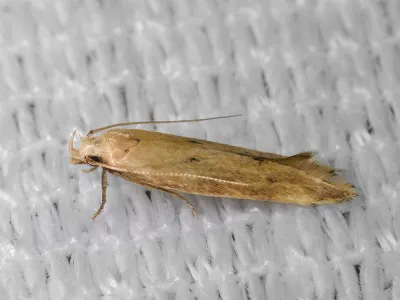
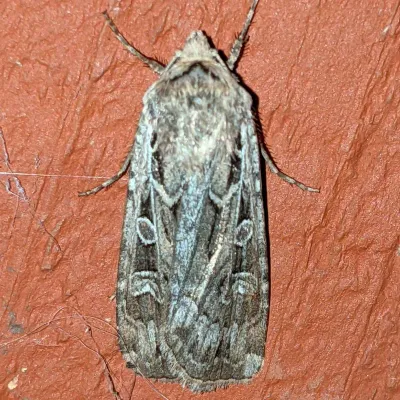
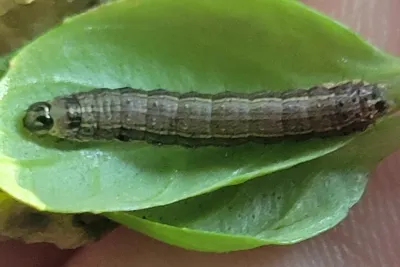
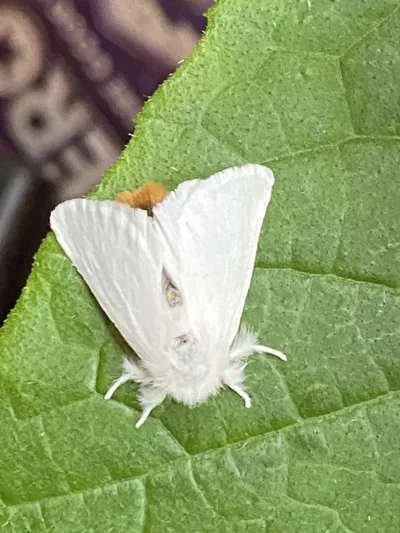
Saddleback Caterpillars are often mistaken for these similar pests
Where Saddleback Caterpillars Are Found
Hover over states to see their names. Green regions indicate where saddleback caterpillars have been reported.
Common Questions about Saddleback Caterpillars
Do saddleback caterpillars sting?
+
Yes, saddleback caterpillars have venomous spines on fleshy projections at both ends of their body and along their sides. Contact with these spines causes an immediate, painful sting similar to a bee sting. The pain usually lasts one to several hours. Some people develop welts, redness, and swelling at the sting site.
What does a saddleback caterpillar look like?
+
Saddleback caterpillars are about 1 inch long with a bright green body and a distinctive brown or purple oval spot in the center of their back that looks like a saddle. They have fleshy horn-like projections covered in stinging spines at the front and rear ends. The overall shape is slug-like and flattened.
Are saddleback caterpillars dangerous?
+
For most people, a saddleback caterpillar sting causes temporary pain, redness, and swelling that goes away within a few hours. However, some individuals may have more severe allergic reactions including nausea, swelling beyond the sting site, or difficulty breathing. People with known insect venom allergies should seek medical attention if stung.
What should I do if I get stung by a saddleback caterpillar?
+
Remove any broken spines from the skin using adhesive tape pressed against the sting site and pulled away. Wash the area with soap and water, apply ice to reduce swelling, and take an over-the-counter antihistamine or apply hydrocortisone cream to manage itching. Seek medical attention if you experience severe symptoms like difficulty breathing or widespread swelling.
Where do saddleback caterpillars live?
+
Saddleback caterpillars are found throughout the eastern United States. They feed on a wide range of trees and shrubs including oaks, maples, cherries, plums, and corn. You may find them on garden plants, ornamental shrubs, and shade trees from late summer through fall.
What do saddleback caterpillars turn into?
+
Saddleback caterpillars pupate in a tough, brown cocoon and emerge as saddleback caterpillar moths (Acharia stimulea). The adult moth is small, dark brown, and stout-bodied with a wingspan of about 1 to 1.5 inches. Adult moths do not sting and are rarely noticed since they are active at night.
How do I get rid of saddleback caterpillars in my yard?
+
For small numbers, carefully remove caterpillars wearing thick gloves and drop them into soapy water. Avoid touching them with bare skin. For larger infestations, Bacillus thuringiensis var. kurstaki (Btk) is an effective treatment that targets caterpillars. Keeping outdoor lights off at night can reduce the number of adult moths attracted to your property.

With five years of hands-on experience in the pest control industry, George Schulz is a registered technician with the Virginia Pest Management Association and a proud third-generation professional in a family business that's been protecting homes for over 57 years. He manages and trains a team of service pros while also leading internal research efforts—recently spearheading a deep-dive review of thousands of documents on pest control materials to hand-pick the most kid and pet friendly, most effective solutions tailored specifically for homes in the DC metro area.