Puss Caterpillars Identification Guide
Megalopyge opercularis
Puss caterpillars are among the most venomous caterpillars in North America. Covered in soft, hair-like setae that conceal sharp, hollow spines, even brief contact with this caterpillar delivers an intensely painful sting that can cause welts, swelling, and in rare cases systemic reactions.
Taxonomy
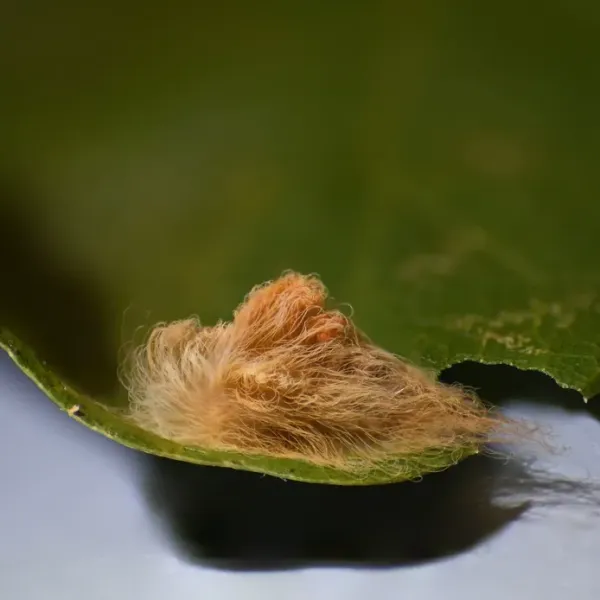
Puss Caterpillars Coloration
Common color patterns to help identify puss caterpillars
Puss Caterpillars
Seasonal Activity
When puss caterpillars are most active throughout the year
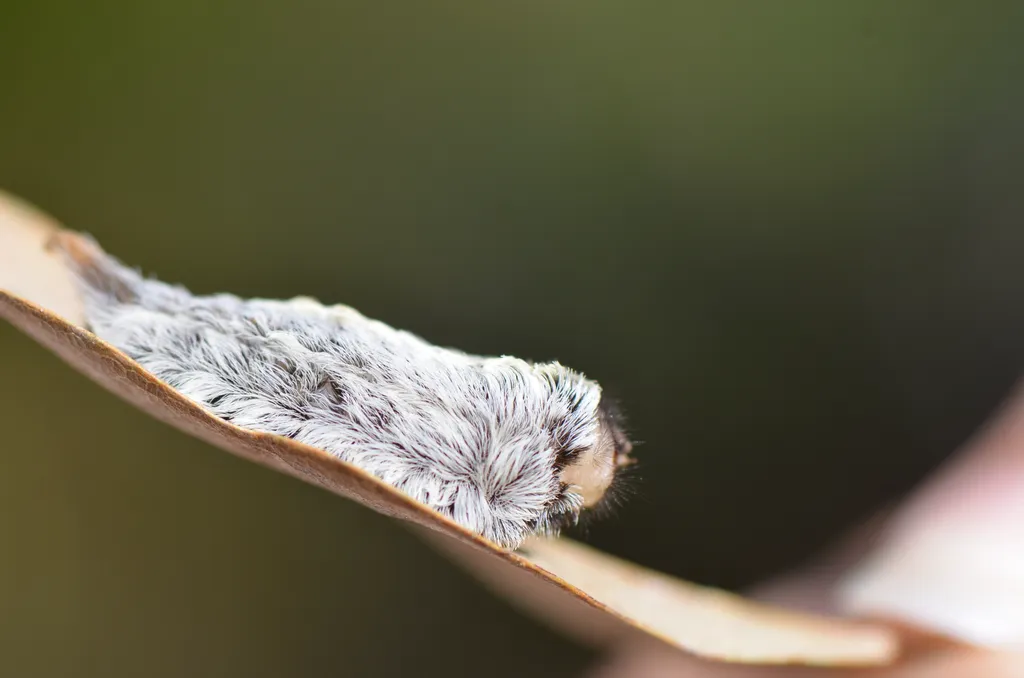
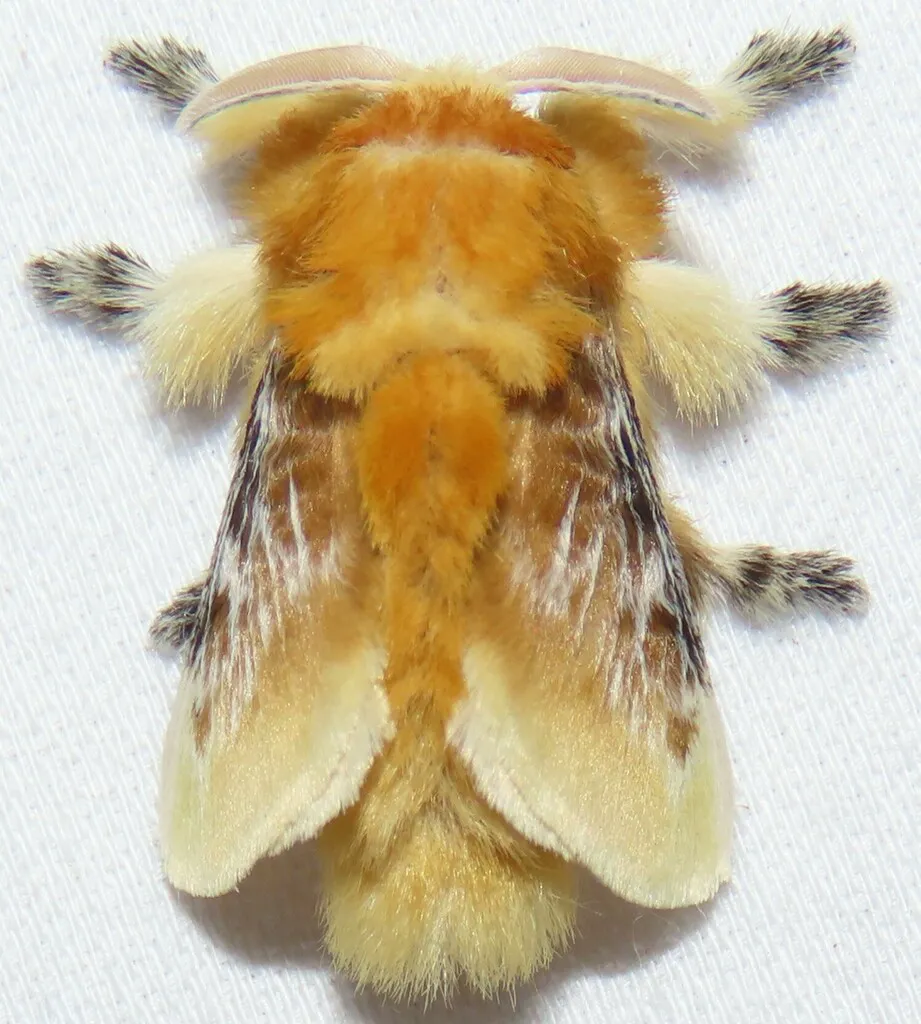
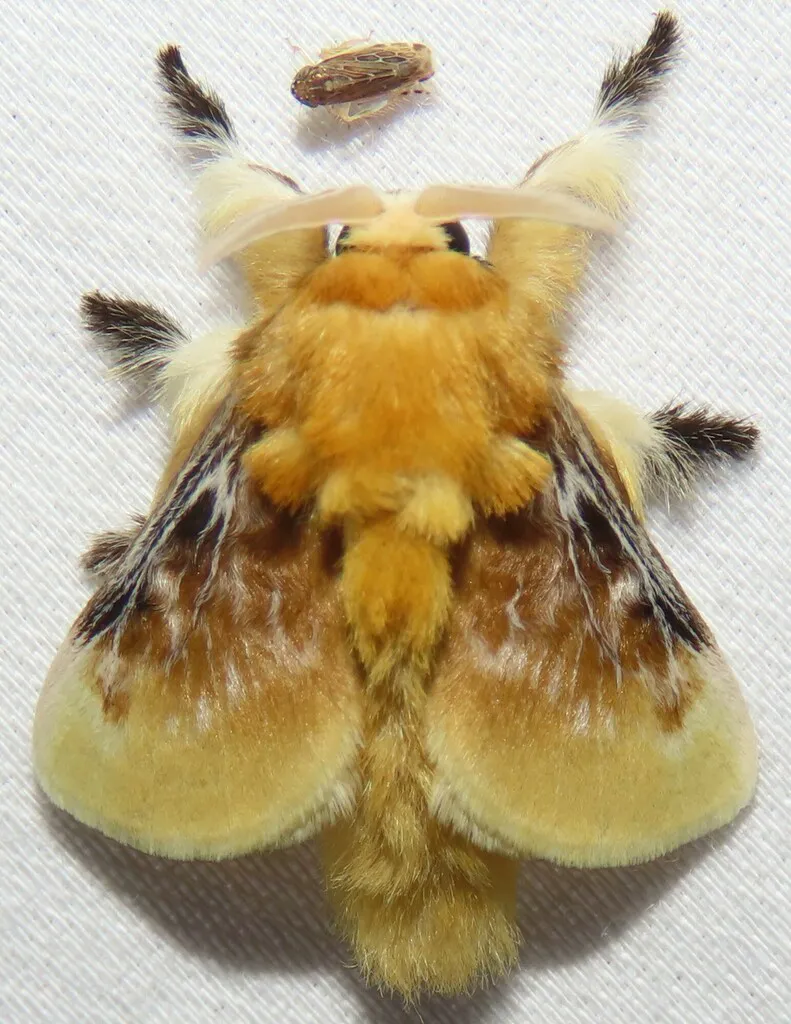

Where Puss Caterpillars Are Found
Hover over states to see their names. Green regions indicate where puss caterpillars have been reported.
Puss Caterpillar Identification Guide
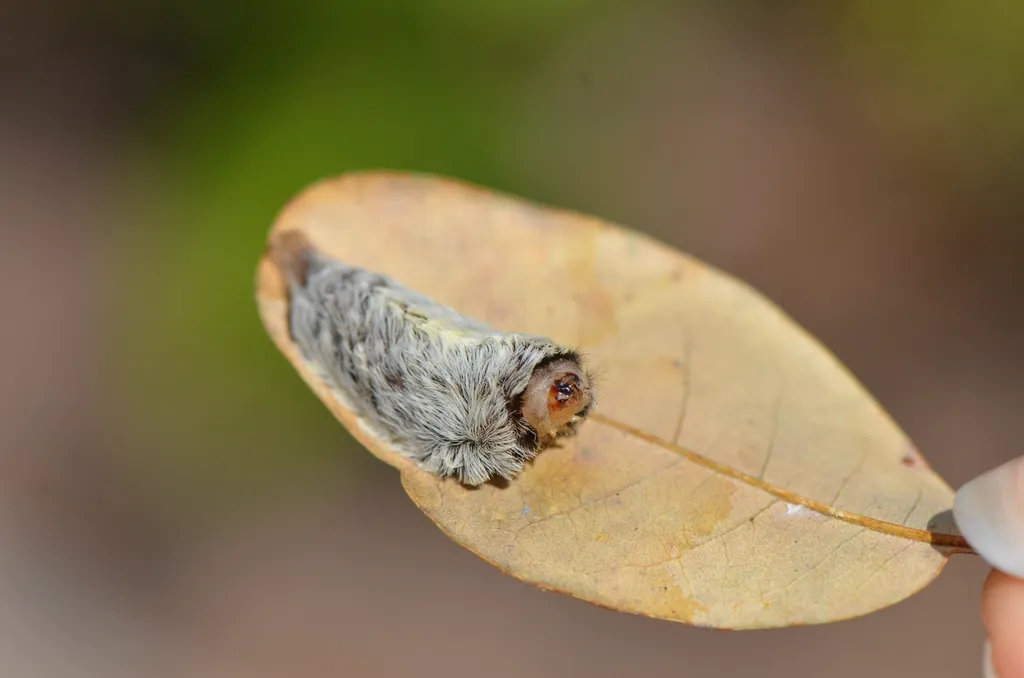
The puss caterpillar (Megalopyge opercularis) is the most venomous caterpillar in North America. It is also called the asp caterpillar, tree asp, or southern flannel moth caterpillar. Its common name comes from its soft, furry look that resembles a cat’s fur. That harmless look is what makes it so dangerous. Hidden under the silky outer hairs are rows of hollow, venom-filled spines that cause an intense, painful sting on contact.
Physical Characteristics
Mature puss caterpillars are about 1 to 1.4 inches long. They have a teardrop or rounded slug-like shape. Their entire body is covered in dense, long, silky hairs called setae. These hairs completely hide the body underneath. This covering makes them look like a small tuft of cotton or fur, which is how the “puss” name came about.
Color varies a lot based on the population and age. Common colors include cream, tan, light brown, golden brown, reddish-brown, gray, and white. Some are one solid color. Others show a soft blend from lighter edges to a darker center ridge. The venomous spines are completely hidden beneath the outer hair layer and cannot be seen without close inspection.
Like all caterpillars, puss caterpillars have three pairs of true legs on the thorax. They also have up to five pairs of fleshy prolegs on the abdomen that help them grip leaves and branches.
Adult Southern Flannel Moth
The adult form of the puss caterpillar is the southern flannel moth. It is a small, stout moth with a wingspan of about 1 to 1.5 inches. Adults are covered in dense, fur-like scales. They are orange-gold at the base of the forewings, fading to cream or white at the wing tips. The legs are heavily furred with dark tufts at the joints.
Adult southern flannel moths fly only at night. They have nonfunctional mouthparts and do not feed during their short adult life, which lasts about one to two weeks. Females lay clusters of eggs on the undersides of host plant leaves.
Similar Stinging Caterpillars
Several other stinging caterpillars live in the same areas as the puss caterpillar:
-
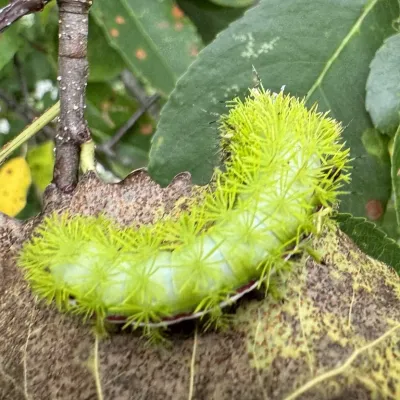
Io moth caterpillar (Automeris io) is bright green with a white side stripe and has clearly visible branching spines on every body segment. The Io caterpillar’s spines are easy to see, unlike the hidden spines of the puss caterpillar.
-
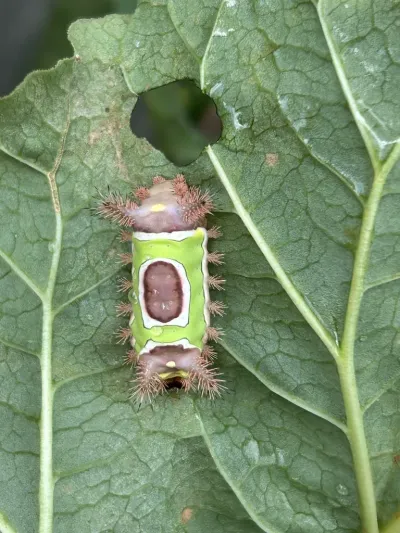
Saddleback caterpillar (Acharia stimulea) has a brown saddle-shaped marking on a green body with horn-like spines at each end. Its flat shape and bold color pattern look very different from the puss caterpillar’s fuzzy appearance.
-
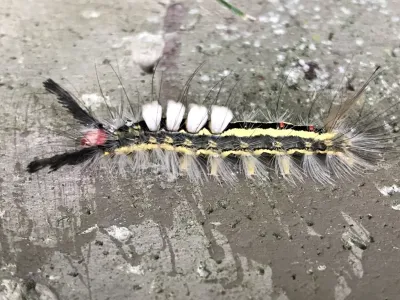
White-marked tussock moth caterpillar (Orgyia leucostigma) has paired tufts of white or yellow hair on the back, along with red head markings and pencil-like hair clusters. Its structured, segmented look is easy to tell apart from the smooth, rounded puss caterpillar.
-
Woolly bear caterpillar (Pyrrharctia isabella) is also hairy but has clear black and orange-brown bands. Woolly bears are not venomous and pose no sting risk, while puss caterpillars should never be touched.
Puss Caterpillar Behavior and Biology
Habitat and Host Plants
Puss caterpillars eat a wide range of plants. Known host plants include oak, elm, pecan, hackberry, rose, citrus, persimmon, apple, and many ornamental trees and shrubs. They feed on leaves and are most often found on shade trees in yards, parks, school grounds, and woodland edges.
Unlike some caterpillars that feed in large groups, puss caterpillars are usually found alone. They move slowly and often rest on bark, the undersides of leaves, or twigs. Their furry covering helps them blend in. They can also fall from trees onto outdoor furniture, cars, or people below.
Life Cycle
Puss caterpillars go through four life stages: egg, larva (caterpillar), pupa, and adult moth.
Female moths lay clusters of eggs on host plant leaves. After hatching, the larvae grow through several stages over a few weeks. They get larger and develop their thick covering of hair. When fully grown, caterpillars spin tough, rounded cocoons on bark, branches, or debris. Each cocoon has a hinged lid called an operculum that the adult moth pushes open when it emerges. The species name opercularis refers to this lid.
The number of generations per year depends on the region. In south-central states like Texas, there are usually two broods per year, with a smaller peak in early summer and a larger one in fall. In the Southeast, there is usually one brood with a main peak in September. In the northern parts of their range, including the Mid-Atlantic, populations are lower and caterpillars appear mainly in mid-to-late summer.
Stinging Mechanism
The puss caterpillar’s venom system works so well because the spines are fully hidden. Recent research found that the venom-producing structures involve genes picked up from other organisms. This makes the puss caterpillar’s venom unusual compared to other caterpillars.
When the caterpillar touches skin, even lightly, the hollow spines break off and push into the skin, releasing venom. The sting creates a grid-like pattern of welts that matches the layout of spines on the caterpillar’s body. Doctors can sometimes use this pattern to identify the cause of the sting.
The pain starts right away and is often described as a burning or throbbing feeling. Other symptoms can include redness, swelling, and welts that last one to several hours. More serious reactions may include nausea, stomach pain, headache, and in rare cases trouble breathing. Even dead puss caterpillars can still sting because the spines stay intact.
Seasonal Activity
Puss caterpillars are most likely to be found from late spring through fall. In Texas and the Gulf Coast states, there are two waves of caterpillar activity each year. The fall wave is usually larger and more widely reported. In the Southeast, the main risk window runs from August through October. In the Mid-Atlantic, encounters are less common but possible from July through early October.
Treatment Methods for Puss Caterpillars
Puss caterpillars rarely cause major damage to plants. The main concern is the painful sting they give people who brush against them while gardening, playing outside, or reaching into trees.
Prevention and Avoidance
Awareness is the best way to prevent puss caterpillar stings:
- Wear thick gloves and long sleeves when pruning trees, picking fruit, or working near dense foliage from late spring through fall.
- Look at branches and tree trunks before leaning against them or reaching into the canopy.
- Teach children to never touch caterpillars, especially ones that look soft or fuzzy.
- Check outdoor furniture, play structures, and vehicles for caterpillars that may have fallen from trees above.
- Keep firewood away from exterior walls, as puss caterpillars sometimes form cocoons in bark crevices and wood piles.
Physical Removal
If you find caterpillars near walkways, patios, or play areas, you can remove them carefully. Use thick leather gloves, long-handled tongs, or a stick to pick them up and drop them into a bucket of soapy water. Never touch them with bare hands, even if they look dead. If caterpillars are on a single branch, you can prune the branch and seal it in a bag.
Biological and Chemical Controls
Bacillus thuringiensis var. kurstaki (Btk) is a naturally occurring product that targets caterpillars when they eat treated leaves. It works best on young caterpillars that are actively feeding. Both the upper and lower leaf surfaces need to be covered for good results. Spinosad is another option that works through both contact and ingestion.
For ongoing or widespread problems, conventional caterpillar control products labeled for landscape use may be needed. Always follow label directions when applying any pest control product.
Treating a Sting
If someone is stung by a puss caterpillar:
- Remove the spines by pressing adhesive tape firmly against the sting site and peeling it away. Repeat several times to pull out as many spine fragments as you can.
- Wash the area with soap and water.
- Apply ice wrapped in a cloth to reduce pain and swelling.
- Take over-the-counter medicine such as antihistamines (like Benadryl) or apply hydrocortisone cream to help with itching. Pain relievers like acetaminophen or ibuprofen can also help.
- Do not rub the sting area. Rubbing can push spines deeper into the skin and make it worse.
- Get medical help if symptoms spread, last more than a day, or include trouble breathing, nausea, chest pain, or dizziness. Call Poison Control at 1-800-222-1222 for guidance.
This information is for general educational purposes only and is not medical advice. Always consult a healthcare provider for medical concerns related to insect stings or allergic reactions.
References
- PMC: Geographical and Temporal Distribution of Megalopygidae in the United States
- PMC: Horizontal Gene Transfer Underlies the Painful Stings of Asp Caterpillars
- UF/IFAS EDIS: Stinging and Venomous Caterpillars of the Southeast
- UF/IFAS EDIS: Puss Caterpillar (Megalopyge opercularis)
- NC State Extension: Puss Caterpillar
- Merck Manual: Puss Moth Caterpillar Stings
- Clemson HGIC: Southern Flannel Caterpillar Identification
- Butterflies and Moths of North America: Megalopyge opercularis
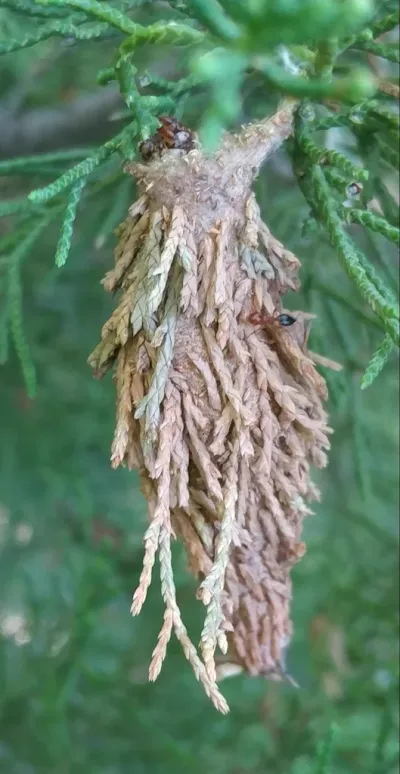
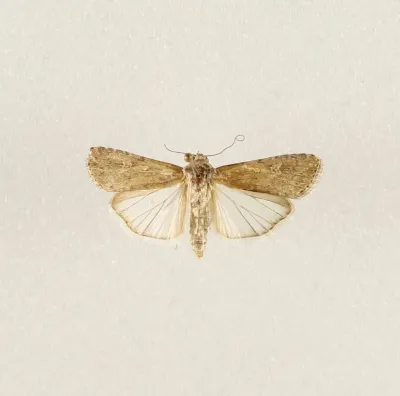
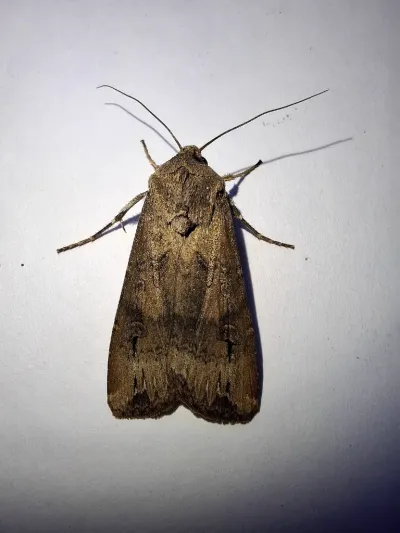
Other Moths
Explore other species in the moths family
Commonly Confused With
Puss Caterpillars are often mistaken for these similar pests
Where Puss Caterpillars Are Found
Hover over states to see their names. Green regions indicate where puss caterpillars have been reported.
Common Questions about Puss Caterpillars
What happens if you touch a puss caterpillar?
+
Touching a puss caterpillar causes an immediate, intense burning sting. Hidden beneath the soft, hair-like covering are rows of hollow, venomous spines that break off in the skin and release venom on contact. The sting typically produces a grid-like pattern of red welts, swelling, and throbbing pain that can last several hours. Some people also experience nausea, headache, or abdominal discomfort.
How do you treat a puss caterpillar sting?
+
Use adhesive tape (such as clear packing tape) pressed firmly against the sting site and peeled away repeatedly to remove embedded spine fragments. Wash the area with soap and water, apply ice to reduce swelling, and take an over-the-counter oral antihistamine or apply hydrocortisone cream to manage pain and itching. Do not rub the area. Seek medical attention if symptoms spread, persist beyond a day, or include difficulty breathing.
Are puss caterpillars dangerous?
+
Puss caterpillars are considered the most venomous caterpillar species in North America. While most stings cause severe but temporary pain and localized swelling, some individuals experience more serious systemic reactions including nausea, chest pain, difficulty breathing, or widespread swelling. Children and people with insect venom sensitivities are at higher risk for severe reactions.
What does a puss caterpillar look like?
+
Puss caterpillars have a distinctive teardrop or rounded slug-like shape, about 1 to 1.4 inches long, covered in dense, silky hair that makes them look like a small tuft of fur or cotton. Their color varies from cream and tan to brown, gray, or reddish-brown depending on the population and age. The venomous spines are completely hidden beneath this soft outer covering, which is why they look harmless but are actually very dangerous to touch.
Where are puss caterpillars found?
+
Puss caterpillars are found throughout the southeastern and south-central United States, from New Jersey south to Florida and west to Texas. They are especially common in Texas, Louisiana, Florida, and along the Gulf Coast. They feed on many common shade trees and shrubs including oak, elm, pecan, hackberry, citrus, and rose, so they are frequently encountered in yards, parks, and landscaped areas.
What do puss caterpillars turn into?
+
Puss caterpillars are the larval stage of the southern flannel moth (Megalopyge opercularis). The adult moth is a small, stout insect with a wingspan of about 1 to 1.5 inches, covered in dense orange-gold and cream-colored fur. Adults are nocturnal, do not sting, and have vestigial mouthparts so they do not feed during their brief adult lifespan.
When are puss caterpillars most active?
+
Puss caterpillar activity varies by region. In the south-central United States, particularly Texas, there are typically two peaks of larval activity: a smaller one in early summer (June-July) and a larger one in fall (October-November). In the Southeast, a single peak occurs in late summer to early fall (September). In the Mid-Atlantic, encounters are less common but most likely from late summer into early fall.

With five years of hands-on experience in the pest control industry, George Schulz is a registered technician with the Virginia Pest Management Association and a proud third-generation professional in a family business that's been protecting homes for over 57 years. He manages and trains a team of service pros while also leading internal research efforts—recently spearheading a deep-dive review of thousands of documents on pest control materials to hand-pick the most kid and pet friendly, most effective solutions tailored specifically for homes in the DC metro area.