Io Moth Caterpillars Identification Guide
Automeris io
Io moth caterpillars are bright green stinging caterpillars covered in clusters of venomous, branching spines. Contact with their spines causes an immediate, painful sting that produces welts, redness, and swelling lasting several hours.
Taxonomy
Io Moth Caterpillars Coloration
Common color patterns to help identify io moth caterpillars
Io Moth Caterpillars
Seasonal Activity
When io moth caterpillars are most active throughout the year

Where Io Moth Caterpillars Are Found
Hover over states to see their names. Green regions indicate where io moth caterpillars have been reported.
Io Moth Caterpillar Identification Guide
The Io moth caterpillar (Automeris io) is one of the most commonly encountered stinging caterpillars in eastern North America. Named after Io of Greek mythology, this species belongs to the giant silk moth family Saturniidae. While the adult moths are admired for their striking eyespot wing markings, the caterpillar stage demands respect due to its painful venomous spines.
Physical Characteristics
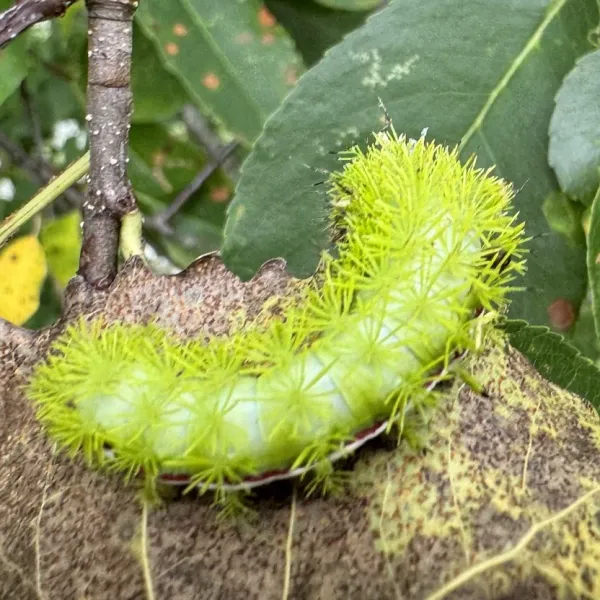
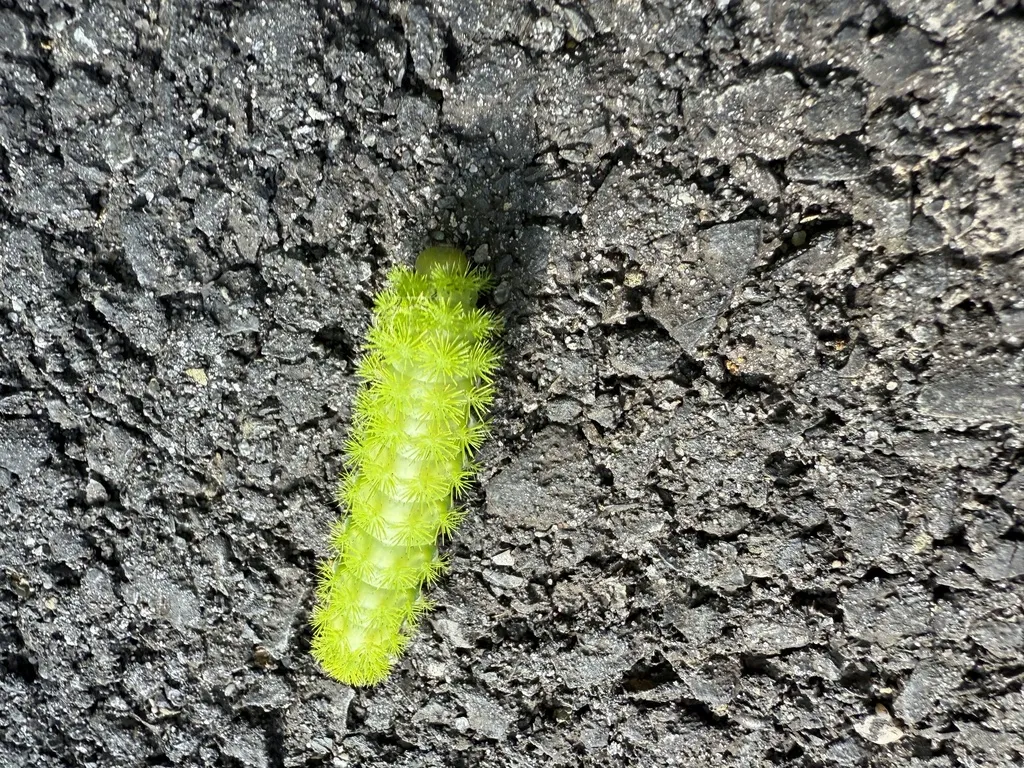
Mature Io moth caterpillars grow to about 2 to 2.5 inches long and are a vivid bright green. A prominent white lateral stripe edged with reddish-pink runs along each side of the body. The most distinctive feature is the rows of scoli, which are branching, thorn-like tubercles tipped in black that radiate outward from every body segment. These spines give the caterpillar a bristly, sea-urchin-like appearance.
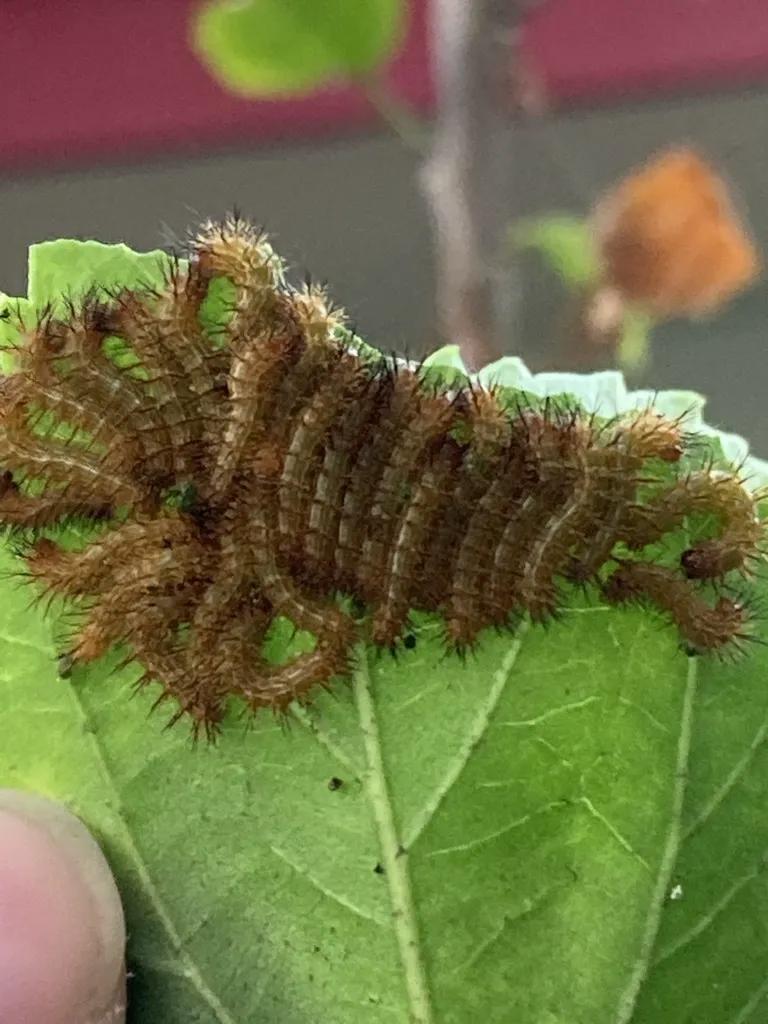
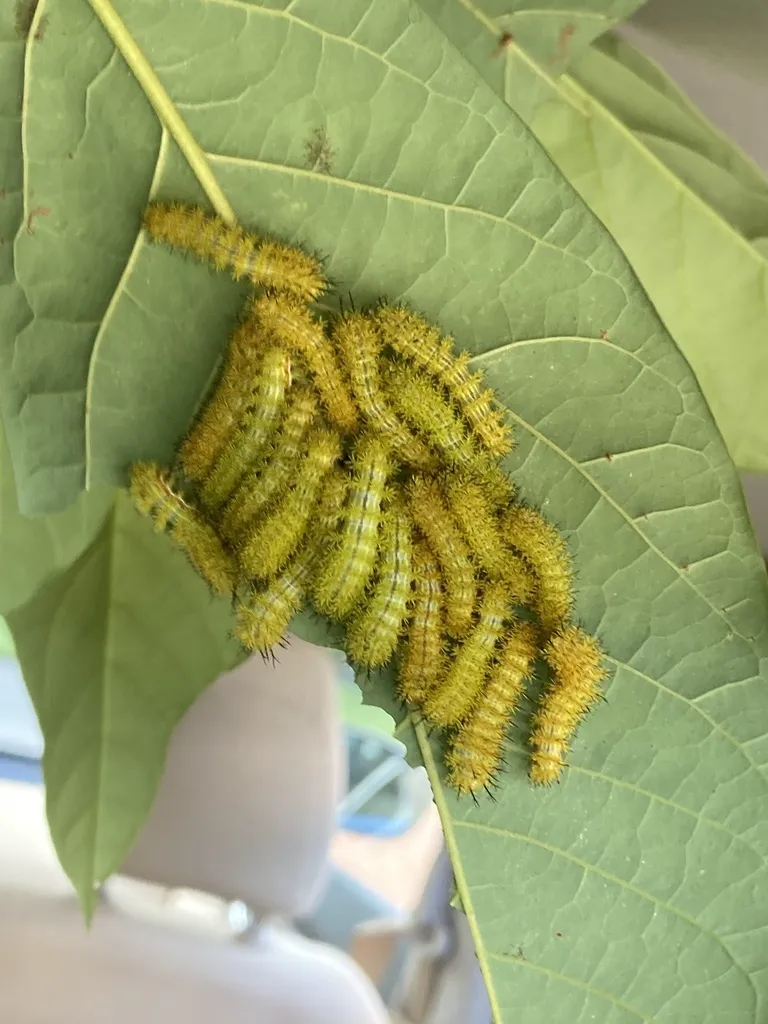
Early instars look quite different from mature caterpillars. Newly hatched larvae are dark, often reddish-brown or orange, and travel in tightly packed groups along silk trails. As they grow through their five larval stages, they gradually become greener and more solitary. The spines are present and capable of stinging from the very first instar.
The caterpillar has three pairs of true thoracic legs and five pairs of fleshy abdominal prolegs that it uses to grip foliage and stems while feeding.
Adult Moth
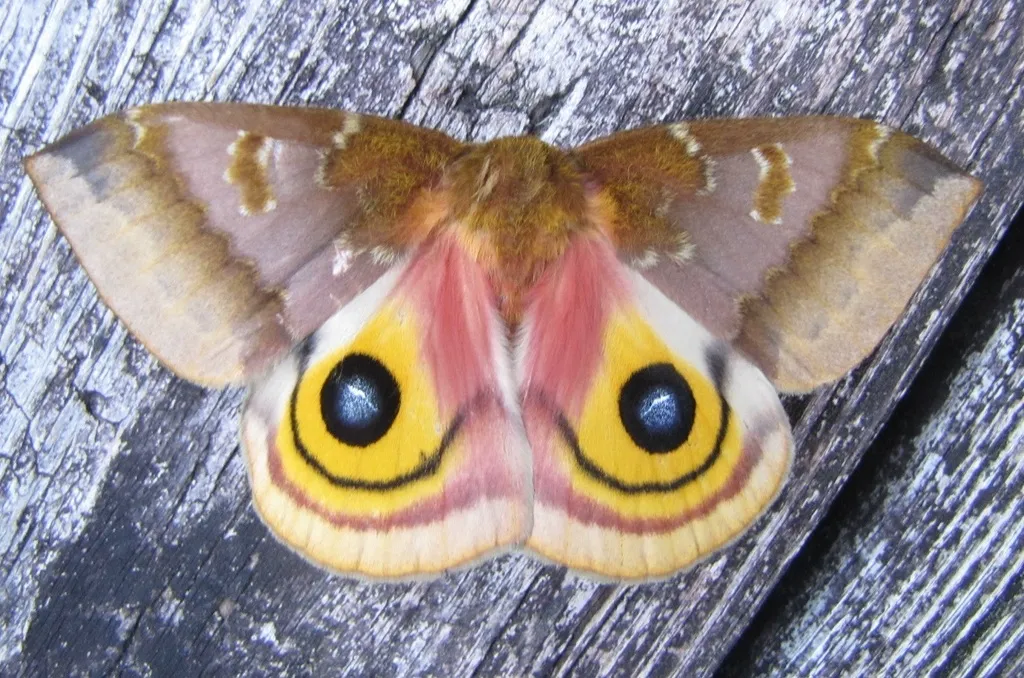
Adult Io moths are striking insects with a wingspan of 2 to 3.5 inches. They display strong sexual dimorphism: males have bright yellow forewings and bodies, while females have reddish-brown to purplish-brown forewings. Both sexes share the species’ signature defense, a pair of large, dramatic eyespots on the hindwings. Each eyespot is dark with a blue-black center ringed in yellow. When disturbed, the moth flashes these markings by spreading its forewings to startle potential predators.
Adults have vestigial mouthparts and do not feed. They are strictly nocturnal, using their feathery antennae (especially prominent in males) to detect pheromones and locate mates during their brief one- to two-week adult lifespan.
Similar Stinging Caterpillars
Several other stinging caterpillars overlap with the Io moth caterpillar’s range and may be confused with it:
-
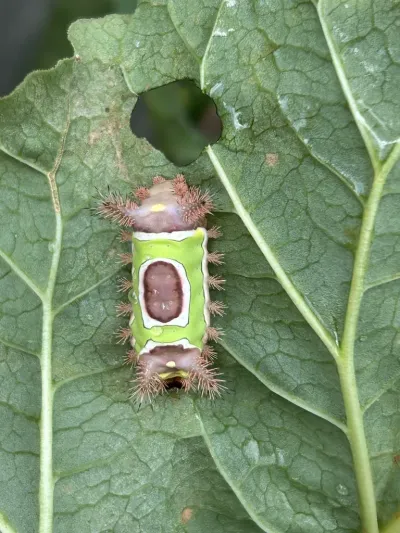
Saddleback caterpillar (Acharia stimulea) has a distinctive brown saddle-shaped marking on a green body. It is flatter and slug-like in shape, lacking the Io caterpillar’s lateral stripe pattern and radiating scoli.
-
Puss caterpillar (Megalopyge opercularis) appears soft and furry like a tuft of hair, with venomous spines concealed beneath long, silky setae. Its appearance is very different from the Io caterpillar’s clearly visible branching spines.
-
Browntail moth caterpillar (Euproctis chrysorrhoea) is dark brown with white side markings and reddish-orange spots. Its irritating hairs can become airborne and cause rashes and respiratory problems, unlike the Io caterpillar’s contact-only sting.
-
Hickory tussock moth caterpillar (Lophocampa caryae) is white with black tufts and pencil-like hair clusters. Its tussock-style appearance is distinct from the Io caterpillar’s green coloring and stiff, branching spines.
Io Moth Caterpillar Behavior and Biology
Habitat and Host Plants
Io moth caterpillars are polyphagous, meaning they feed on a remarkably wide range of plants. Documented host plants include willow, redbud, hackberry, elm, oak, maple, beech, ash, sweetgum, dogwood, cherry, and many ornamental shrubs. They have also been reported on corn, roses, and various herbaceous plants.
You are most likely to find them on the foliage of deciduous trees and shrubs in yards, gardens, parks, and woodland edges. Early-instar caterpillars feed in clusters and can sometimes defoliate individual branches before dispersing as they mature.
Life Cycle
Io moths undergo complete metamorphosis through four life stages: egg, larva (caterpillar), pupa, and adult moth.
Female moths lay clusters of 20 or more eggs on the undersides of host plant leaves. The eggs hatch in roughly 8 to 11 days depending on temperature. Young caterpillars are gregarious, marching in processions along silk trails and feeding side by side on leaves. As they grow through five instars over several weeks, they become increasingly solitary.
When fully grown, caterpillars spin thin, papery brown cocoons among leaf litter on the ground or loosely attached to vegetation. Pupae overwinter inside these cocoons. Adults emerge the following spring or summer, mate, and the cycle begins again.
In the northern part of their range, Io moths are univoltine, producing one generation per year. In the warm Southeast and Gulf Coast states, they may produce two or more broods annually, extending the period when caterpillars are present.
Stinging Mechanism
The Io caterpillar’s branching spines are hollow and connected to glandular cells at their base that produce venom. When the spines contact skin, even lightly, the tips break off and deliver venom into the skin. The result is an immediate nettling or burning sensation, followed by redness, welts, and localized swelling.
The reaction, known as erucism or caterpillar dermatitis, is usually self-limiting and resolves within a few hours. However, repeated exposures or individual sensitivity can lead to more pronounced reactions. Unlike some other stinging caterpillars, Io moth caterpillars can sting at every larval stage, making even small, young caterpillars hazardous to touch.
Seasonal Activity
In the Mid-Atlantic region, Io moth caterpillars are most active from May through September, with peak activity in June, July, and August. This corresponds to the period of larval feeding and growth following egg hatch. Adult moths are on the wing primarily in June and July. By late fall, caterpillars have pupated and are no longer a contact risk until the following year.
Treatment Methods for Io Moth Caterpillars
Io moth caterpillars seldom occur in numbers large enough to cause major landscape damage. Their primary concern is the painful sting they deliver to people who accidentally brush against them while gardening, pruning, or playing outdoors.
Prevention and Avoidance
Awareness is the most effective defense against Io moth caterpillar stings:
- Wear thick gloves and long sleeves when pruning trees, picking fruit, or working in dense foliage during summer months.
- Inspect branches and leaves before grabbing or reaching into shrubs and low-hanging tree canopy.
- Teach children to avoid touching caterpillars, especially brightly colored or spiny ones.
- Check outdoor furniture, towels, and play equipment for caterpillars that may have crawled onto them.
Physical Removal
When caterpillars are found near walkways, patios, or play areas, they can be carefully removed using thick leather gloves, tongs, or a stick. Drop them into a bucket of soapy water. Never handle them with bare hands. Even dead Io caterpillars can still sting, as the spines retain their ability to penetrate skin and release venom.
For clusters of early-instar caterpillars on a single branch, pruning the branch and disposing of it in a sealed bag is an efficient removal method.
Biological Controls
Bacillus thuringiensis var. kurstaki (Btk) is an effective biological treatment for Io moth caterpillars. This naturally occurring soil bacterium targets caterpillar digestive systems when ingested. It is most effective when applied to foliage while caterpillars are young and actively feeding. Thorough coverage of both upper and lower leaf surfaces improves results.
Spinosad, another naturally derived insecticide from soil bacteria, provides control through both contact and ingestion. Both Btk and spinosad are widely available at garden centers and are suitable for organic gardening programs.
Other Control Options
Parasitic wasps (ichneumonids and braconids) and tachinid flies lay eggs on or inside Io caterpillars, which helps reduce populations over time. For persistent problems or large numbers near living spaces, a pest control professional can assess the situation and recommend targeted treatments.
Treating a Sting
If someone is stung by an Io moth caterpillar:
- Remove embedded spines by pressing adhesive tape firmly against the sting site and peeling it away. Repeat multiple times to extract as many spine fragments as possible.
- Wash the area thoroughly with soap and water.
- Apply ice wrapped in a cloth to reduce pain and swelling.
- Use over-the-counter remedies such as oral antihistamines or topical hydrocortisone cream to manage itching and inflammation.
- Do not rub the affected area, as this can drive spine tips deeper into the skin.
- Seek medical attention if symptoms spread beyond the sting site, persist for more than a day, or include difficulty breathing, nausea, or dizziness.
This information is for general educational purposes only and is not medical advice. Always consult a healthcare provider for medical concerns related to insect stings or allergic reactions.
References
Other Moths
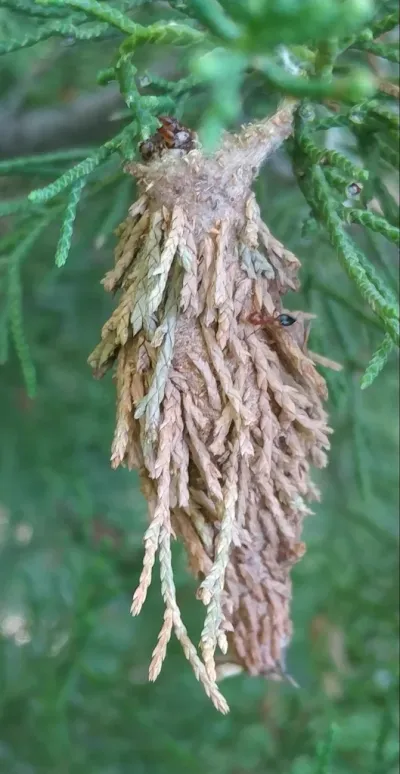
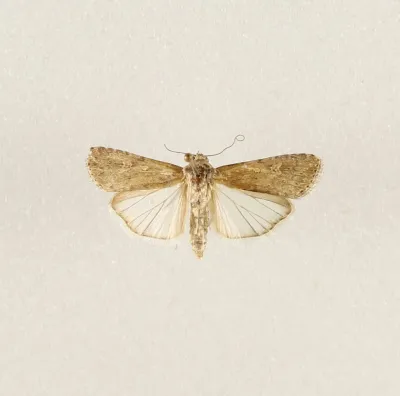
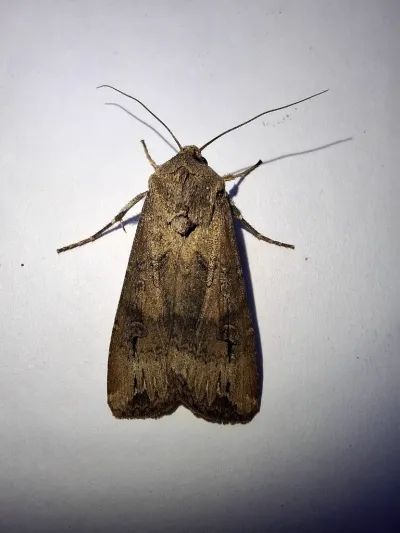
Explore other species in the moths family
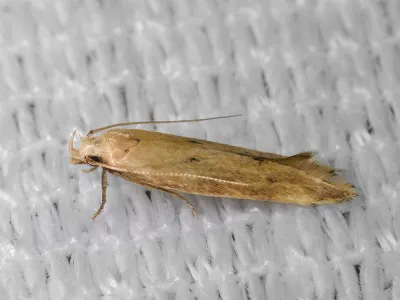
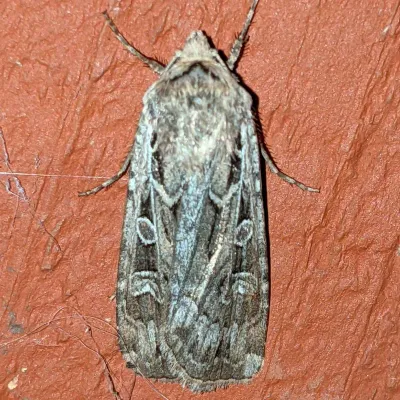
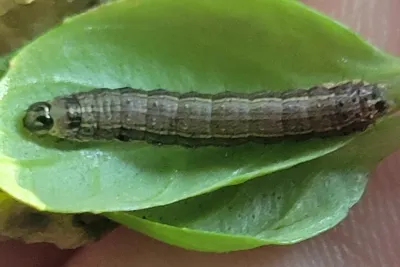
Commonly Confused With
Io Moth Caterpillars are often mistaken for these similar pests
Where Io Moth Caterpillars Are Found
Hover over states to see their names. Green regions indicate where io moth caterpillars have been reported.
Common Questions about Io Moth Caterpillars
Do Io moth caterpillars sting?
+
Yes, Io moth caterpillars have venomous spines covering their entire body. These spines are hollow and connected to venom-producing cells at their base. Even light contact breaks the spines and releases venom into the skin, causing immediate burning pain, redness, and swelling that typically lasts one to several hours.
What does an Io moth caterpillar look like?
+
Mature Io moth caterpillars are about 2 to 2.5 inches long and bright green with a white lateral stripe bordered by a reddish line running along each side. Their most distinctive feature is the clusters of branching, black-tipped green spines (called scoli) that cover every body segment. Early-stage caterpillars are darker, often reddish-brown or orange, and feed in groups.
Are Io moth caterpillars dangerous?
+
For most people, an Io moth caterpillar sting causes temporary pain, welts, and localized swelling that resolves within a few hours. However, some individuals may experience more severe allergic reactions including nausea, widespread swelling, or difficulty breathing. People with known insect venom sensitivities should seek medical attention if stung.
What should I do if I get stung by an Io moth caterpillar?
+
Immediately use adhesive tape pressed against the sting site and peeled away to remove any embedded spine fragments. Wash the area with soap and water, apply ice to reduce swelling, and take an over-the-counter antihistamine or apply hydrocortisone cream. Do not rub the area, as this can push spines deeper into the skin. Seek medical attention if symptoms are severe or you have difficulty breathing.
Where are Io moth caterpillars found?
+
Io moth caterpillars are found throughout eastern North America, from southern Canada through the eastern United States and into parts of Mexico. They feed on a wide range of trees and shrubs including willow, oak, maple, redbud, hackberry, elm, and many ornamental plants. You are most likely to encounter them from late spring through early fall.
What do Io moth caterpillars turn into?
+
Io moth caterpillars pupate inside a thin, papery brown cocoon spun among leaf litter or attached to vegetation. They emerge as Io moths (Automeris io), striking moths with a wingspan of 2 to 3.5 inches. Males have bright yellow forewings while females have reddish-brown forewings. Both sexes display large, dramatic eyespots on their hindwings when disturbed.
How do I get rid of Io moth caterpillars?
+
For small numbers, carefully remove caterpillars wearing thick leather gloves and drop them into soapy water. Never handle them with bare hands. For larger groups, Bacillus thuringiensis var. kurstaki (Btk) is an effective treatment when applied while caterpillars are young and actively feeding. Parasitic wasps and tachinid flies also help keep populations in check.

With five years of hands-on experience in the pest control industry, George Schulz is a registered technician with the Virginia Pest Management Association and a proud third-generation professional in a family business that's been protecting homes for over 57 years. He manages and trains a team of service pros while also leading internal research efforts—recently spearheading a deep-dive review of thousands of documents on pest control materials to hand-pick the most kid and pet friendly, most effective solutions tailored specifically for homes in the DC metro area.