Beet Armyworms Identification Guide
Spodoptera exigua
Beet armyworms are destructive caterpillar pests that feed on over 250 plant species, causing significant damage to vegetables, field crops, and ornamentals across North America.
Taxonomy
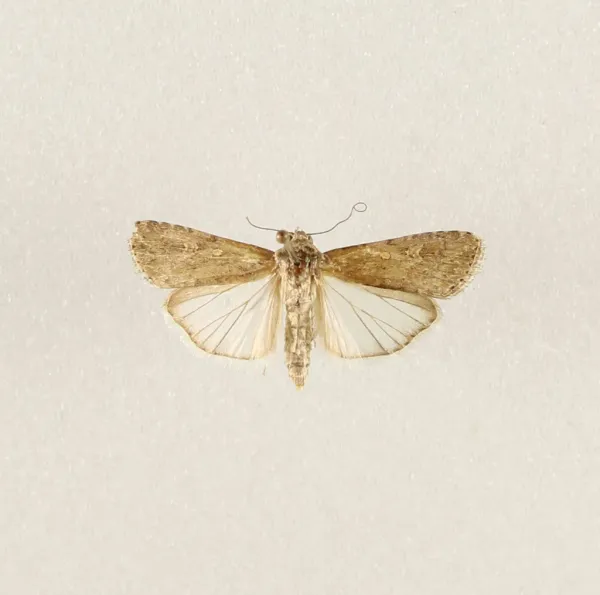
Beet Armyworms Coloration
Common color patterns to help identify beet armyworms
Beet Armyworms
Seasonal Activity
When beet armyworms are most active throughout the year

Where Beet Armyworms Are Found
Hover over states to see their names. Green regions indicate where beet armyworms have been reported.
Beet Armyworm Identification Guide
Physical Characteristics
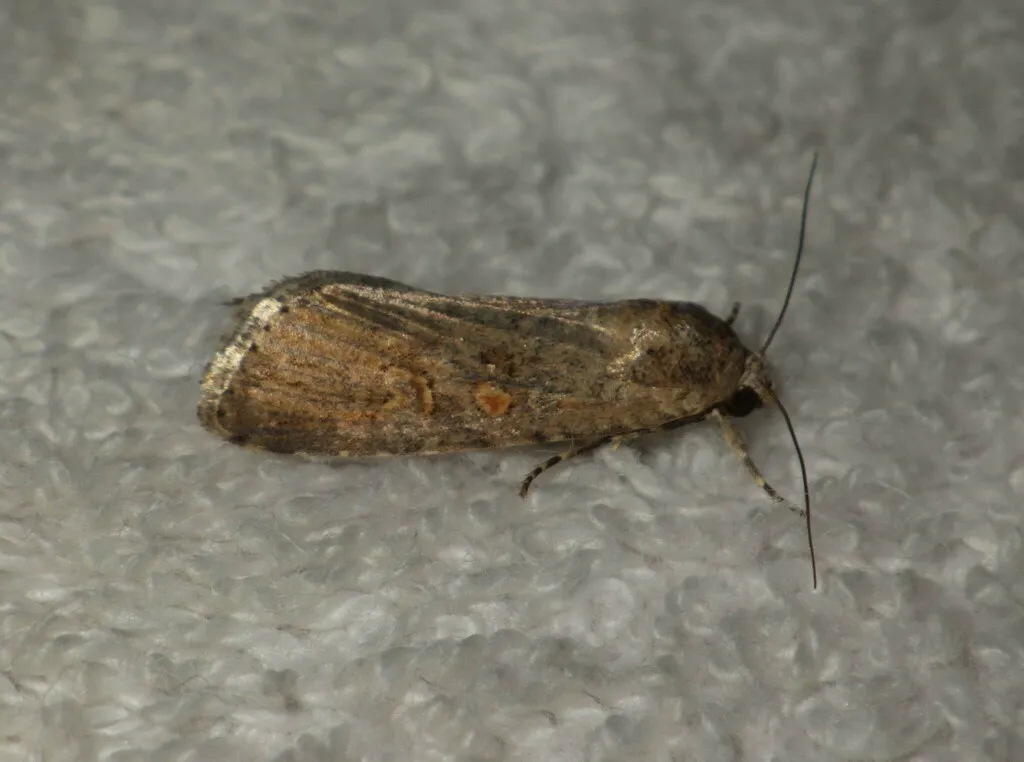
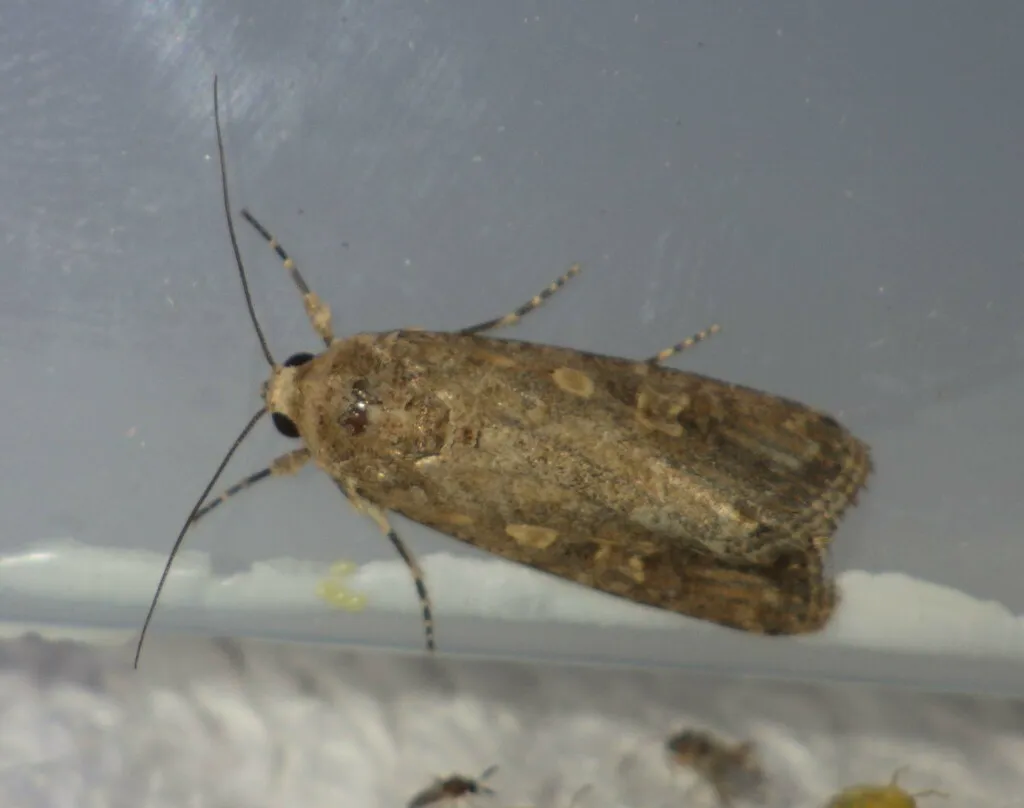
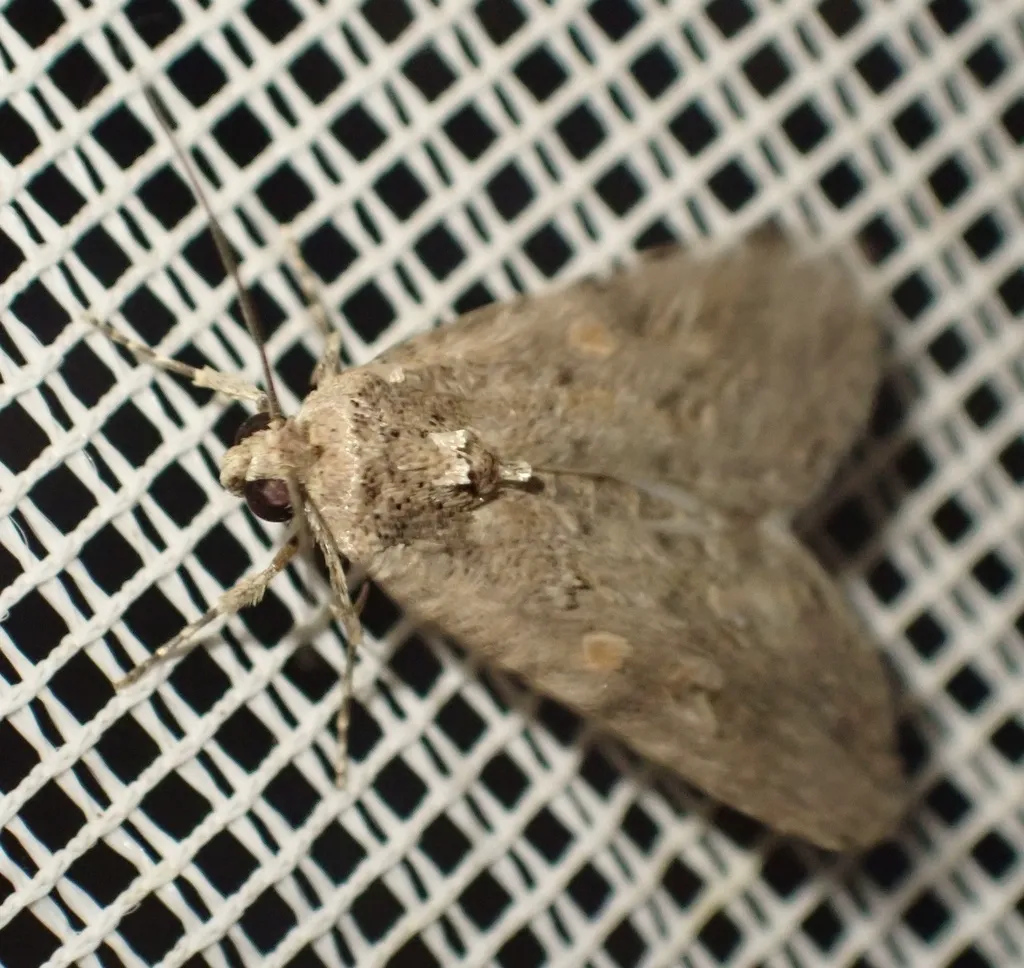
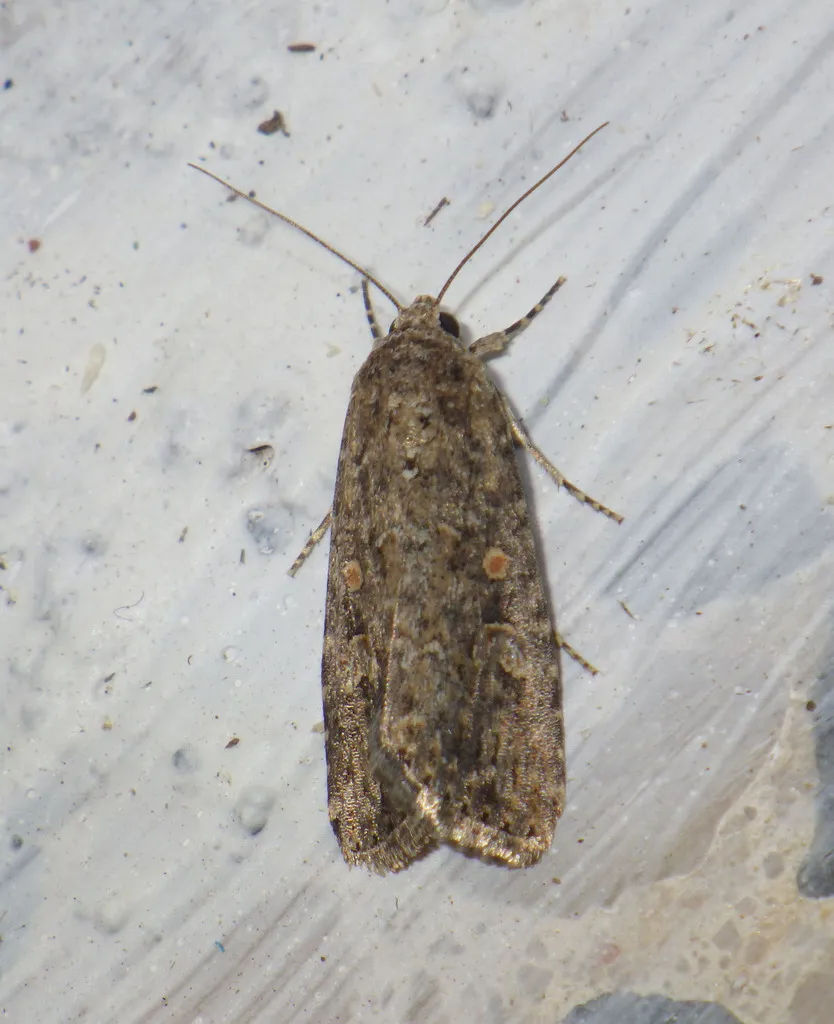
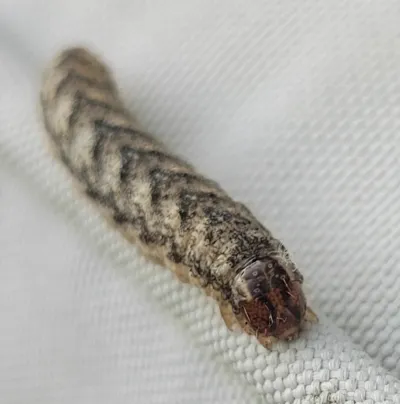
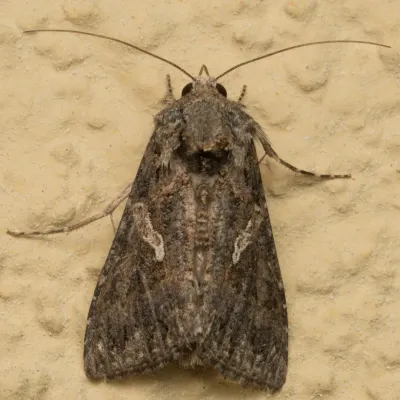
The beet armyworm (Spodoptera exigua) changes form as it grows, so it looks very different at each life stage. Adult moths are small with a wingspan of about 1 to 1.25 inches. The front wings are mottled gray-brown with a pale, round spot near the center. The back wings are white with darker edges. Adults fly at night and are drawn to lights.
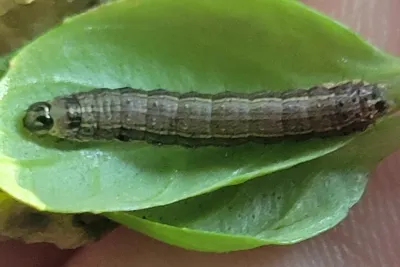
The caterpillar stage is the one that causes crop damage. Young caterpillars are pale green and feed in groups. As they grow, their color shifts from green to brown or nearly black. A wide, pale stripe runs along each side, and three lighter lines run down the back. The best way to tell them apart from other caterpillars is a small dark spot on the side of the body just above the second pair of true legs. Full-grown larvae reach about 1 to 1.2 inches long.
Eggs are laid in clusters of 20 to 150 on the undersides of leaves. The female moth covers them with scales from her body, giving the egg masses a fuzzy or cottony look.
Common Species
The beet armyworm belongs to the genus Spodoptera, which includes several related pest species in North America:
- Beet Armyworm (Spodoptera exigua): The subject of this page. Also known as the small mottled willow moth. Found across much of the continent and feeds on many crops.
- Fall Armyworm (Spodoptera frugiperda): A larger species with an upside-down Y mark on the head. The most damaging armyworm to lawns and corn.
- Southern Armyworm (Spodoptera eridania): Found mainly in the southeastern United States and tropics. Feeds on many vegetable crops.
- Yellow-striped Armyworm (Spodoptera ornithogalli): Has bright yellow stripes along its sides. Feeds on a wide range of crops and garden plants.
Beet Armyworm Behavior and Biology
Beet armyworms complete their life cycle in about 24 to 38 days, depending on how warm it is. Female moths lay 300 to 600 eggs total in small clusters. Eggs hatch in 2 to 3 days when the weather is warm. The caterpillar stage lasts 10 to 21 days as they grow through five or six size stages. When done feeding, they dig into the soil and form a pupa. Adult moths come out 6 to 10 days later, mate quickly, and start laying eggs.
In warm southern states and Mexico, beet armyworms can produce three to eight broods per year. They may stay active almost all year in areas that do not freeze. In cooler areas like the Mid-Atlantic and Northeast, they die off in winter because the pupae cannot handle freezing cold. Each spring and summer, new moths fly north from the Deep South to start new populations.
Feeding Habits and Damage
Young caterpillars feed in groups and eat only the soft tissue between leaf veins. This leaves behind a see-through “windowpane” pattern on the leaves. As they grow larger, they feed alone and can eat entire leaves down to the stems.
Beet armyworms feed on over 250 types of plants. Their favorite hosts include beets, lettuce, tomatoes, peppers, cabbage, celery, asparagus, cotton, and many garden plants. Larger caterpillars can bore into lettuce heads, tomato fruit, and other crops. They feed mostly at night and hide deep in the plant or near the soil during the day.
Unlike fall armyworms that mainly target lawns, beet armyworms focus on vegetable crops and garden plants. They do not damage buildings, furniture, or stored food in the home.
Signs of Infestation
Watch for these indicators of beet armyworm activity in your garden or crops:
- Skeletonized leaves with only the veins remaining, especially on young plants
- Fuzzy egg masses on the undersides of leaves in the upper canopy
- Green to brown caterpillars with a dark lateral spot near the thorax
- Ragged holes in leaves, fruit, or lettuce heads
- Green frass (droppings) on leaves and near the base of plants
- Webbing from early-instar larvae feeding in groups
Treatment Methods for Beet Armyworms
Beet armyworms respond well to a mix of scouting, biological controls, and targeted treatments. This species has built up resistance to many chemical classes, so rotating between different control methods is important.
-
Scouting and Monitoring: Set up pheromone traps to catch adult moths early. Check plants often by looking at the undersides of leaves for fuzzy egg masses and signs of chewed foliage. Focus on the upper half of the plant where females prefer to lay eggs.
-
Biological Controls: Bacillus thuringiensis (Bt) products work well on young caterpillars when applied at the right time. Parasitoid wasps like Cotesia marginiventris and Trichogramma species also help reduce numbers.
-
Cultural Practices: Pull weeds like pigweed and lambsquarters that give caterpillars extra places to feed and breed. Rotate your crops and clean up plant debris after harvest to cut down on egg-laying spots. Do not over-fertilize. Lush new growth draws in egg-laying moths.
-
Targeted Treatments: When caterpillar numbers are high, foliar sprays timed to the early growth stages give the best results. Switch between different chemical types to slow down resistance. IRAC research shows beet armyworms have built up resistance to pyrethroids, organophosphates, and carbamates. This makes rotating products a must.
-
Timing: Treat when caterpillars are small. Young larvae cause less than 7% of total feeding damage but are much easier to kill. The large, late-stage caterpillars cause over 93% of crop damage and are harder to control.
Prevention Tips
Stopping beet armyworm outbreaks starts with regular checking during the growing season. Begin scouting in late spring when the first moths migrate into your area. Check pheromone traps weekly and look for egg masses and early feeding damage on your plants.
Keep your garden clean by removing plant debris after harvest. Control weeds that can host caterpillars between plantings. Floating row covers can block moths from laying eggs on high-value vegetable crops.
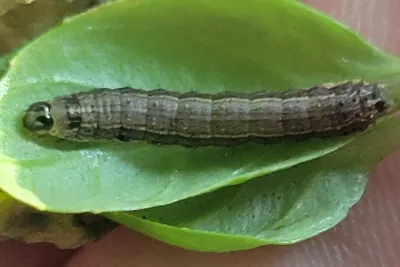
Beet armyworms are sometimes confused with cutworms, which tend to cut seedlings at the soil line rather than chewing on leaves. They may also be mistaken for cabbage loopers, which move with a looping, inchworm-like motion and do not have the dark side spot that marks beet armyworms.
References
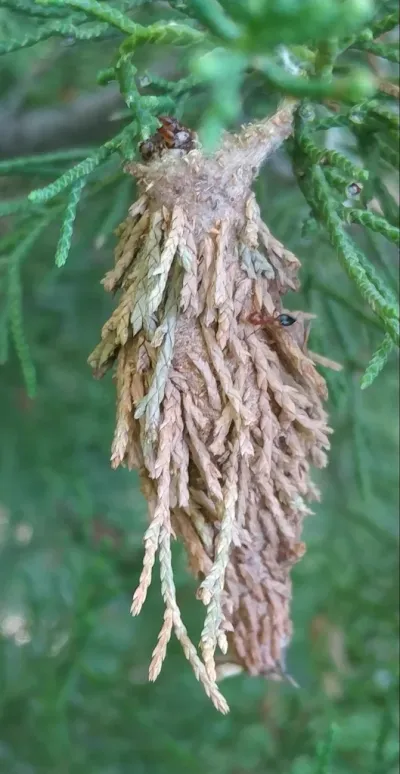
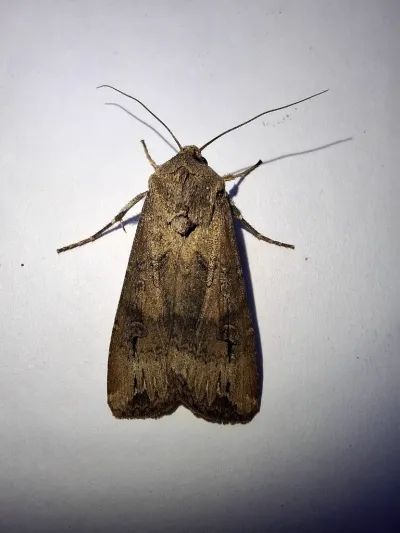
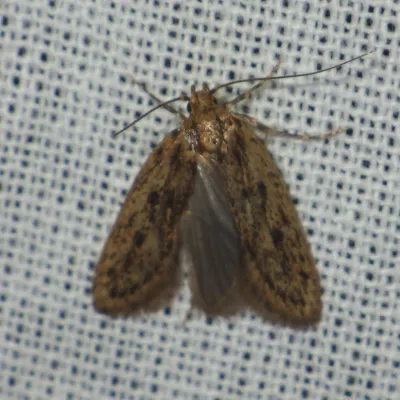
Other Moths
Explore other species in the moths family
Commonly Confused With
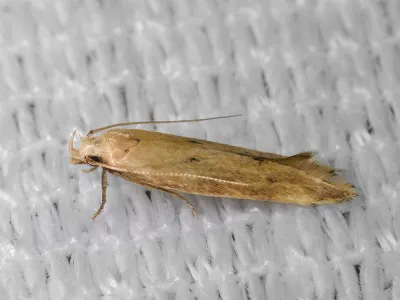
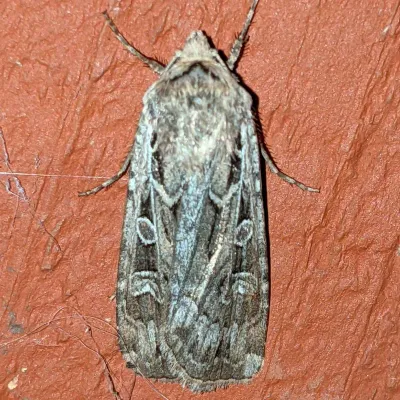
Beet Armyworms are often mistaken for these similar pests
Where Beet Armyworms Are Found
Hover over states to see their names. Green regions indicate where beet armyworms have been reported.
Common Questions about Beet Armyworms
What do beet armyworm caterpillars look like?
+
Beet armyworm larvae are smooth-skinned caterpillars that grow up to about 1.2 inches long. They range from pale green to dark brown with light lateral stripes on each side. The most reliable identification feature is a small black spot on the side of the body above the second pair of true legs.
Are beet armyworms harmful to humans?
+
Beet armyworms are not harmful to humans. They do not bite, sting, or transmit diseases to people. Their damage is limited to plants, where the caterpillars feed on leaves, stems, and fruit of many vegetable and ornamental crops.
What plants do beet armyworms eat?
+
Beet armyworms are highly polyphagous with over 250 documented host plants. They commonly attack beets, lettuce, tomatoes, peppers, cabbage, celery, cotton, and many ornamental plants. They will feed on almost any broadleaf vegetable or field crop.
How fast do beet armyworms reproduce?
+
Female moths can lay 300 to 600 eggs in clusters of 20 to 150 on the undersides of leaves. Eggs hatch in 2 to 3 days in warm weather. The entire life cycle from egg to adult takes roughly 24 to 38 days depending on temperature, and multiple overlapping generations can occur each year.
When are beet armyworms most active?
+
In temperate regions like the Mid-Atlantic, beet armyworms are most active from July through August when temperatures are highest. In southern states and Mexico, populations can be active nearly year-round. They are nocturnal feeders that hide during the day.
How can I tell beet armyworms apart from fall armyworms?
+
Beet armyworm larvae lack the inverted Y-shaped head marking that fall armyworms display. Beet armyworms are generally smaller and smoother, and their key identification feature is a dark spot on the side of the body near the thorax. Fall armyworm larvae tend to be larger with more prominent stripe patterns.
What is the best way to control beet armyworms?
+
A combination of scouting, biological controls, and targeted treatments works best. Monitor with pheromone traps and scout for egg masses on leaf undersides. Bacillus thuringiensis (Bt) products work well on young caterpillars. Treating early while larvae are small gives the best results.

With five years of hands-on experience in the pest control industry, George Schulz is a registered technician with the Virginia Pest Management Association and a proud third-generation professional in a family business that's been protecting homes for over 57 years. He manages and trains a team of service pros while also leading internal research efforts—recently spearheading a deep-dive review of thousands of documents on pest control materials to hand-pick the most kid and pet friendly, most effective solutions tailored specifically for homes in the DC metro area.