Soft Scale Insects Identification Guide
Coccidae
Soft scale insects are small, dome-shaped sap feeders that attach to plant stems and leaves. They produce sticky honeydew that leads to sooty mold, weakening ornamental trees, shrubs, and houseplants across North America.
Taxonomy
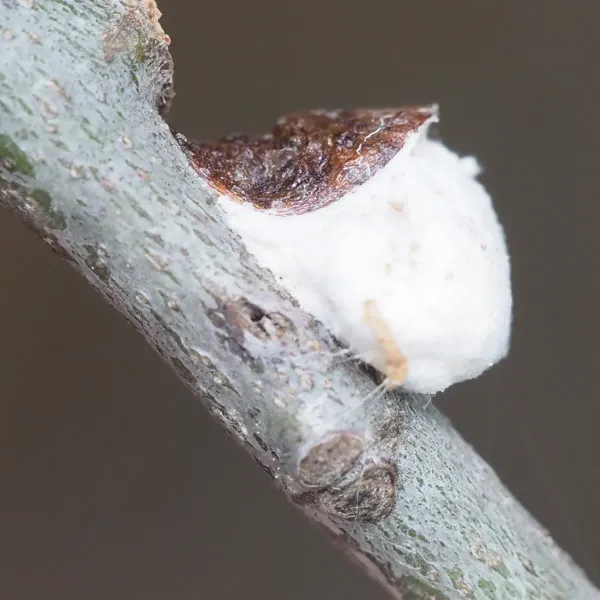
Soft Scale Insects Coloration
Common color patterns to help identify soft scale insects
Soft Scale Insects
Seasonal Activity
When soft scale insects are most active throughout the year

Where Soft Scale Insects Are Found
Hover over states to see their names. Green regions indicate where soft scale insects have been reported.
Soft Scale Identification Guide
Physical Characteristics
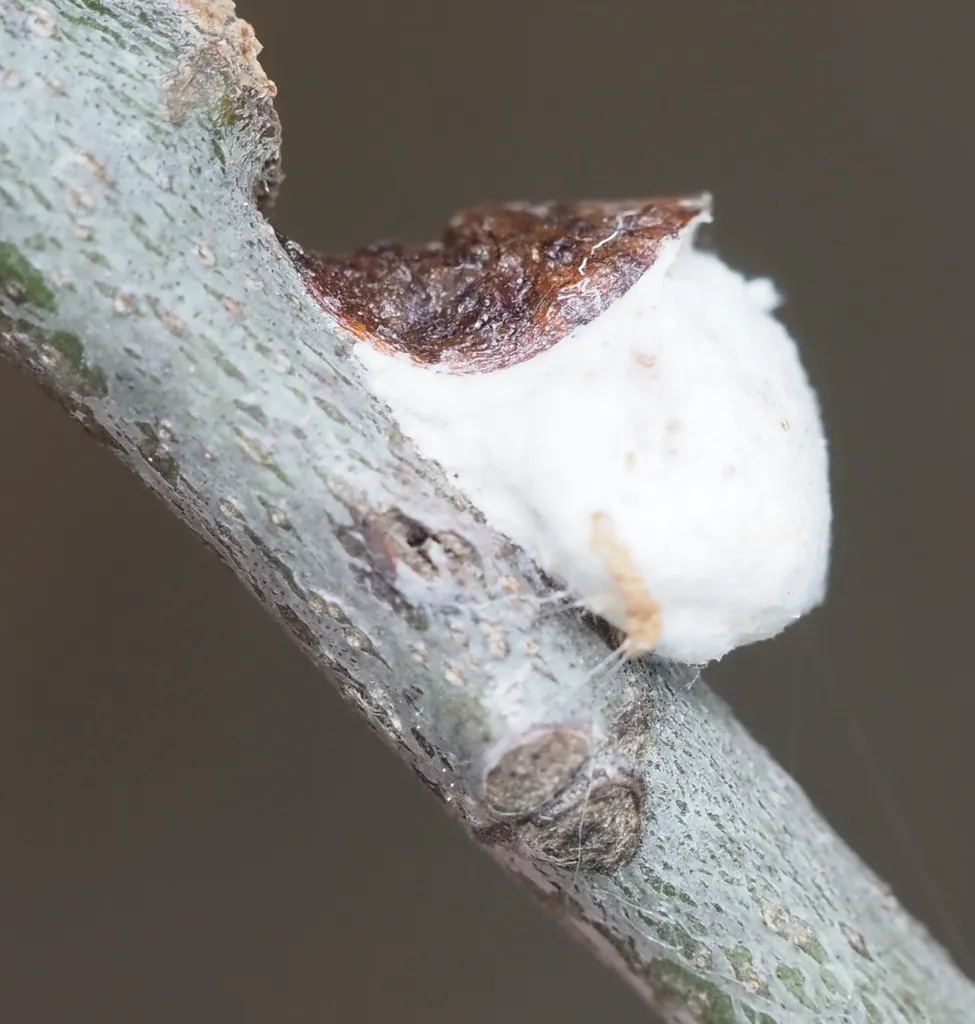
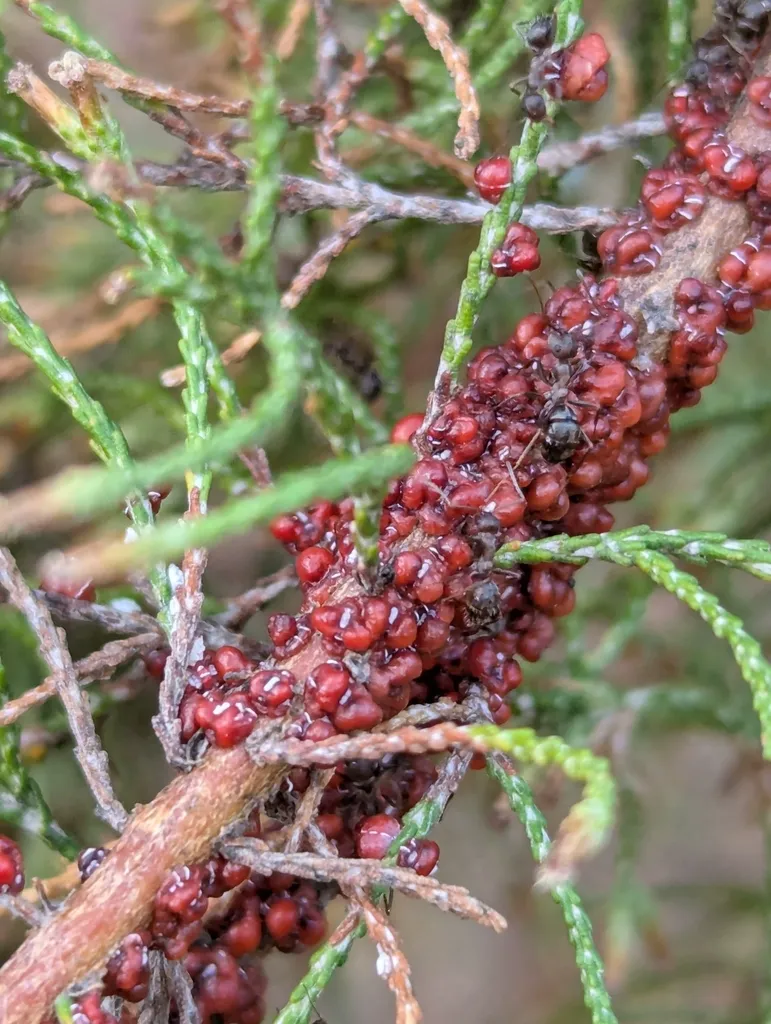
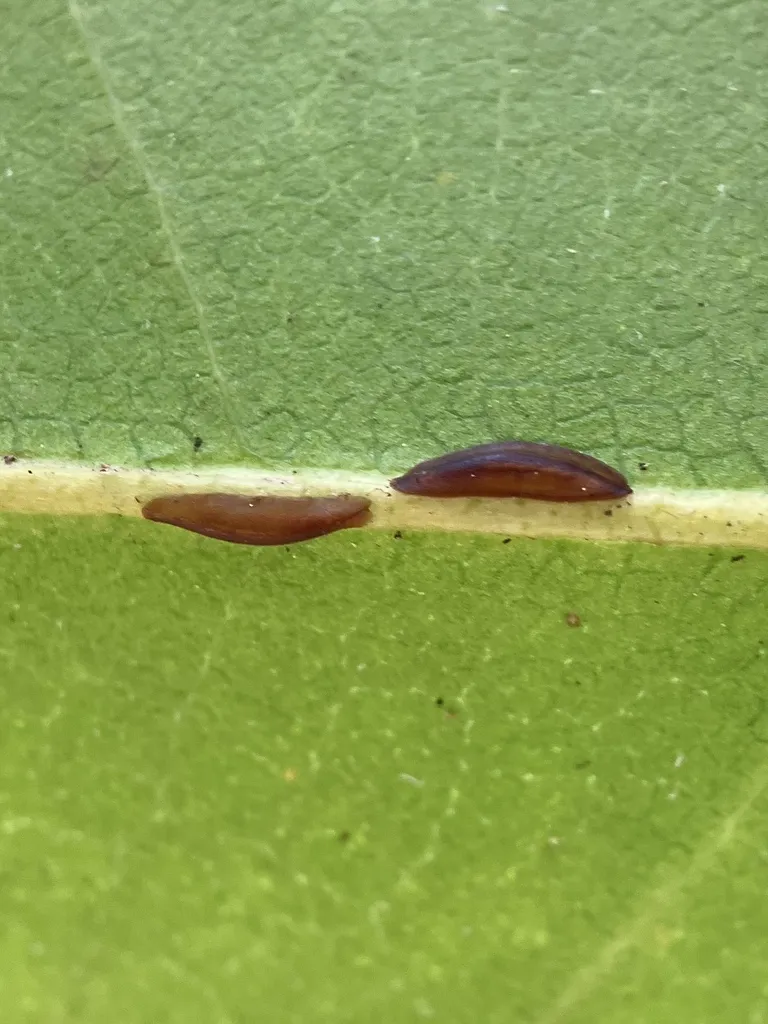
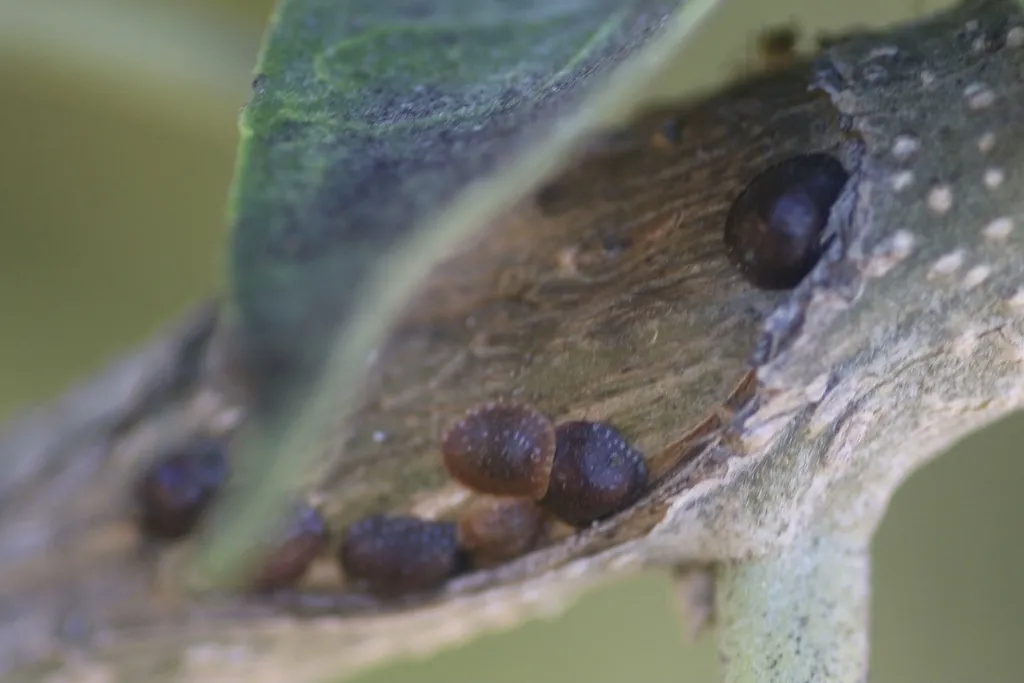
Soft scale insects are small, oval to dome-shaped pests. They range from 2 to 7 millimeters long, depending on the species. Adult females are the most visible stage. They look like raised bumps stuck to stems, branches, and the undersides of leaves. Colors vary by species, from tan and light brown to dark brown, green, or reddish-brown. Some species, like wax scales, have a thick white or pinkish waxy coating.
Armored scale insects look similar but are a different group. The easiest way to tell them apart is honeydew. Soft scales produce sticky honeydew that drips onto surfaces below. Armored scales do not. Also, if you scrape off a soft scale, the whole insect comes away in one piece. Armored scales have a hard, separate shell you can pry off the insect body underneath.
The young “crawler” stage is tiny (under 1 mm), pale, and able to move. Crawlers settle on plant tissue within a day or two and start feeding. After that, they barely move again. Adult females are wingless and stay in one spot. Males, when they develop at all, are tiny winged insects that live only long enough to mate.
Common Species in North America
- Brown Soft Scale (Coccus hesperidum): One of the most common soft scales, found on greenhouse plants, citrus, and ornamentals across the country. Adults are flat, oval, and yellowish-brown.
- Magnolia Scale (Neolecanium cornuparvum): The largest soft scale in North America, reaching up to 13 mm. Found on magnolias in the eastern United States and southeastern Canada.
- Oak Lecanium Scale (Parthenolecanium quercifex): Common on oaks in the eastern U.S. Adults are shiny brown domes on twigs.
- Pine Tortoise Scale (Toumeyella parvicornis): Attacks pines from the Northeast through the Southeast. Adults are reddish-brown and mottled.
- Wax Scales (Ceroplastes spp.): Covered in thick white or pinkish wax. Found on hollies, citrus, and many ornamentals, mainly in the Southeast.
- Tuliptree Scale (Toumeyella liriodendri): Attacks tulip poplars and magnolias in the eastern half of the continent.
Soft Scale Behavior and Biology
Soft scales feed on plant sap. They use needle-like mouthparts to tap into the plant’s vascular tissue. They take in more sugar than they can use, so they release the extra as honeydew. This sticky, clear liquid drips onto lower leaves and anything below the plant.
Honeydew causes two extra problems. First, it feeds sooty mold, a black fungus that coats leaves and blocks sunlight. Second, it draws in ants. Ants feed on the honeydew and, in exchange, guard the scales from predators like lady beetles and parasitoid wasps. This partnership makes infestations harder to control.
Life Cycle
Most soft scale species in cooler climates produce one generation per year. In warmer areas or greenhouses, some species can produce two or more. Here is the typical cycle:
- Overwintering: Eggs or young nymphs survive winter on bark, branches, or leaf undersides.
- Crawler emergence: In spring to early summer, tiny mobile crawlers hatch and spread by walking, riding the wind, or hitching rides on birds and other animals.
- Settlement: Crawlers find a good spot on the plant within 24 to 48 hours. They push their mouthparts into the tissue and start feeding.
- Growth: Nymphs go through several stages over summer, getting larger and less mobile with each one.
- Adult stage: Females reach full size by late summer or fall. Males (when present) develop wings and live just long enough to mate.
Soft scales spread mainly through infested nursery plants and potted stock. Wind, animals, and garden tools can also carry crawlers to new plants.
Host Plants and Habitat
Soft scales feed on a wide range of plants. Outdoors, they show up on shade trees (oaks, maples, elms, lindens), ornamental shrubs (hollies, euonymus, azaleas), fruit trees (citrus, stone fruits), and conifers (pines, spruces). Indoors, they infest houseplants and greenhouse crops like ficus, schefflera, and tropical foliage.
They tend to gather on twigs, branches, leaf veins, and leaf undersides where they can reach the plant’s sap. Heavy infestations are most obvious in mid to late summer when adult females are at full size and honeydew output is at its peak.
Treatment Methods for Soft Scale Insects
Treating soft scale works best when you combine several approaches: monitoring, pruning, targeted sprays, and proper timing.
-
Monitoring and timing: Check plants regularly for honeydew, sooty mold, and crawlers. The crawler stage (usually late spring through early summer) is the best time to treat. Once nymphs settle and start growing their waxy covering, they are much harder to reach with contact sprays.
-
Pruning and plant care: Cut out heavily infested branches to bring numbers down fast. Avoid heavy fertilizing, which can encourage rapid soft growth that scales favor. Healthy, well-watered plants hold up better against feeding damage.
-
Ant control: Ants protect scale colonies in exchange for honeydew. Keeping ants away from infested plants allows predators like lady beetles and parasitoid wasps to do their job. Sticky barriers on trunks or ant baits near the base of trees can help.
-
Horticultural oils and insecticidal soaps: These products smother crawlers and young nymphs on contact. Dormant oil sprays in late winter can target overwintering stages on bare branches. Summer oil sprays work well when timed to crawler emergence. Always follow label directions for temperature and mixing rates.
-
Systemic insecticides: For large trees or serious infestations, systemic products applied as soil drenches or trunk injections can give season-long control. These move through the plant’s tissue and reach scales as they feed. Follow all label directions and local regulations when using these products.
-
Physical removal: On houseplants and small shrubs, you can scrape off scales by hand or wipe them with a soft brush dipped in rubbing alcohol. A strong stream of water from a hose can knock crawlers off outdoor plants.
Soft Scale vs. Similar Pests
Soft scales are often mistaken for several other small plant-feeding insects:
- Armored scale insects: Have a separate hard shell that lifts off. They do not produce honeydew or sooty mold.
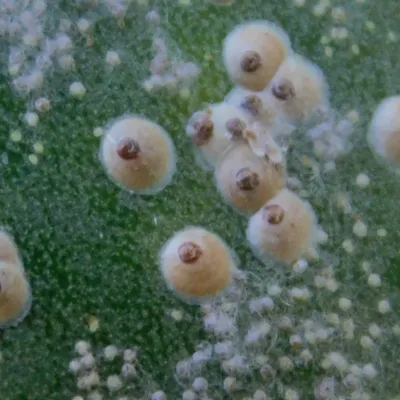
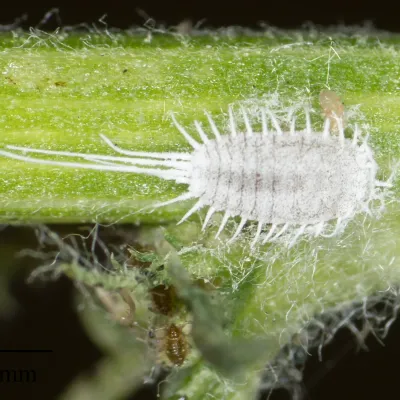
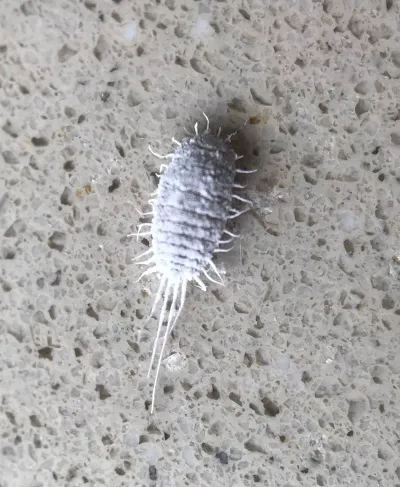
- Mealybugs: Covered in white, cottony wax threads that give them a fuzzy look. Soft scales are smooth or waxy domes instead.
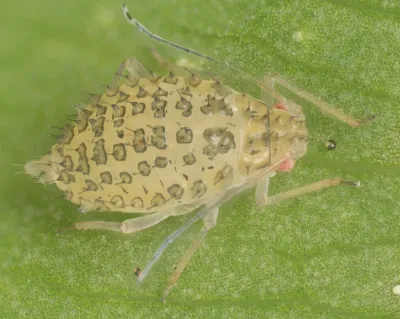
- Aphids: Also produce honeydew, but aphids are mobile and pear-shaped. They cluster on new growth rather than forming fixed bumps.
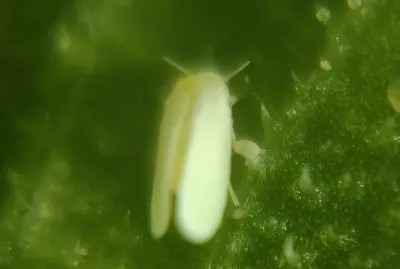
- Whiteflies: Adults have wings and fly when the plant is shaken. Their nymphs are flat, not dome-shaped like soft scales.
For a broader look at all scale insects, including the differences between soft and armored types, see our main scale insect guide.
References
Other Garden Pests
Explore other species in the garden pests family
Commonly Confused With
Soft Scale Insects are often mistaken for these similar pests
Where Soft Scale Insects Are Found
Hover over states to see their names. Green regions indicate where soft scale insects have been reported.
Common Questions about Soft Scale Insects
What are soft scale insects?
+
Soft scale insects are small, dome-shaped bugs in the family Coccidae that attach to plant stems and leaves to feed on sap. Unlike armored scales, they produce sticky honeydew that attracts ants and promotes sooty mold growth.
How can I tell soft scale from armored scale?
+
Soft scales produce honeydew and sooty mold, while armored scales do not. Soft scales also have a smooth, waxy covering that is part of their body, whereas armored scales have a separate, hard shell that can be lifted off the insect underneath.
What plants do soft scale insects attack?
+
Soft scales feed on a wide range of plants including ornamental trees, fruit trees, shrubs, and houseplants. Common hosts include oaks, maples, magnolias, hollies, citrus, and many greenhouse plants.
What is the sticky substance on my plants from soft scale?
+
That sticky substance is honeydew, a sugar-rich liquid that soft scales excrete as they feed on plant sap. Honeydew coats leaves, branches, and surfaces beneath infested plants and often leads to black sooty mold growth.
When are soft scale crawlers active?
+
Crawler activity varies by species and region, but in most of North America, crawlers emerge in late spring through early summer (May through July). This is the most vulnerable life stage and the best window for contact treatments.
Will soft scale kill my plants?
+
Mild infestations rarely kill established plants, but heavy or repeated infestations can cause leaf yellowing, branch dieback, reduced vigor, and in severe cases, death of stressed trees or shrubs.
Why are ants on my soft scale-infested plant?
+
Ants feed on the honeydew that soft scales produce. In return, ants guard the scales from other insects that would otherwise keep their numbers down. Controlling ant activity around infested plants is an important step in reducing scale populations.

With five years of hands-on experience in the pest control industry, George Schulz is a registered technician with the Virginia Pest Management Association and a proud third-generation professional in a family business that's been protecting homes for over 57 years. He manages and trains a team of service pros while also leading internal research efforts—recently spearheading a deep-dive review of thousands of documents on pest control materials to hand-pick the most kid and pet friendly, most effective solutions tailored specifically for homes in the DC metro area.