Silverleaf Whiteflies Identification Guide
Bemisia tabaci
Silverleaf whiteflies are tiny, sap-feeding insects that damage plants by draining nutrients, producing sticky honeydew, and transmitting over 100 plant viruses. They are among the most destructive agricultural pests worldwide.
Taxonomy
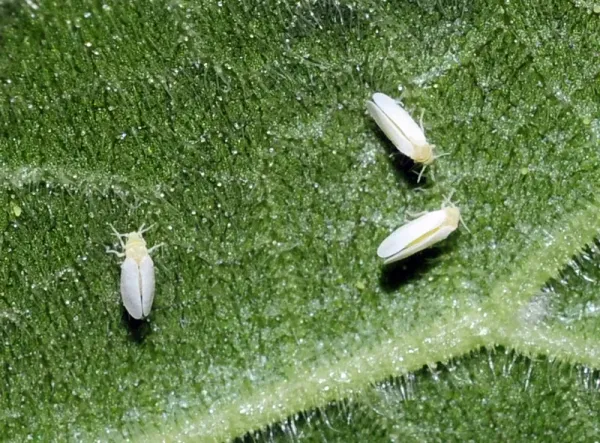
Silverleaf Whiteflies Coloration
Common color patterns to help identify silverleaf whiteflies
Silverleaf Whiteflies
Seasonal Activity
When silverleaf whiteflies are most active throughout the year

Where Silverleaf Whiteflies Are Found
Hover over states to see their names. Green regions indicate where silverleaf whiteflies have been reported.
Silverleaf Whitefly Identification Guide
Physical Characteristics
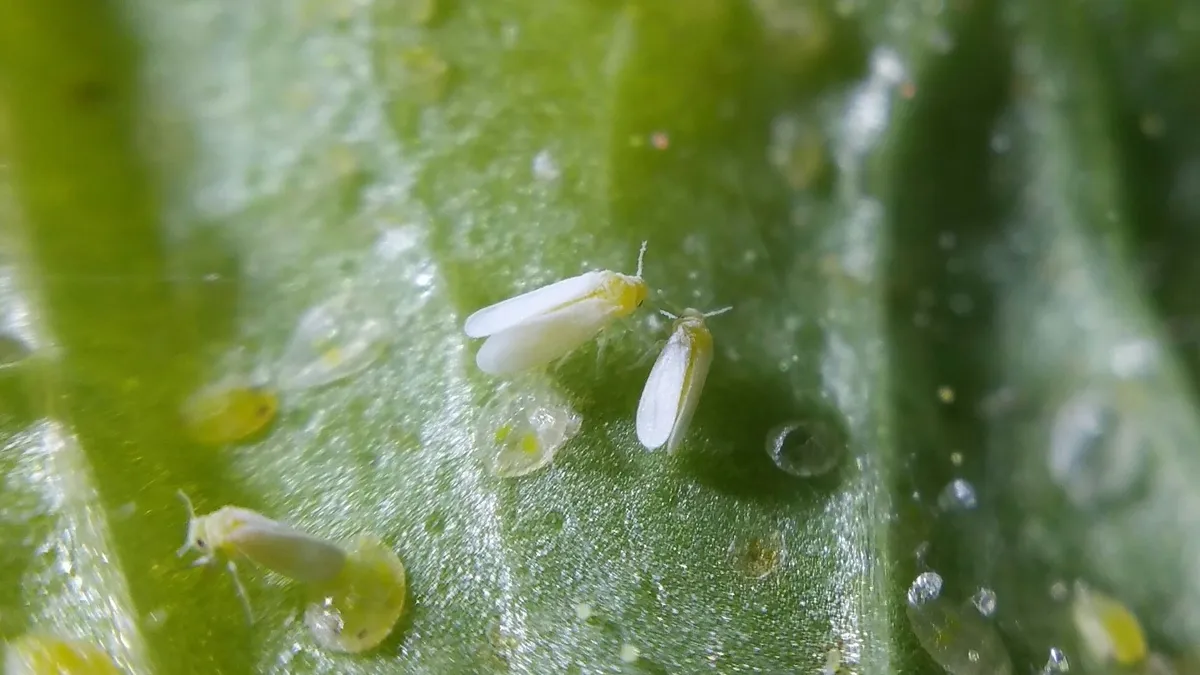
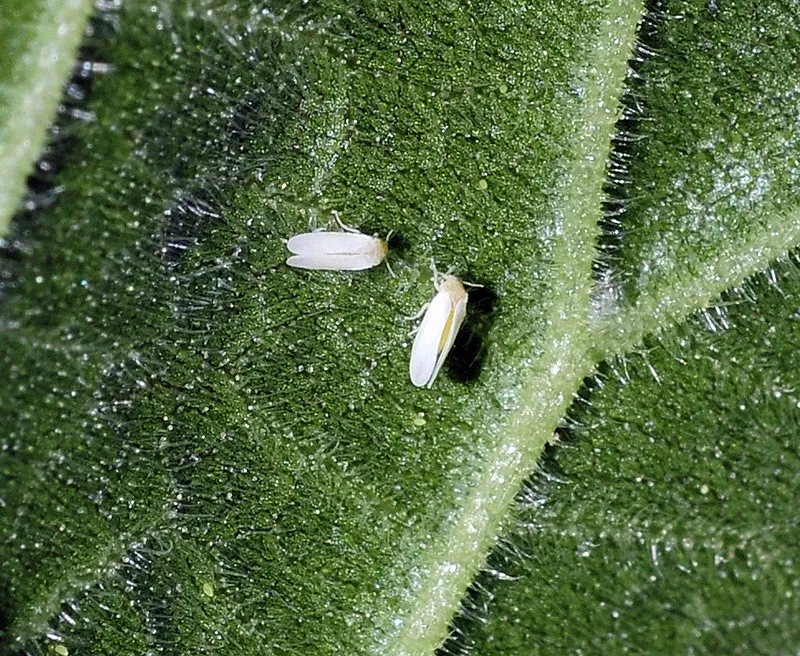
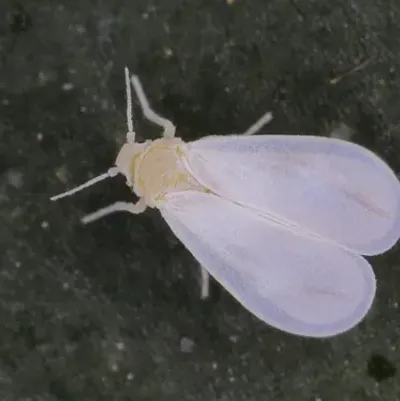
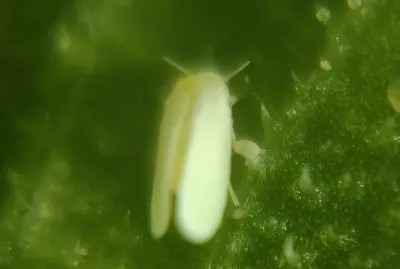
Silverleaf whiteflies are some of the smallest plant pests you will find. Adults are just 0.8 to 1.5 millimeters long, about the size of a pinhead. They have pale yellow bodies and two pairs of powdery white wings. At rest, they hold their wings in a roof-like shape with a small gap where the wings meet along the back. This wing posture is one of the best ways to tell them apart from the greenhouse whitefly, which holds its wings flatter against the body.
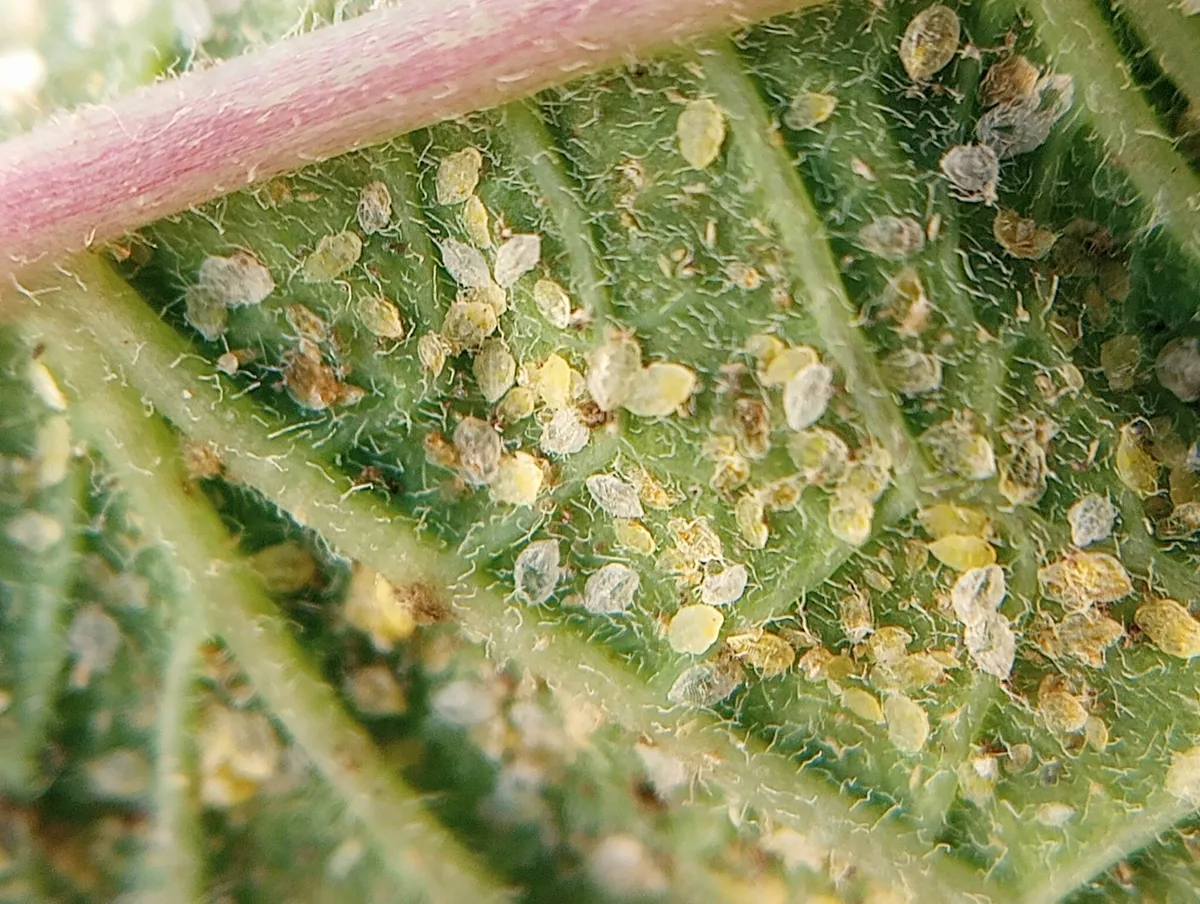
Young whiteflies look very different from adults. The first stage after hatching, called crawlers, can move around and are nearly see-through. Once they settle on a leaf, later stages become flat, oval, and scale-like. They cling to the underside of leaves and stay in one spot. The last stage before adulthood is sometimes called the “red-eye” pupa because it develops reddish eye spots. Greenhouse whitefly pupae have long waxy threads around their edges, but silverleaf whitefly pupae are smooth with very few of these threads.
Common Species and Biotypes
Silverleaf whitefly is really a group of closely related species. They look the same but have different genes. The two main types in North America are:
-
MEAM1 (formerly B biotype): The most common type in the United States. It was once called Bemisia argentifolii. It causes silverleaf disorder in squash and spreads many plant viruses.
-
MED (formerly Q biotype): Originally from the Mediterranean region. This type has been found in U.S. greenhouses. It is harder to control with many common insecticides than MEAM1.
Silverleaf Whitefly Behavior and Biology
Habitat and Feeding
Silverleaf whiteflies feed on plant sap. Both adults and young use tiny needle-like mouths to pierce leaves and drink the juices inside. This drains water and food from the plant. Leaves turn yellow, growth slows, and leaves may fall off when numbers are high. As they feed, they leave behind a sticky liquid called honeydew. This coats leaf surfaces and leads to black sooty mold. The mold does not attack the plant itself, but it blocks sunlight and slows growth.
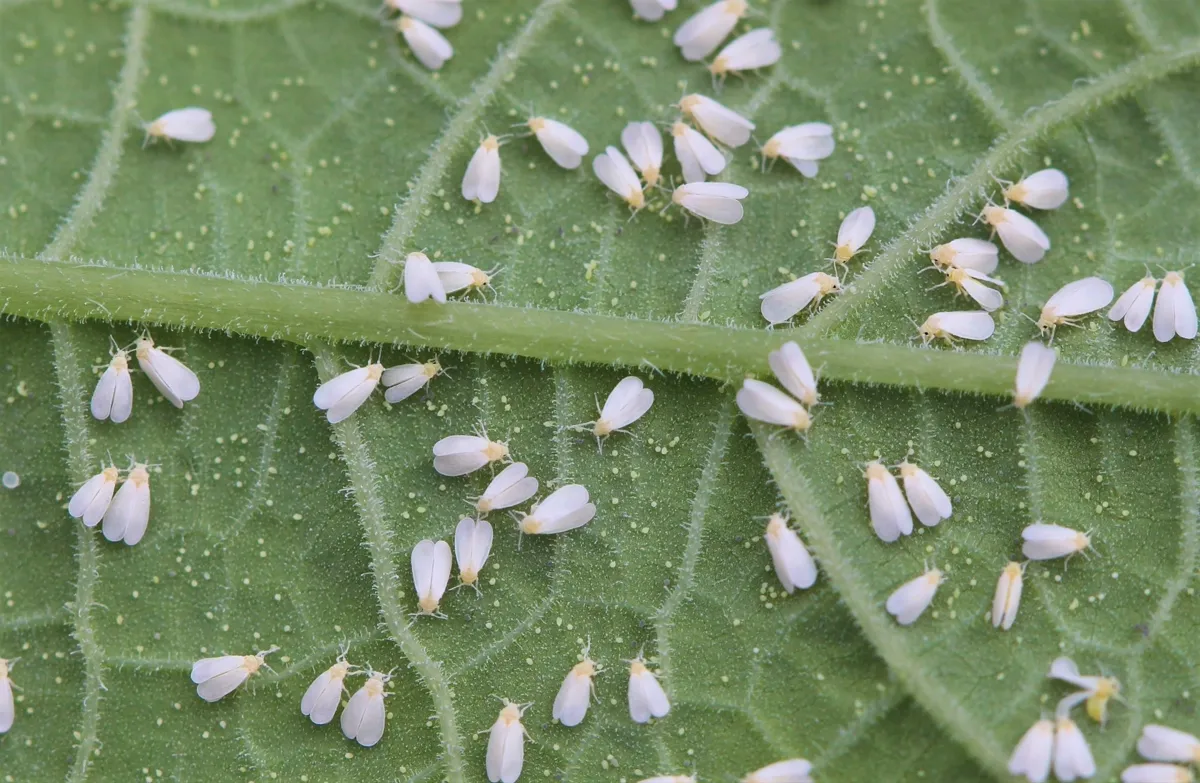
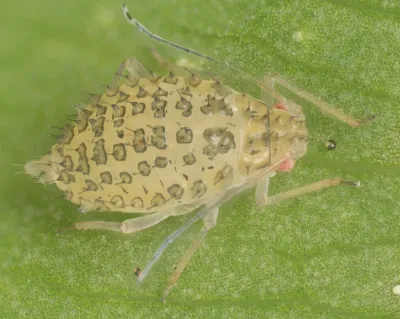
Adults gather on the undersides of leaves and fly up in small white clouds when you brush against the plant. They prefer young, tender leaves for laying eggs. These pests feed on a huge range of plants, including tomatoes, peppers, squash, cucumbers, beans, poinsettias, hibiscus, and lantana. In farm settings, cotton is one of the most heavily affected crops. Like aphids, silverleaf whiteflies produce honeydew and cause feeding damage. However, whiteflies spread plant diseases far more often.
Life Cycle and Reproduction
The silverleaf whitefly goes through four life stages: egg, nymph (four growth phases), pupa, and adult. Females lay tiny, pear-shaped eggs on the bottoms of leaves, often in curved rows. One female can lay 100 to 300 eggs in her lifetime.
How fast they grow depends on temperature. They start growing when temps hit about 50 degrees Fahrenheit and slow down above 90 degrees. In warm weather, the full cycle from egg to adult takes only 2 to 4 weeks. This fast growth lets numbers build up quickly in summer. In warm climates and greenhouses, several generations can overlap at once. This makes control much harder.
Virus Transmission
Silverleaf whiteflies can spread over 100 plant viruses. This is one of the biggest reasons they cause so much damage. Tomato yellow leaf curl virus (TYLCV) is one of the worst, causing major crop losses around the world. Whiteflies pick up viruses while feeding on sick plants. Then they pass the virus to healthy plants the next time they feed. Symptoms can take weeks to show up, so sick plants often spread the disease before anyone notices.
Treatment Methods for Silverleaf Whiteflies
Getting silverleaf whiteflies under control usually takes a mix of methods. Monitoring, good garden habits, biological controls, and targeted sprays all play a part.
Monitoring and Early Detection
- Yellow sticky traps: Hang these near plant height to catch adults early. Check them often to track how fast numbers are growing.
- Leaf checks: Look at the undersides of lower and middle leaves each week for nymphs, pupae, and eggs. A magnifying glass or hand lens helps spot the smaller stages.
- Honeydew and sooty mold: Sticky leaves and black mold on leaf surfaces are signs of whitefly feeding nearby.
Prevention and Cultural Controls
- Check new plants: Always look at the undersides of leaves before adding new plants to your garden or greenhouse. Keep new plants separate for at least two weeks to watch for signs of whiteflies.
- Remove infested material: Cut off and throw away heavily infested leaves or branches. After harvest, destroy old crop debris to remove places where whiteflies can overwinter.
- Use reflective mulches: Silver or aluminum mulches around vegetable crops have been shown to keep whiteflies away, especially when plants are young.
- Control weeds: Many weeds act as host plants for both whiteflies and the viruses they carry. Keeping the area around your garden free of weeds helps reduce the problem.
Biological Control Options
Biological control uses other organisms to reduce whitefly numbers:
- Parasitic wasps: Tiny wasps in the Encarsia and Eretmocerus groups are commonly released in greenhouses. They lay eggs inside whitefly nymphs, killing them as the wasp larvae grow.
- Predators: Ladybugs, lacewings, minute pirate bugs, and the whitefly predator beetle Delphastus catalinae eat whitefly eggs and nymphs.
- Fungal products: Sprays made with Beauveria bassiana or Isaria fumosorosea fungi can infect and kill whiteflies on contact.
Chemical Treatment Options
When populations grow large, insecticide treatments may be needed. Effective options include:
- Insecticidal soaps and horticultural oils: These contact sprays work well against nymphs and adults. Make sure to cover the undersides of leaves where whiteflies gather.
- Insect growth regulators: Products with buprofezin or pyriproxyfen stop young whiteflies from developing into adults.
- Systemic insecticides: These products are taken up by the plant and kill whiteflies as they feed. They provide longer-lasting control but should be used carefully and rotated with other products.
- Rotating products: Switching between different types of insecticides is very important. The MED biotype has shown resistance to several product classes, so using the same product over and over will become less effective over time.
References
- Sweetpotato (Silverleaf) Whitefly - UC Pest Management - Full identification and control guide from the University of California.
- Bemisia tabaci EPPO Datasheet - Global distribution and status information from the European and Mediterranean Plant Protection Organization.
- Silverleaf Whitefly - Texas A&M Field Guide - Photos and regional control guidance.
- Sweetpotato Whitefly Phenology Model - UC - Temperature-based development model for predicting whitefly activity.
- Classical Biological Control of Bemisia tabaci - USDA Forest Service - History of biological control efforts in the United States.
Other Garden Pests
Explore other species in the garden pests family
Commonly Confused With
Silverleaf Whiteflies are often mistaken for these similar pests
Where Silverleaf Whiteflies Are Found
Hover over states to see their names. Green regions indicate where silverleaf whiteflies have been reported.
Common Questions about Silverleaf Whiteflies
What do silverleaf whiteflies look like?
+
Silverleaf whiteflies are very small, about 1 to 1.5 millimeters long. Adults have a pale yellow body covered with powdery white wings that they hold in a roof-like position. When you disturb an infested plant, clouds of tiny white insects flutter into the air.
How can I tell silverleaf whiteflies apart from greenhouse whiteflies?
+
Silverleaf whiteflies hold their wings at an angle with a small gap between them, while greenhouse whiteflies hold their wings flatter against their bodies. Silverleaf whitefly pupae are smooth with very few waxy filaments, whereas greenhouse whitefly pupae have many long waxy threads around their edges.
Are silverleaf whiteflies harmful to my garden?
+
Yes, silverleaf whiteflies can cause serious plant damage. They drain sap from leaves, causing yellowing and wilting. They also produce honeydew that leads to sooty mold, and they can transmit over 100 different plant viruses including tomato yellow leaf curl virus.
What plants do silverleaf whiteflies attack?
+
Silverleaf whiteflies feed on hundreds of plant species. They are especially damaging to tomatoes, peppers, squash, cucumbers, beans, cotton, poinsettias, and many ornamental plants. Few pest insects attack as wide a range of plants.
When are silverleaf whiteflies most active?
+
In temperate areas like the Mid-Atlantic, silverleaf whiteflies are most active from June through September when temperatures are warmest. In southern states like Florida and Texas, they can reproduce year-round. Greenhouse populations can be active in any season.
Can silverleaf whiteflies survive winter outdoors?
+
In northern and temperate states, silverleaf whiteflies generally cannot survive freezing winter temperatures outdoors. However, they can overwinter in greenhouses, on indoor plants, and in mild southern climates where host plants remain available year-round.
How fast do silverleaf whiteflies reproduce?
+
Very fast. A single female can lay 100 to 300 eggs in her lifetime. In warm conditions, the complete life cycle from egg to adult takes only 2 to 4 weeks, which means populations can explode rapidly during summer months.

With five years of hands-on experience in the pest control industry, George Schulz is a registered technician with the Virginia Pest Management Association and a proud third-generation professional in a family business that's been protecting homes for over 57 years. He manages and trains a team of service pros while also leading internal research efforts—recently spearheading a deep-dive review of thousands of documents on pest control materials to hand-pick the most kid and pet friendly, most effective solutions tailored specifically for homes in the DC metro area.