Rose Aphids Identification Guide
Macrosiphum rosae
Rose aphids are soft-bodied, sap-sucking insects that form dense colonies on rose buds and new shoots. They range from green to pink and produce sticky honeydew that leads to sooty mold on foliage.
Taxonomy
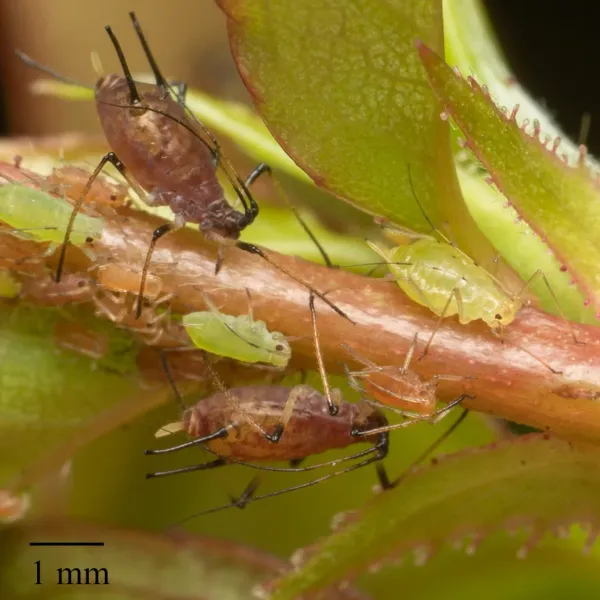
Rose Aphids Coloration
Common color patterns to help identify rose aphids
Rose Aphids
Seasonal Activity
When rose aphids are most active throughout the year

Where Rose Aphids Are Found
Hover over states to see their names. Green regions indicate where rose aphids have been reported.
Rose Aphid Identification Guide
Physical Characteristics
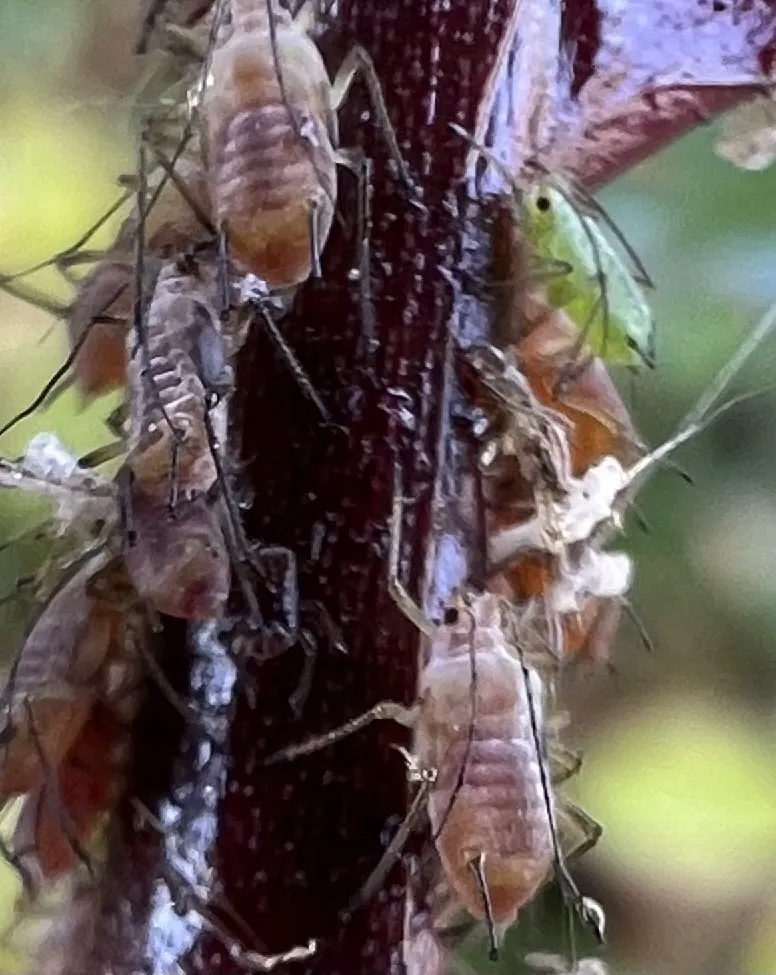
Rose aphids (Macrosiphum rosae) are one of the larger aphid species found in North American gardens. Adults measure 1.7 to 3.6 millimeters long, about the size of a sesame seed. They have a pear-shaped body with long antennae and six slender legs.
The best way to tell rose aphids apart from other aphids is by their cornicles. Cornicles are the two tube-like parts that stick out near the rear of the body. On rose aphids, the cornicles are long, tapered, and dark brown to black. This dark color sets them apart from look-alike species that have pale cornicles.
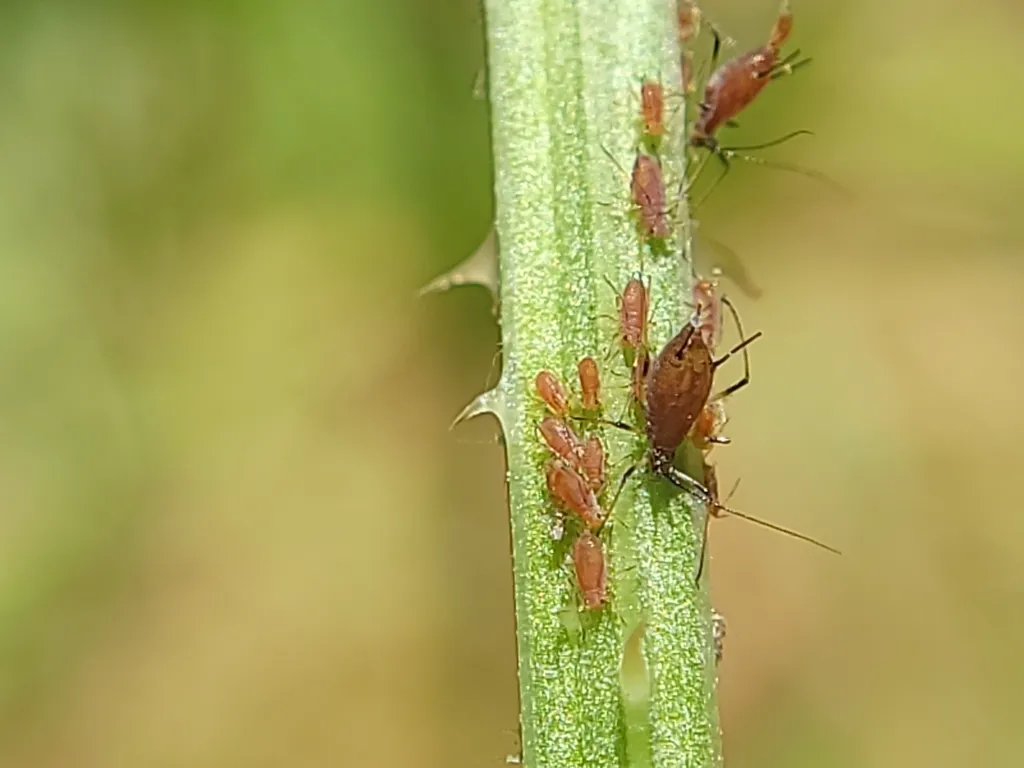
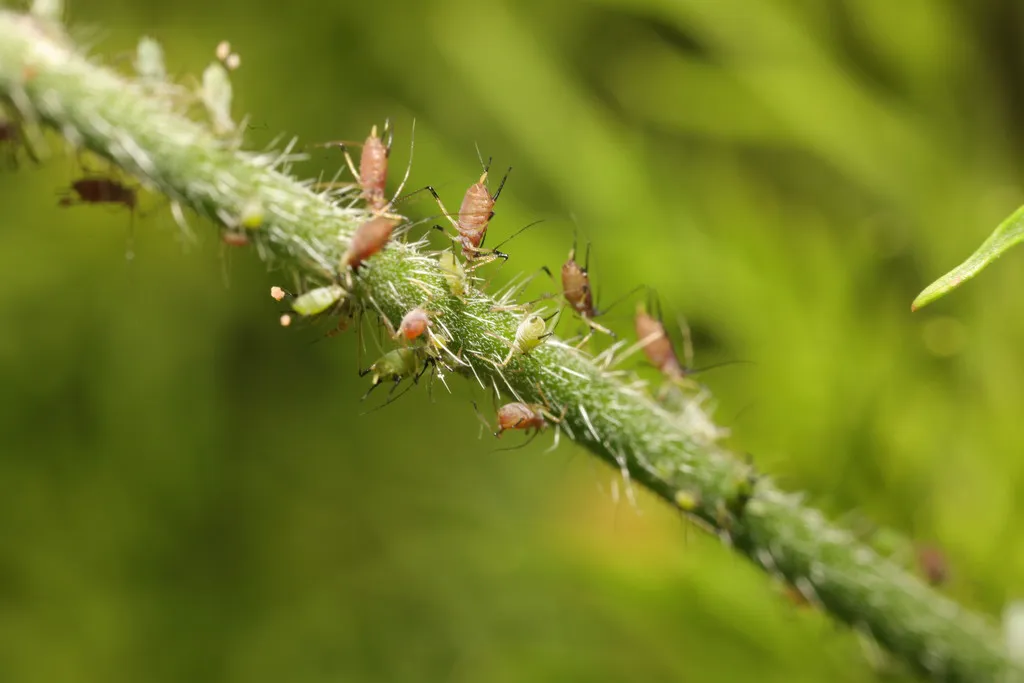
Rose aphids come in several colors. The same species can be green, pink, or reddish-brown. Both color forms may show up in the same colony. Most rose aphids lack wings. Winged forms appear when colonies get crowded or when the host plant starts to decline. Winged adults are slimmer with dark markings on the thorax and can fly to new plants.
Species Commonly Confused with Rose Aphids
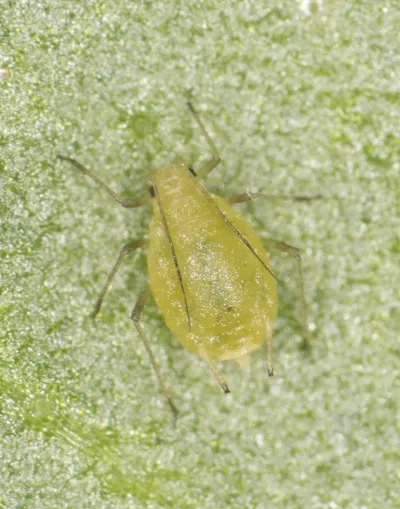
Green Peach Aphid (Myzus persicae): Smaller than rose aphids and usually pale yellow-green. Its cornicles match the body color instead of being dark. It also has a dent between its antennal bases. It feeds on a much wider range of plants.
Potato Aphid (Macrosiphum euphorbiae): A close relative with a similar size and overlapping pink and green color forms. The potato aphid has paler cornicles with dusky tips. It feeds on potatoes, tomatoes, and many other plants.
Rose-Grain Aphid (Metopolophium dirhodum): Has pale cornicles and often shows a darker stripe down its back. This species starts on roses in spring but moves to grasses and grain crops by midsummer. Rose aphids stay on roses all season.
Rose Aphid Behavior and Biology
Rose aphids spend the winter as small, shiny black eggs on rose canes. The eggs sit near buds and in bark cracks. When spring arrives and rose buds start to swell, the eggs hatch. The first young, called stem mothers, begin feeding right away on soft new growth.
From spring through summer, females give birth to live young without mating. This process is called parthenogenesis. Each female can produce dozens of nymphs in her lifetime. These nymphs are born already growing the next batch inside them. This rapid cycle lets colonies explode from a few aphids to thousands in just weeks.
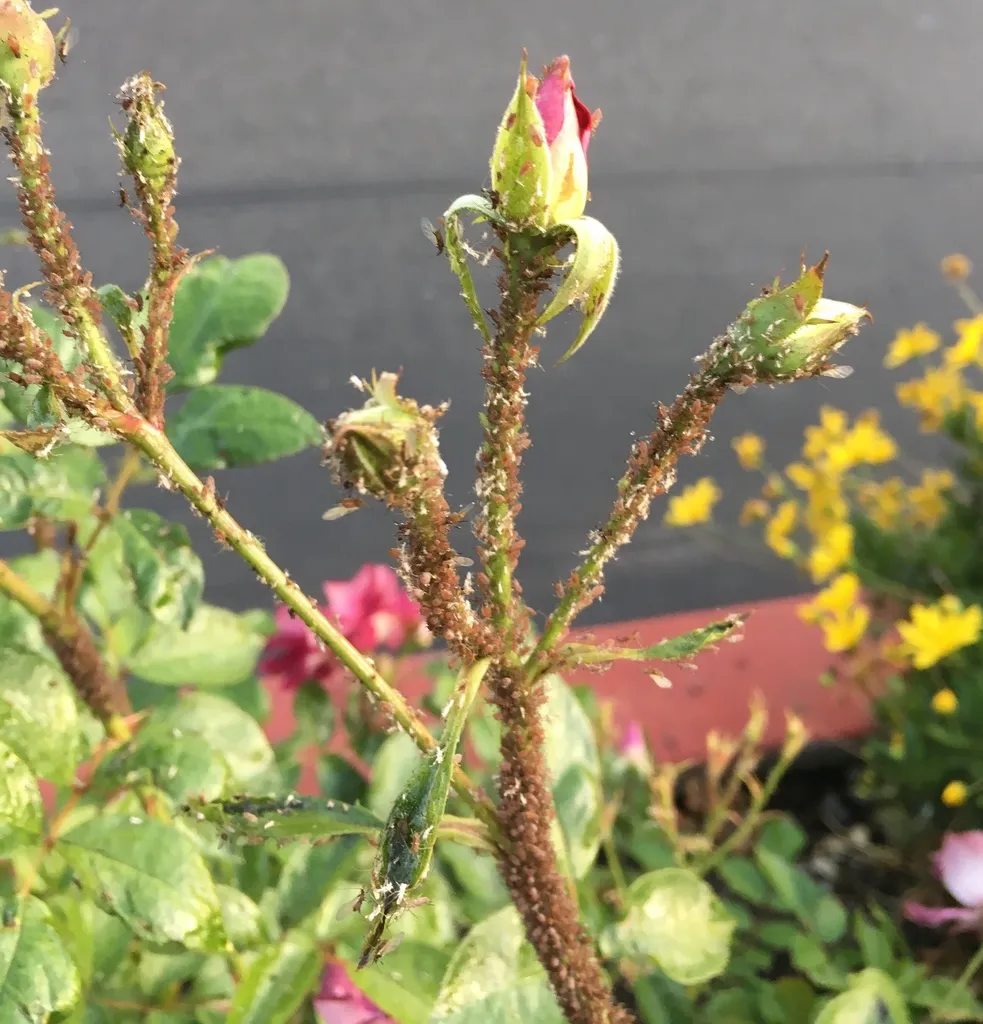
Rose aphids gather in tight clusters on shoot tips, flower buds, and young stems. They feed by pushing their thin mouthparts into the plant and sucking out sap. As they feed, they release extra sugars as honeydew. This sticky liquid coats leaves and stems below the colony. Honeydew draws ants, which guard aphid colonies in return for the sweet food. Black sooty mold also grows on honeydew, blocking sunlight from reaching the leaves.
When colonies get too crowded, winged females develop and fly to nearby rose bushes to start new groups. In fall, males and egg-laying females appear. After mating, females lay eggs on rose canes. These eggs survive the winter and hatch the next spring. In mild winter areas, some groups skip the egg stage and keep giving birth year-round.
Plant Damage
Heavy rose aphid colonies cause several types of visible harm:
- Curled and twisted new growth at shoot tips where colonies feed
- Stunted or misshaped flower buds that may not open
- Sticky honeydew on leaves, stems, and surfaces below the plant
- Black sooty mold on honeydew-coated leaves
- Yellow leaves on shoots that have lost too much sap
- Fewer blooms and weaker plants over time
Rose aphids can also spread plant viruses. They have been linked to at least 11 different viruses. Their role as virus carriers is smaller than that of species like the green peach aphid, but it still adds to the damage they cause.
Treatment Methods for Rose Aphids
Rose aphids breed fast, so using more than one control method at a time gives the best results. A mix of good plant care, physical removal, and targeted products can bring colonies under control.
Monitoring and Early Action
Check your roses at least once a week during the growing season. Look closely at new shoot tips and buds. Small groups of a few dozen aphids are common and often resolve on their own. Act when you see colonies growing fast, leaves curling, or sticky honeydew building up.
Cultural Practices
Good rose care helps stop aphid problems before they start:
- Go easy on nitrogen. Too much nitrogen makes soft, lush growth that draws aphids in. Spread fertilizer out in small amounts over the season.
- Prune infested tips. Cut off shoots covered in aphids and throw them away. Winter pruning also removes overwintering eggs on canes.
- Space plants well. Good airflow helps plants dry fast and makes it harder for aphid colonies to take hold.
Physical and Contact Treatments
Several methods work well to knock down rose aphid colonies:
- Water spray: A strong blast of water from a garden hose knocks aphids off plants. Do this in the morning so leaves dry before night. Repeat every few days.
- Insecticidal soap: Kills aphids on contact. You need to spray the colonies directly for it to work. Reapply after rain.
- Horticultural oil: Coats and smothers aphids on contact. Apply during cooler hours to avoid leaf burn. Test on a small area first, since some rose types are sensitive.
- Neem oil: Acts as both a contact treatment and a feeding deterrent. Follow label rates for mixing and timing.
Professional and Systemic Options
For large or stubborn infestations, systemic products can help. The plant absorbs these through its roots, and aphids take in the active ingredient as they feed. Systemic treatments give longer-lasting control than contact sprays alone. A pest control professional can evaluate the level of the problem and choose the right product and timing for your roses.
References
Other Garden Pests
Explore other species in the garden pests family
Commonly Confused With
Rose Aphids are often mistaken for these similar pests
Where Rose Aphids Are Found
Hover over states to see their names. Green regions indicate where rose aphids have been reported.
Common Questions about Rose Aphids
What do rose aphids look like?
+
Rose aphids are soft-bodied, pear-shaped insects about 1.7 to 3.6 mm long. They come in green, pink, or reddish-brown color forms. A key identifying feature is their long, dark or black cornicles, which are the two tube-like projections near the rear of the body. Most individuals are wingless, but winged forms develop when colonies get crowded.
What damage do rose aphids cause?
+
Rose aphids feed by piercing plant tissue and sucking out sap. This causes new shoots to curl and become stunted. Flower buds may fail to open or produce deformed blooms. They also leave behind a sticky substance called honeydew that attracts ants and grows black sooty mold on leaves and stems.
Why are there ants on my rose bushes with the aphids?
+
Ants feed on the honeydew that aphids produce. In return, ants guard the aphid colony from ladybugs and lacewings. If you see ants marching up and down your rose canes, check the new growth tips for aphid colonies. Treating the ant activity can help reduce aphid numbers as well.
When are rose aphids most active?
+
Rose aphids are most active from late spring through midsummer, with peak populations in June and July when roses are putting out new growth and flower buds. They overwinter as eggs on rose canes and hatch in early spring as new leaves emerge.
Will rose aphids kill my roses?
+
Rose aphids rarely kill established, healthy rose bushes. However, heavy infestations can weaken plants over time, reduce flower production, and make roses look unsightly due to curled leaves and sooty mold. Young or stressed plants are more vulnerable to lasting damage.
How can I get rid of rose aphids naturally?
+
Start by spraying plants with a strong jet of water from a hose to knock aphids off. Prune heavily infested shoots and throw them away. Insecticidal soap or horticultural oil can be applied for colonies that keep coming back. For large or stubborn problems, a pest control company can apply targeted treatments.
Do rose aphids spread diseases to other plants?
+
Rose aphids can transmit certain plant viruses, though they are not as prolific at virus transmission as some other aphid species like the green peach aphid. They have been implicated in spreading at least 11 plant viruses. The viruses they carry mainly affect roses and related plants rather than vegetables.

With five years of hands-on experience in the pest control industry, George Schulz is a registered technician with the Virginia Pest Management Association and a proud third-generation professional in a family business that's been protecting homes for over 57 years. He manages and trains a team of service pros while also leading internal research efforts—recently spearheading a deep-dive review of thousands of documents on pest control materials to hand-pick the most kid and pet friendly, most effective solutions tailored specifically for homes in the DC metro area.