Greenhouse Whiteflies Identification Guide
Trialeurodes vaporariorum
Greenhouse whiteflies are tiny, white-winged sap-feeding insects that thrive in warm, sheltered environments. They weaken plants by draining nutrients and producing sticky honeydew that promotes sooty mold growth.
Taxonomy
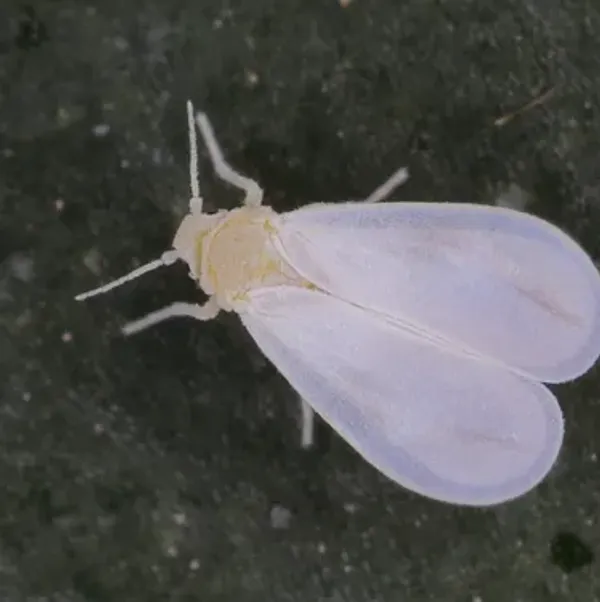
Greenhouse Whiteflies Coloration
Common color patterns to help identify greenhouse whiteflies
Greenhouse Whiteflies
Seasonal Activity
When greenhouse whiteflies are most active throughout the year
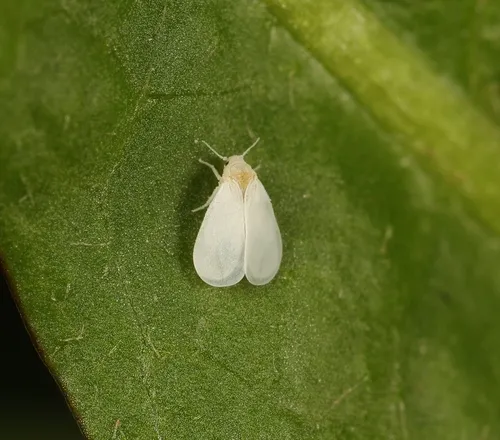
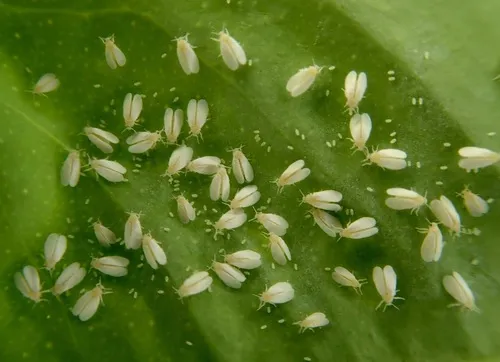
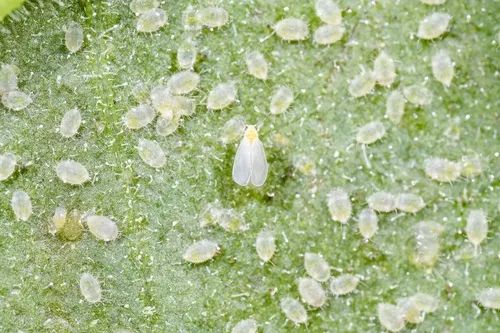

Where Greenhouse Whiteflies Are Found
Hover over states to see their names. Green regions indicate where greenhouse whiteflies have been reported.
Greenhouse Whitefly Identification Guide
Physical Characteristics
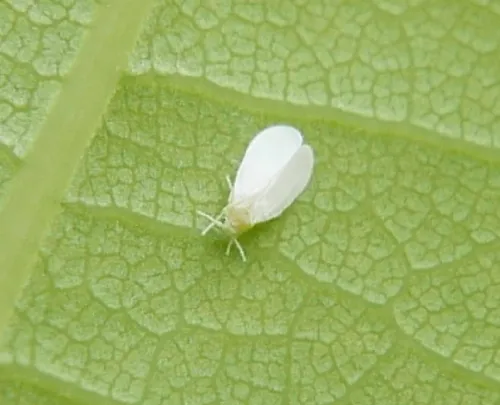
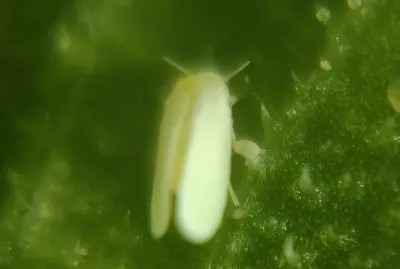
The greenhouse whitefly (Trialeurodes vaporariorum) is one of the most common whitefly species in homes and greenhouses across North America. Adults are small. They measure just 1 to 2 millimeters long, about the size of a pinhead. A fine white, waxy powder covers their bodies and wings, giving them their white color. Despite the name, they are not true flies. They belong to the order Hemiptera and are closer relatives of aphids and scale insects.
When resting, adult greenhouse whiteflies hold their wings flat against the leaf surface. This flat wing position is one of the easiest ways to tell them apart from the silverleaf whitefly (Bemisia tabaci), which holds its wings at a tented angle. Look for their red-orange eyes with a hand lens. Shake or brush a plant you suspect is infested. The adults will fly up in a small cloud of white specks before settling back down.
Young greenhouse whiteflies look very different from adults. Eggs are tiny, oval, and pale yellow. Females lay them in curved rows on the bottoms of leaves. After hatching, the first nymphs (called crawlers) move around to find a feeding spot. Once they settle, later nymph stages become flat, oval, and stuck in place. The final nymph stage has a raised body ringed with waxy threads along its edge. This fringe of waxy threads is a key feature for telling this species apart from others.
How to Tell Them Apart from Similar Pests
Several pests look like greenhouse whiteflies:
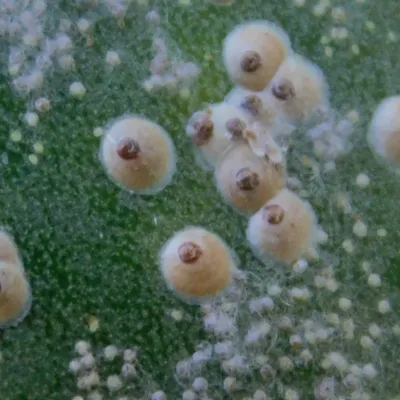
- Silverleaf whitefly (Bemisia tabaci): A bit smaller and holds wings in a tent shape rather than flat. Pupae do not have the waxy fringe that greenhouse whitefly pupae show.
- Bandedwinged whitefly (Trialeurodes abutiloneus): Similar shape but has gray bands across its wings.
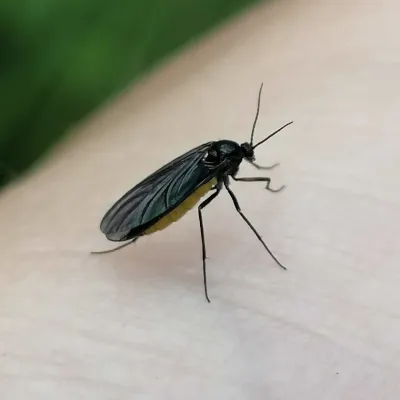
- Fungus gnats: Darker colored with longer legs and antennae. Fungus gnats are true flies and do not have the white, waxy coating.
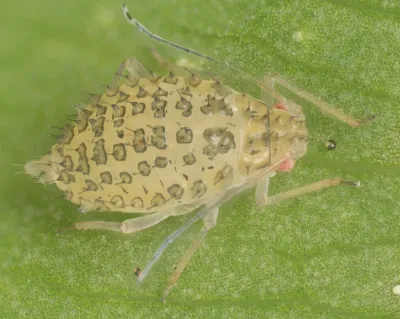
- Aphids: Soft-bodied and usually green, brown, or black. Aphids do not fly up in white clouds when you touch the plant.
Greenhouse Whitefly Behavior and Biology
Lifecycle and Reproduction
The greenhouse whitefly goes through four main stages: egg, nymph (four sub-stages), pupa, and adult. Females lay 200 to 400 eggs in their lifetime, placing them on the bottoms of leaves. Eggs hatch in 5 to 10 days based on temperature.
After hatching, the first nymph moves a short distance and then pushes its mouthparts into the leaf to start feeding. It stays mostly in one spot through the next three nymph stages. The full cycle from egg to adult can take as few as 18 days in warm greenhouse conditions (around 75 to 80 degrees Fahrenheit). In cooler weather, it can take six weeks or longer. Adults live about 10 to 40 days.
This fast growth rate makes greenhouse whiteflies hard to control. In heated greenhouses, they breed all year long. Eggs, nymphs, pupae, and adults are all present at the same time. A few whiteflies can turn into a big problem in just a few weeks.
Feeding Habits and Plant Damage
Greenhouse whiteflies feed on plant sap. They push their needle-like mouthparts into leaf tissue and pull out sugars and nutrients. Over time, this weakens the plant. Leaves turn yellow, growth slows, and leaves may fall off early.
As they feed, whiteflies leave behind a sticky waste called honeydew. This coats leaf surfaces and helps black sooty mold grow. Sooty mold does not attack the plant directly, but it blocks sunlight. This makes it even harder for the plant to stay healthy. Heavy infestations can seriously weaken or kill plants due to the mix of sap loss and mold growth.
Greenhouse whiteflies also spread plant viruses, including beet pseudo-yellows virus. Sick plants may show uneven yellowing, poor fruit set, and overall decline. This makes finding and treating whiteflies early very important, especially for vegetable growers.
Seasonal Activity
Outdoors, greenhouse whiteflies are most active from June through August. They slow down in cool weather and usually do not survive freezing temperatures. In the Mid-Atlantic and similar areas, outdoor numbers build in spring, peak in summer, and drop in fall.
Inside heated greenhouses, the picture changes. Greenhouse whiteflies stay active all year as long as temperatures stay above 50 degrees Fahrenheit. This is why they are such a lasting problem in greenhouses, sunrooms, and homes with many houseplants.
Treatment Methods for Greenhouse Whiteflies
Getting rid of greenhouse whiteflies usually takes more than one method. These insects breed fast and can become resistant to chemicals, so using a mix of tactics works best.
Prevention and Early Detection
- Check new plants: Always look at the bottoms of leaves before bringing new plants home. Keep new plants apart from your other plants for one to two weeks and watch for whitefly signs.
- Use yellow sticky traps: Place yellow sticky cards near the tops of your plants. They catch adult whiteflies and help you spot a problem early.
- Remove badly infested plants: Cut off and throw away leaves or plants that are heavily infested. This helps stop the spread to healthy plants.
Biological Control
Several natural enemies can help keep greenhouse whitefly numbers down, especially in greenhouse settings:
- Parasitic wasps: Encarsia formosa is the most common natural enemy used against greenhouse whiteflies. These tiny wasps lay eggs inside whitefly nymphs, killing them as the wasp young grow. Eretmocerus eremicus is another option.
- Predatory beetles: Delphastus catalinae, a small beetle, eats whitefly eggs and nymphs in large numbers.
- Lacewings: Green lacewing larvae feed on whitefly eggs and nymphs.
- Fungal sprays: Beauveria bassiana is a fungus that kills whiteflies on contact when sprayed on plants.
Chemical Control Options
When other methods fall short, insecticide treatments may be needed. Products with insecticidal soap, horticultural oil, or neem oil can knock down whitefly numbers. These work on contact and break down quickly after use.
For worse infestations, systemic insecticides may help. Keep in mind that greenhouse whiteflies have built up resistance to several chemical types, especially neonicotinoids and pyrethroids. Switching between different product types helps slow resistance from building. Always spray the bottoms of leaves where whiteflies gather for the best results.
Putting It All Together
The best results come from using prevention, monitoring, natural enemies, and targeted chemical treatments together. This layered approach lowers the chance of resistance and keeps whitefly numbers under control.
References
- Whiteflies Pest Notes - UC Statewide Pest Management
- Greenhouse Whitefly Fact Sheet - UNH Extension
- Greenhouse Whitefly - Entomological Society of America
- Whiteflies in Greenhouse Crops - Ontario Ministry of Agriculture
- Encarsia formosa Biological Control - Cornell University
- Greenhouse Whitefly and Virus Transmission - American Phytopathological Society
Other Garden Pests
Explore other species in the garden pests family
Commonly Confused With
Greenhouse Whiteflies are often mistaken for these similar pests
Where Greenhouse Whiteflies Are Found
Hover over states to see their names. Green regions indicate where greenhouse whiteflies have been reported.
Common Questions about Greenhouse Whiteflies
What does a greenhouse whitefly look like?
+
Adult greenhouse whiteflies are tiny insects, about 1 to 2 millimeters long. They have white, powdery wings that they hold flat over their bodies like a roof. Their eyes are reddish-orange. When you disturb a plant they are feeding on, they fly up in a small white cloud.
How do greenhouse whiteflies get into my home?
+
Greenhouse whiteflies most often enter homes on infested houseplants or nursery stock. When you bring new plants home from a garden center, any whiteflies hiding on the undersides of leaves come along for the ride. They can also fly in through open windows during warm weather.
What damage do greenhouse whiteflies cause?
+
Greenhouse whiteflies feed by sucking sap from plant leaves, which weakens the plant over time. Leaves may turn yellow, wilt, or drop off. They also produce a sticky substance called honeydew that coats leaves and encourages black sooty mold growth. In severe cases, they can transmit plant viruses.
How can I tell greenhouse whiteflies apart from other whitefly species?
+
Greenhouse whiteflies hold their wings flat and parallel to the leaf surface when resting. This differs from the silverleaf whitefly, which holds its wings tented at an angle. Additionally, greenhouse whitefly pupae have a fringe of waxy filaments around the edges, which is a reliable identifying feature.
How fast do greenhouse whiteflies reproduce?
+
Very fast. A single female can lay 200 to 400 eggs during her lifetime. Under warm conditions, the full lifecycle from egg to adult takes as little as two to three weeks. In heated greenhouses, they can produce overlapping generations year-round.
Are greenhouse whiteflies harmful to people or pets?
+
No. Greenhouse whiteflies do not bite, sting, or transmit diseases to humans or animals. They are strictly plant pests. The main concern is the damage they cause to houseplants, garden plants, and greenhouse crops.
What plants do greenhouse whiteflies prefer?
+
Greenhouse whiteflies feed on a wide range of plants. Common targets include tomatoes, peppers, cucumbers, lettuce, poinsettias, hibiscus, fuchsia, and many other ornamental and vegetable plants. They tend to prefer plants with soft, tender leaves.

With five years of hands-on experience in the pest control industry, George Schulz is a registered technician with the Virginia Pest Management Association and a proud third-generation professional in a family business that's been protecting homes for over 57 years. He manages and trains a team of service pros while also leading internal research efforts—recently spearheading a deep-dive review of thousands of documents on pest control materials to hand-pick the most kid and pet friendly, most effective solutions tailored specifically for homes in the DC metro area.