Green Peach Aphids Identification Guide
Myzus persicae
Green peach aphids are small, pear-shaped sap-feeding insects that attack over 400 plant species and transmit more than 100 plant viruses. They are one of the most economically important aphid species in North America.
Taxonomy
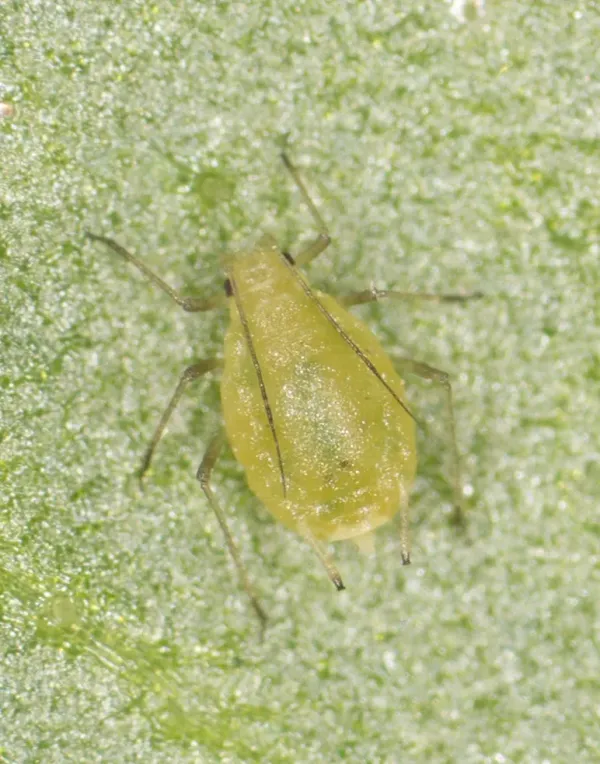
Green Peach Aphids Coloration
Common color patterns to help identify green peach aphids
Green Peach Aphids
Seasonal Activity
When green peach aphids are most active throughout the year

Where Green Peach Aphids Are Found
Hover over states to see their names. Green regions indicate where green peach aphids have been reported.
Green Peach Aphid Identification Guide
Physical Characteristics
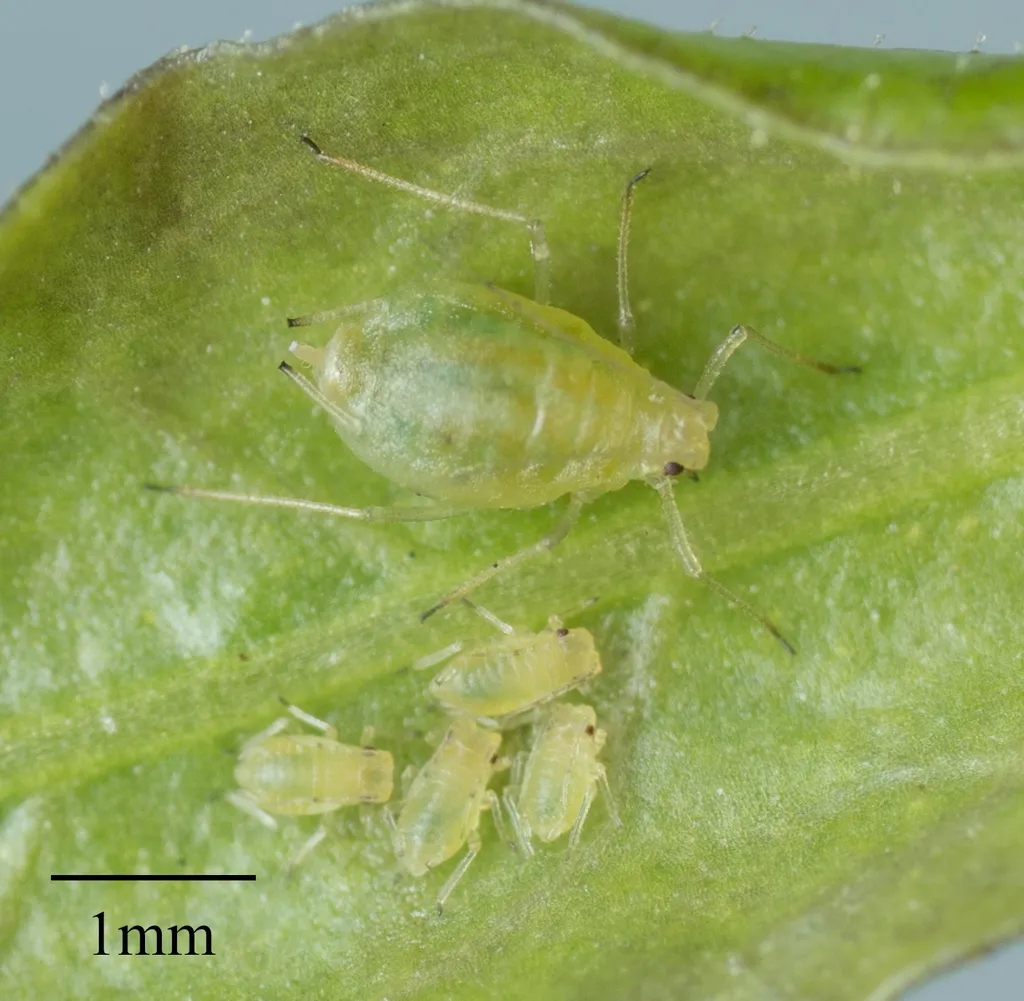
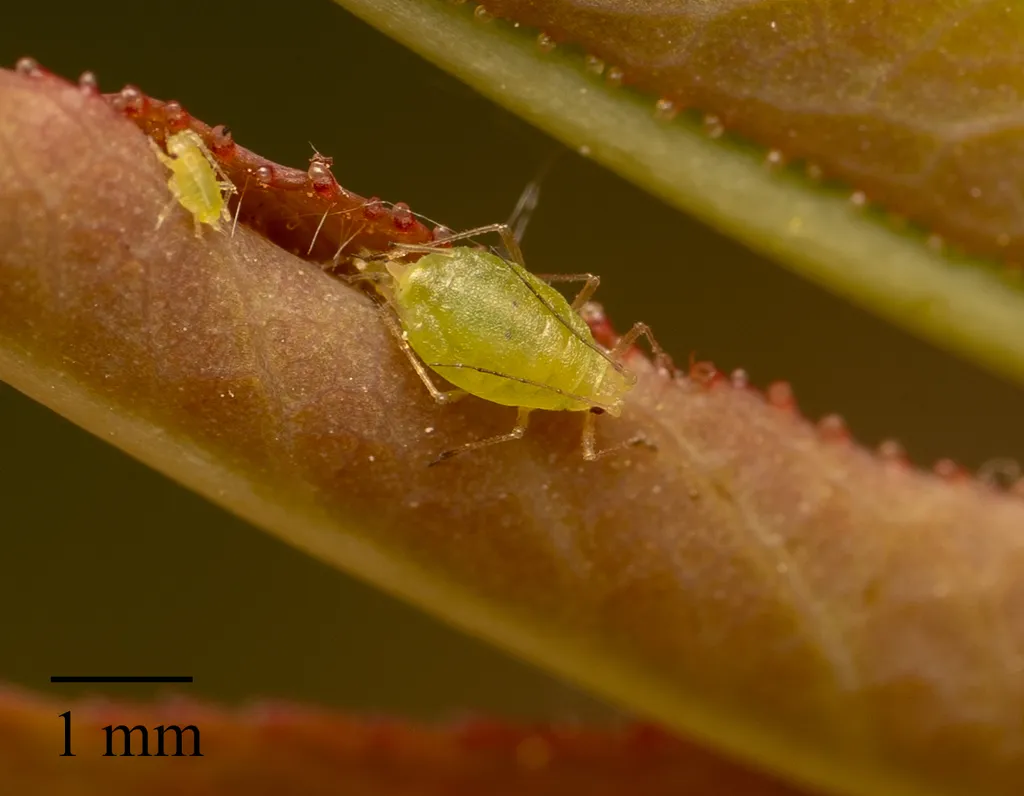
Green peach aphids are small, soft-bodied insects about 1.8 to 2.1 millimeters long. That is roughly the size of a pinhead. They have the pear-shaped body common to all aphids, with long antennae and six slender legs. You can tell them apart from other aphids by the bumps at the base of their antennae, called antennal tubercles. These bumps point inward toward each other. A pair of small tubes called cornicles stick out from the rear of the body. The cornicles are the same color as the body and may have slightly darker tips.
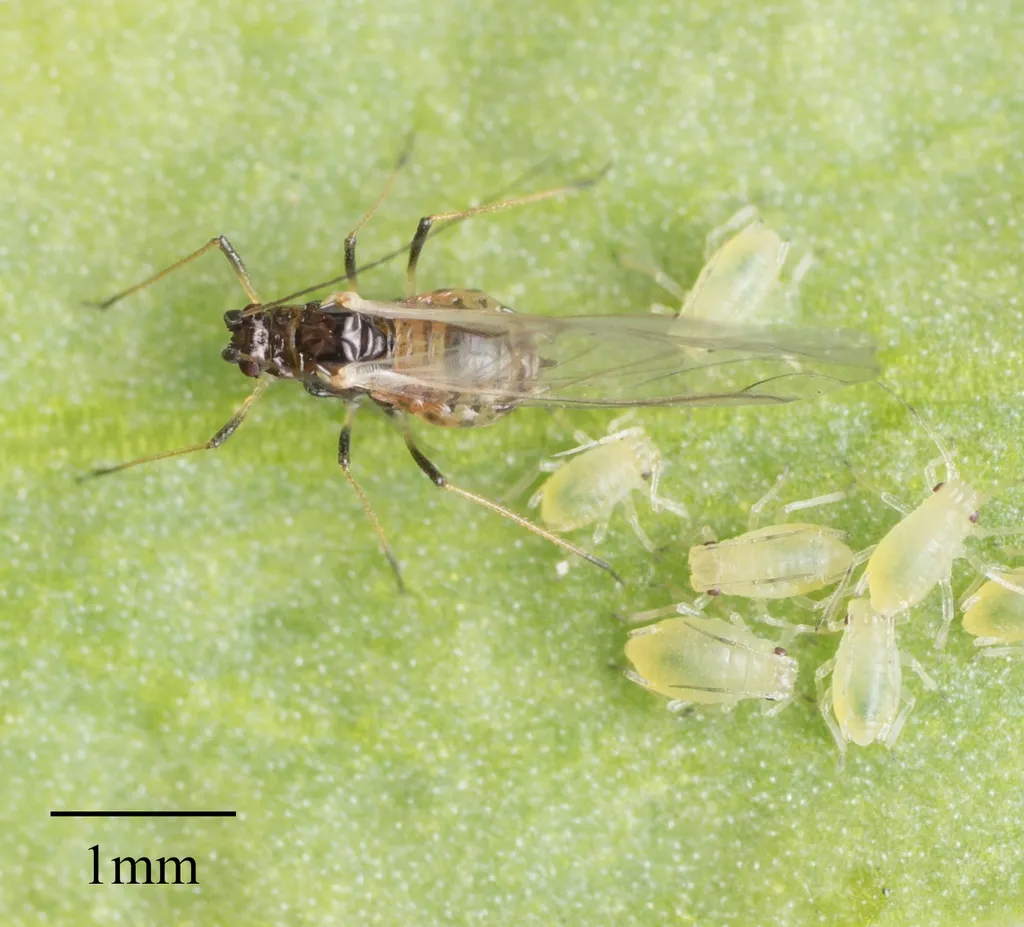
The wingless form is usually pale yellow-green. Color can shift depending on the host plant and the time of year. Red, orange, and pinkish forms show up often in late summer and fall. The winged form looks quite different. It has a dark black head and thorax with a yellowish-green abdomen. A large dusky blotch on the top of the abdomen is one of the best ways to tell winged green peach aphids apart from other aphid species in the field.
Common Species and Variants
The green peach aphid (Myzus persicae) is one species, but it shows up in several forms during its life cycle:
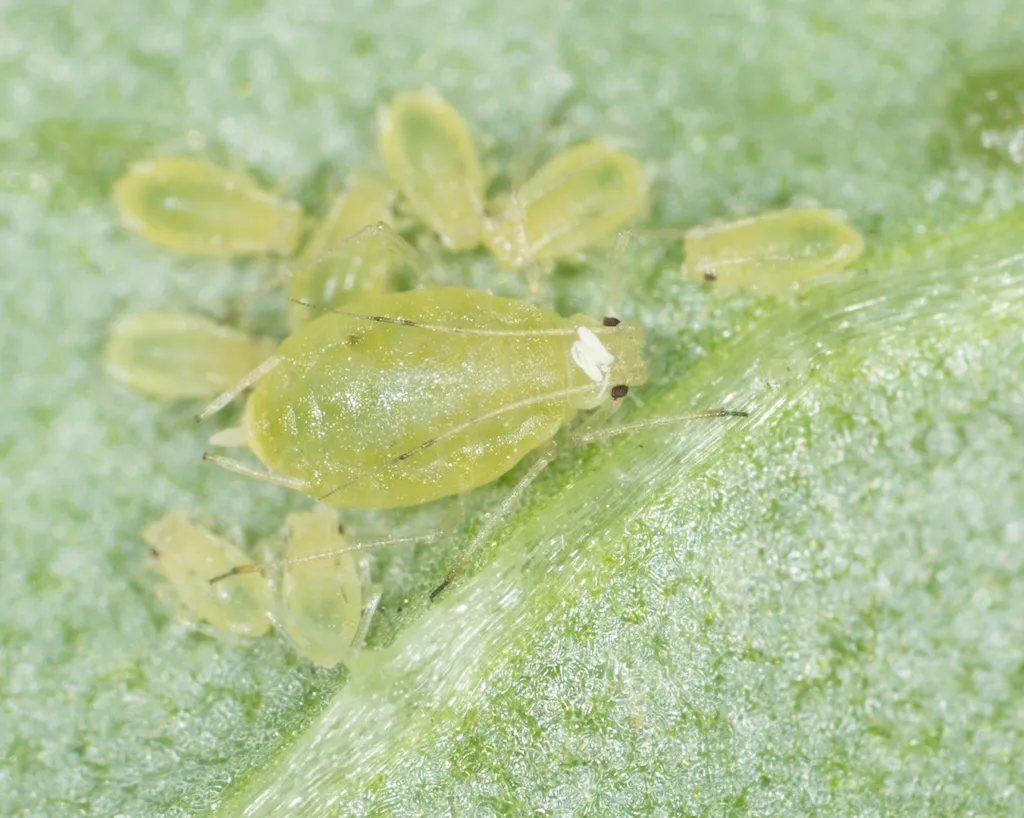
- Wingless females (apterae) are the form you will see most often. They are pale green to yellowish-green, pear-shaped, and found in groups on the undersides of leaves.
- Winged females (alatae) develop when colonies get crowded or when host plants start to decline. They have a dark thorax and head with a blotch on the abdomen.
- Sexual females (oviparae) show up in fall in colder areas. They lay eggs that survive the winter on Prunus trees.
- Males are small and winged. They only appear during the fall mating season.
Green Peach Aphid Behavior and Biology
Green peach aphids have one of the most complex life cycles of any insect pest. In colder regions, they spend the winter as eggs on peach, plum, cherry, and other stone fruit trees (Prunus species). These eggs hatch in early spring when buds open. The young nymphs feed on new tree growth. After one or two generations on Prunus, winged females develop and fly to a wide range of summer plants. These include vegetables, field crops, flowers, and weeds.
In warmer areas and inside greenhouses, green peach aphids skip the egg-laying stage. They reproduce year-round through a process called parthenogenesis. Females give birth to live nymphs without mating. Each female can produce 60 to 80 young in her lifetime. A full generation takes only 10 to 12 days in good conditions. Populations can grow fast, sometimes reaching harmful levels within a week or two of first showing up on a plant.
Green peach aphids feed by pushing their needle-like mouthparts into plant tissue and sucking out sap. This causes leaves to curl, turn yellow, and stop growing. As they feed, they release a sticky substance called honeydew that coats plant surfaces. Honeydew draws in ants, which guard aphid colonies in return for the sweet food. Black sooty mold grows on honeydew too, blocking sunlight and weakening the plant further.
Virus Transmission
The green peach aphid causes the most damage through spreading plant viruses, not through feeding alone. It can carry over 100 different plant viruses. That is more than almost any other insect. Many of these viruses, including potato virus Y and cucumber mosaic virus, spread in a non-persistent way. The aphid picks up virus particles during quick feeding probes that last only seconds. It then passes the virus to the next plant it touches. This fast spread makes it very hard to stop virus transmission with sprays alone, since the virus moves before any product can take effect.
Treatment Methods for Green Peach Aphids
Green peach aphids respond best when you use several control methods together. These aphids reproduce quickly and have built up resistance to many common products, so relying on one approach alone often falls short.
Monitoring and Early Detection
Check your plants regularly to catch aphids early. Look at the undersides of new leaves and growing tips at least once a week during the growing season. Yellow sticky traps placed near plants can help spot winged aphids arriving before colonies take hold. Acting early gives the best results.
Cultural and Preventive Measures
Simple garden care habits can go a long way in keeping green peach aphids away:
- Avoid over-fertilizing with nitrogen. Too much nitrogen creates soft, tender growth that draws aphids in.
- Pull weeds that can host aphids and carry viruses.
- Check transplants and new plants before adding them to your garden or greenhouse.
- Use reflective mulches around vegetable beds to keep winged aphids from landing.
- Clean up old crop debris right after harvest to remove aphid hiding spots.
Biological Control
Several predator insects feed on green peach aphids and can help keep their numbers down. Common aphid predators include:
- Lady beetles (Coccinellidae), which eat up to 50 aphids per day
- Green lacewing larvae (Chrysoperla spp.), which are aggressive aphid feeders
- Syrphid fly larvae (hover flies), which feed on aphid colonies
- Parasitic wasps (Aphidius spp.), which lay eggs inside aphids and create brown “mummy” shells
In greenhouses, releasing parasitic wasps or aphid midges can keep populations in check. Before applying any treatments, look for brown “mummy” aphids or active predators already working on the problem.
Chemical Treatment Options
When aphid numbers get too high, several treatments can bring them under control:
- Insecticidal soaps and horticultural oils kill aphids on contact and break down fast. Thorough coverage of leaf undersides is key.
- Neem oil kills on contact and can also deter feeding.
- Systemic products protect plants from within the root system. Follow all label directions when using these near plants in bloom.
Green peach aphids have built up resistance to many product types over the years. Switching between different product classes helps keep treatments working. Many plant viruses spread before any contact spray can take effect. For this reason, chemical treatment alone rarely stops virus transmission.
References
Other Garden Pests
Explore other species in the garden pests family
Commonly Confused With
Green Peach Aphids are often mistaken for these similar pests
Where Green Peach Aphids Are Found
Hover over states to see their names. Green regions indicate where green peach aphids have been reported.
Common Questions about Green Peach Aphids
What do green peach aphids look like?
+
Green peach aphids are small, pear-shaped insects about 1.8 to 2.1 mm long. They are typically pale yellow-green, though red and orange color forms exist. They have long antennae with prominent converging antennal tubercles, and a pair of tube-like cornicles near their rear end. Winged forms have a dark head and thorax with a dusky blotch on the abdomen.
What plants do green peach aphids attack?
+
Green peach aphids feed on over 400 plant species across more than 40 plant families. Their hosts include stone fruits like peach and plum, vegetables like tomato, pepper, potato, and lettuce, brassicas, tobacco, and many flowers and shrubs.
Do green peach aphids spread plant diseases?
+
Yes. Green peach aphids can spread over 100 different plant viruses. These include potato leafroll virus, potato virus Y, and cucumber mosaic virus. A single aphid can pick up and pass along a virus in just seconds during a quick feeding probe.
How fast do green peach aphids reproduce?
+
Very fast. A full generation can finish in just 10 to 12 days. Females give birth to live young without mating. The nymphs they produce are already growing the next generation inside them. In mild climates, over 20 generations can happen in a single year.
Why do some green peach aphids have wings?
+
Winged forms develop when colonies become overcrowded or when host plant quality declines. These winged adults fly to new plants and start fresh colonies. Winged green peach aphids are the primary way this species disperses over long distances, often assisted by wind currents.
When are green peach aphids most active?
+
In temperate regions, green peach aphids are most active from spring through fall. Populations peak during spring migration in April and May and again during fall alate production in September. In greenhouses or warm southern climates, they can reproduce year-round.
How can I tell green peach aphids apart from other aphids?
+
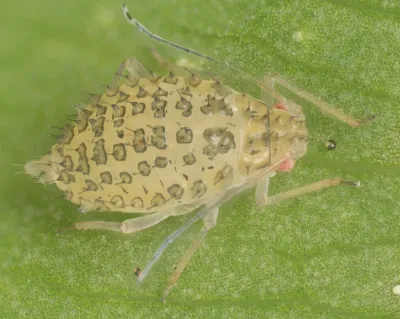
Look for their pale yellow-green color, converging antennal tubercles, and slightly flared cornicles that match their body color. Winged forms have a distinctive dark head and thorax with a dusky dorsal blotch on the abdomen. Potato aphids are larger, melon aphids are often darker, and cabbage aphids have a waxy gray coating.

With five years of hands-on experience in the pest control industry, George Schulz is a registered technician with the Virginia Pest Management Association and a proud third-generation professional in a family business that's been protecting homes for over 57 years. He manages and trains a team of service pros while also leading internal research efforts—recently spearheading a deep-dive review of thousands of documents on pest control materials to hand-pick the most kid and pet friendly, most effective solutions tailored specifically for homes in the DC metro area.