Giant Whiteflies Identification Guide
Aleurodicus dugesii
Giant whiteflies are large, sap-feeding insects native to Mexico that produce distinctive long waxy filaments on leaf undersides. They damage ornamental plants by draining nutrients and promoting sooty mold growth from their honeydew secretions.
Taxonomy
Giant Whiteflies Coloration
Common color patterns to help identify giant whiteflies
Giant Whiteflies
Seasonal Activity
When giant whiteflies are most active throughout the year

Where Giant Whiteflies Are Found
Hover over states to see their names. Green regions indicate where giant whiteflies have been reported.
Giant Whitefly Identification Guide
Physical Characteristics
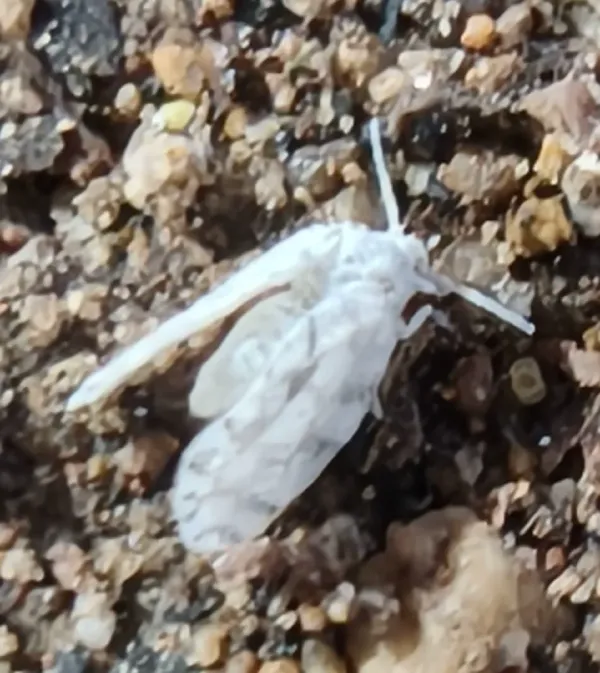
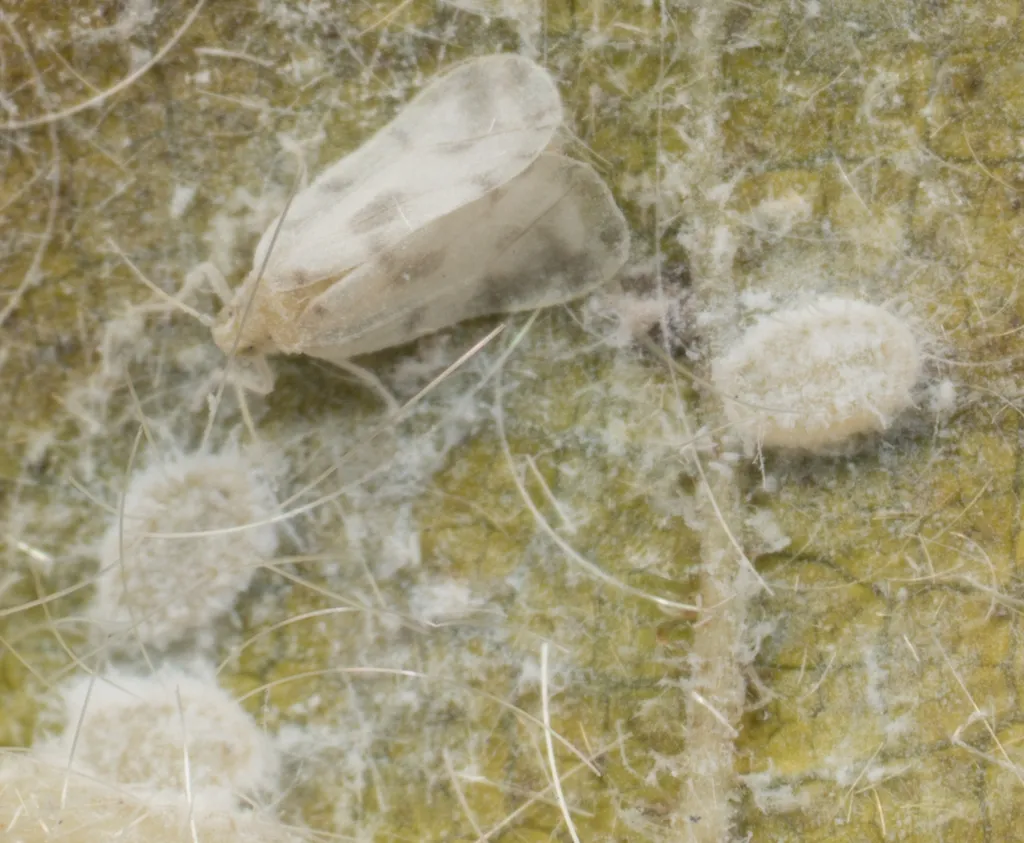
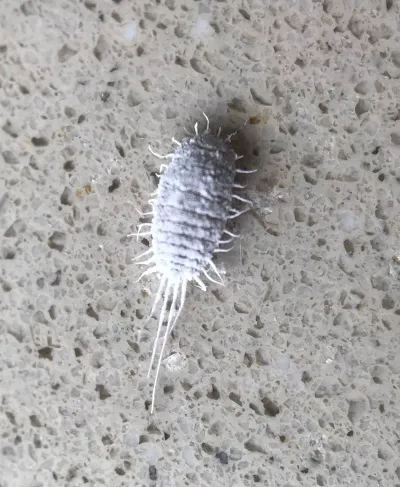
Giant whiteflies (Aleurodicus dugesii) are one of the largest whitefly species. Adults measure about 3/16 inch (roughly 5 mm) long. That makes them nearly three times bigger than common species like silverleaf whiteflies or greenhouse whiteflies. Adults look mostly white because of a powdery wax coating on their wings. A closer look often reveals light brown mottled markings on the wings.
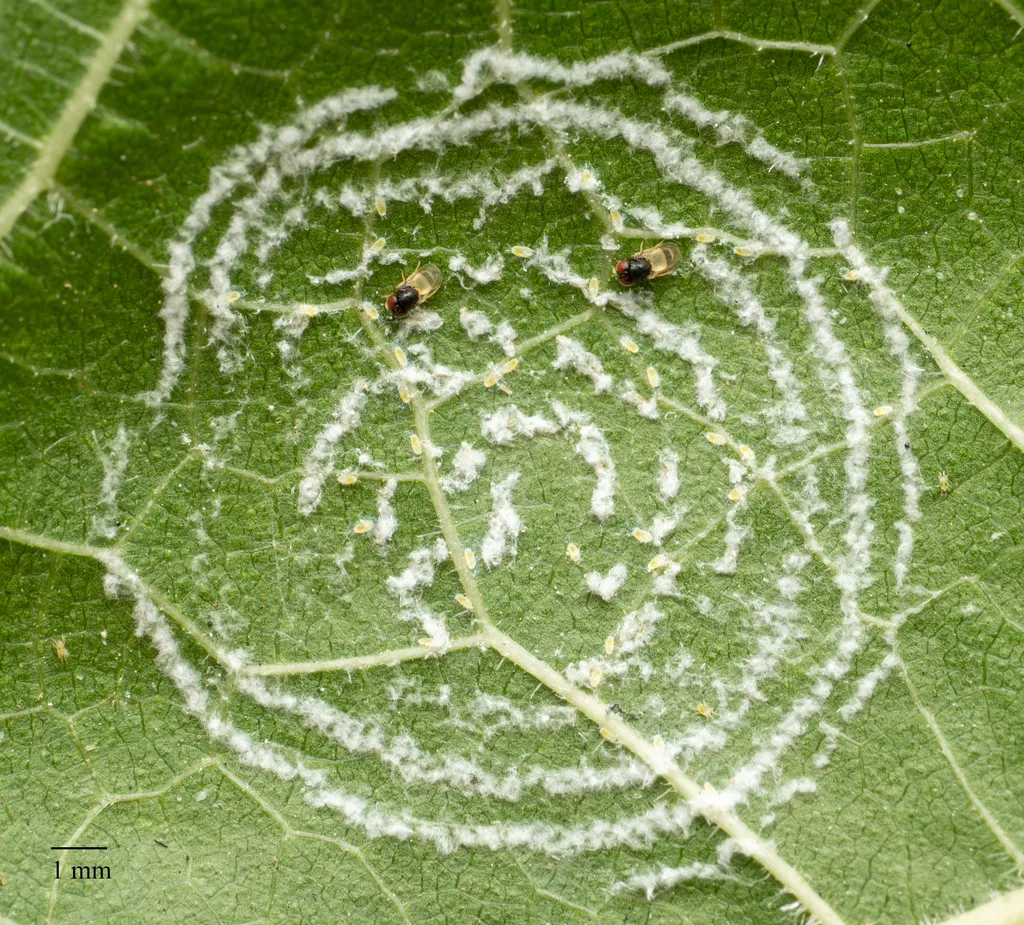
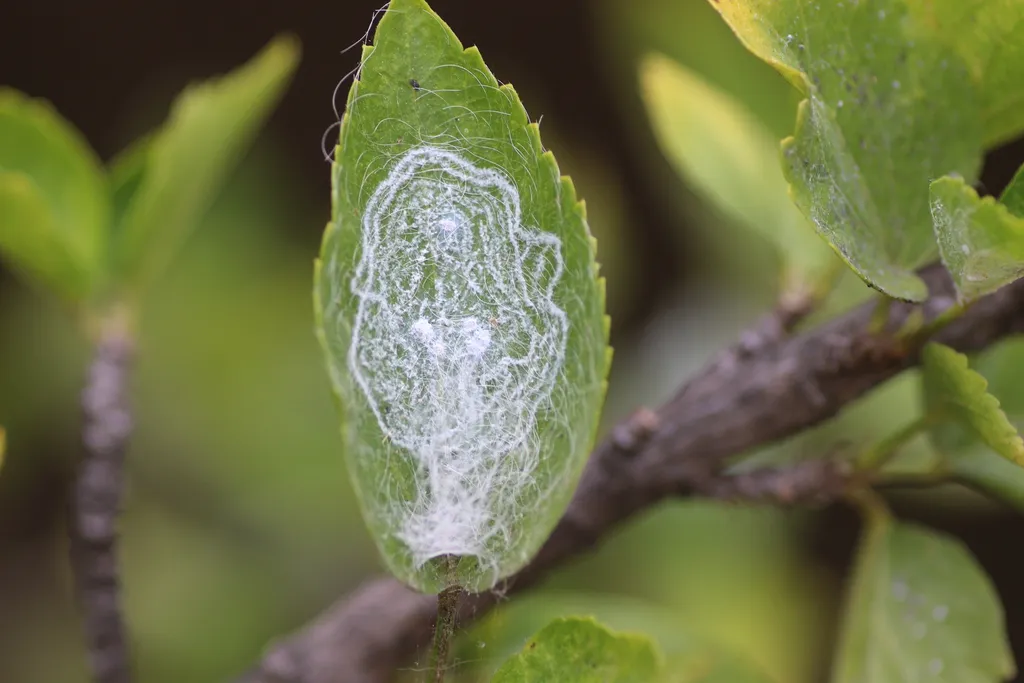
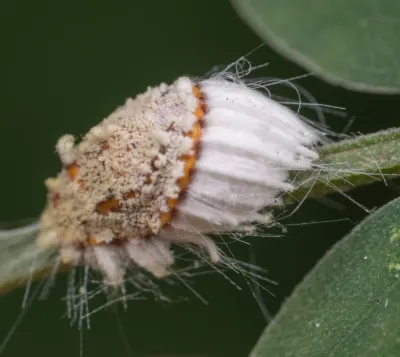
The most obvious sign of a giant whitefly problem is not the adults. Instead, look for long, hair-like waxy strands hanging from the undersides of leaves. Later-stage nymphs produce these glassy, white filaments, which can grow up to two inches long. Heavily infested leaves take on a “bearded” look. Eggs are laid in spiral patterns on leaf undersides and covered in white wax. This spiral egg pattern is one of the best ways to tell giant whiteflies apart from other species.
Common Species
Only one species goes by the name “giant whitefly”:
- Giant whitefly (Aleurodicus dugesii Cockerell, 1896), native to Mexico and now found in several southern U.S. states.
You may also find related species on similar plants, such as the spiraling whitefly (Aleurodicus dispersus) and woolly whitefly (Aleurothrixus floccosus). Both produce waxy coatings but look different in size, wax shape, and egg patterns.
Giant Whitefly Behavior and Biology
Giant whiteflies feed by piercing plant tissue and sucking out the sap. They attack many types of plants. Common targets include hibiscus, bird of paradise, citrus, avocado, banana, mulberry, begonia, and xylosma. Many other garden plants and fruit trees are also at risk.
Their life cycle starts when eggs hatch into tiny “crawlers” that can move around. These crawlers settle on a leaf and stay put for three more growth stages. The later stages look flat and scale-like with no visible legs. In warm summer weather, a full cycle from egg to adult takes about 35 days. In mild areas like coastal California and southern Florida, they breed year-round.
As they feed, both nymphs and adults give off a sticky substance called honeydew. This honeydew coats leaves and surfaces below the plant. It leads to black sooty mold, which blocks sunlight and weakens the plant further. Giant whiteflies prefer shade and cluster on leaf undersides, making them harder to spot early.
Giant whiteflies were first found in the U.S. in Texas in 1991, then in California in 1992. They have since spread to Florida, Arizona, Louisiana, and Hawaii. They are native to central and southern Mexico.
Treatment Methods for Giant Whiteflies
Giant whiteflies can be managed through a mix of physical removal, targeted sprays, and changes to how plants are maintained. Here are the most common approaches.
-
Pruning and water sprays: Cutting away heavily infested branches and leaves is a good first step. A strong stream of water aimed at the undersides of leaves can knock off nymphs and adults. University of California research found that weekly water sprays during heavy infestations, tapered off as numbers drop, can work as well as many chemical treatments.
-
Natural predators: Several tiny wasp species, including Encarsia noyesi and Idioporus affinis, have been released in California and Florida to target giant whiteflies. These wasps lay their eggs inside whitefly nymphs, killing them as they develop. In areas where these wasps have taken hold, giant whitefly numbers have dropped sharply.
-
Insecticidal soaps and horticultural oils: Soap or oil sprays applied directly to leaf undersides can reduce whitefly numbers on contact. These products break down quickly and are less likely to harm other insects in the area. Thorough coverage of leaf undersides is key for these treatments to work.
-
Plant care and placement: Move plants that are prone to whiteflies into full sun, since giant whiteflies prefer shade. Keep plants healthy with regular watering and feeding so they can better handle the stress. Choosing plant varieties that are less attractive to whiteflies is another helpful step.
References
Other Garden Pests
Explore other species in the garden pests family
Commonly Confused With
Giant Whiteflies are often mistaken for these similar pests
Where Giant Whiteflies Are Found
Hover over states to see their names. Green regions indicate where giant whiteflies have been reported.
Common Questions about Giant Whiteflies
What do giant whiteflies look like?
+
Adults are about 3/16 inch long, which is much bigger than most whiteflies. They look white because of a waxy coating on their wings. You may also notice light brown markings on the wings. The nymphs produce long, hair-like wax strands that can reach two inches. These strands give infested leaves a bearded look.
What plants do giant whiteflies attack?
+
Giant whiteflies feed on a wide range of ornamental and fruit plants. Common targets include hibiscus, bird of paradise, citrus, avocado, banana, mulberry, begonia, and xylosma. They prefer shaded areas and gather on the undersides of leaves.
Are giant whiteflies harmful to humans?
+
No, giant whiteflies do not bite, sting, or pose any direct health risk to humans or pets. They are strictly plant pests. However, the sticky honeydew they produce can coat outdoor furniture, vehicles, and walkways, and the resulting sooty mold is unsightly.
Where are giant whiteflies found in the United States?
+
Giant whiteflies are established in California, Texas, Florida, Arizona, Louisiana, and Hawaii. They were first detected in the U.S. in Texas in 1991 and have since spread primarily through warmer southern states. They are native to Mexico and thrive in subtropical to tropical climates.
How can I tell giant whiteflies apart from other whiteflies?
+
Look at their size first. At roughly 3/16 inch, adults are nearly three times bigger than silverleaf whiteflies. Their nymphs also produce long wax strands that other species do not. Another clue is their egg pattern. Giant whiteflies lay eggs in spirals on leaf undersides, while other species lay eggs in random clusters.
What is the white waxy stuff on my plant leaves?
+
If you see long, hair-like white filaments hanging from the undersides of leaves, it is likely the wax produced by giant whitefly nymphs. These wax strands can be several inches long and are brittle, often breaking off and accumulating on surfaces below the plant. The wax itself is harmless but indicates an active infestation.
Do giant whiteflies cause permanent damage to plants?
+
Giant whiteflies rarely kill healthy plants, but heavy infestations can cause leaf yellowing, early leaf drop, and weaker growth over time. The honeydew they produce leads to black sooty mold, which blocks sunlight and adds more stress to the plant. Young or already weakened plants are more at risk of lasting damage.

With five years of hands-on experience in the pest control industry, George Schulz is a registered technician with the Virginia Pest Management Association and a proud third-generation professional in a family business that's been protecting homes for over 57 years. He manages and trains a team of service pros while also leading internal research efforts—recently spearheading a deep-dive review of thousands of documents on pest control materials to hand-pick the most kid and pet friendly, most effective solutions tailored specifically for homes in the DC metro area.