Garden Fleahoppers Identification Guide
Microtechnites bractatus
Garden fleahoppers are tiny, shiny black plant bugs that jump when disturbed. They feed on a wide variety of vegetable, ornamental, and forage plants, causing stippled leaves and reduced plant vigor.
Taxonomy
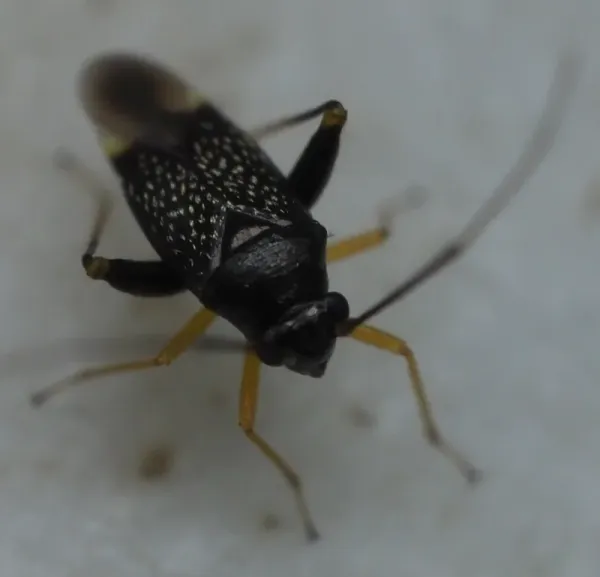
Garden Fleahoppers Coloration
Common color patterns to help identify garden fleahoppers
Garden Fleahoppers
Seasonal Activity
When garden fleahoppers are most active throughout the year

Where Garden Fleahoppers Are Found
Hover over states to see their names. Green regions indicate where garden fleahoppers have been reported.
Garden Fleahopper Identification Guide
Physical Characteristics
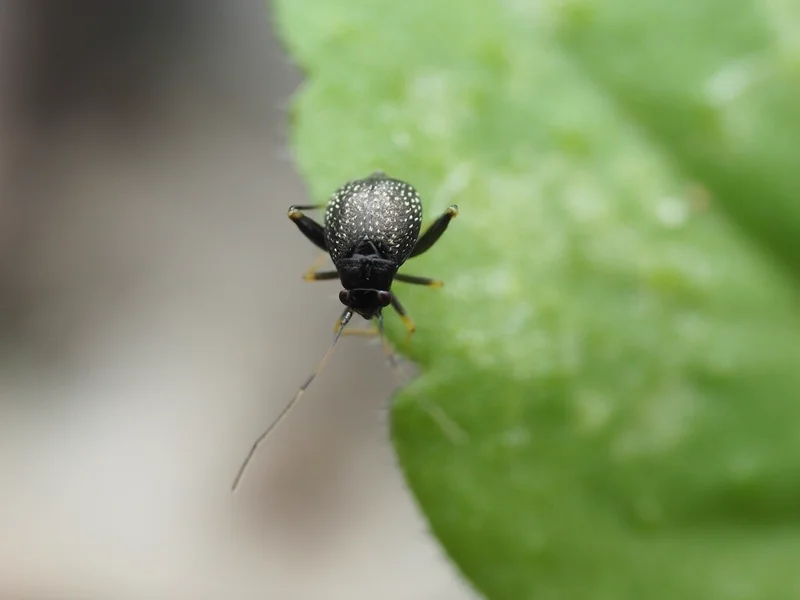
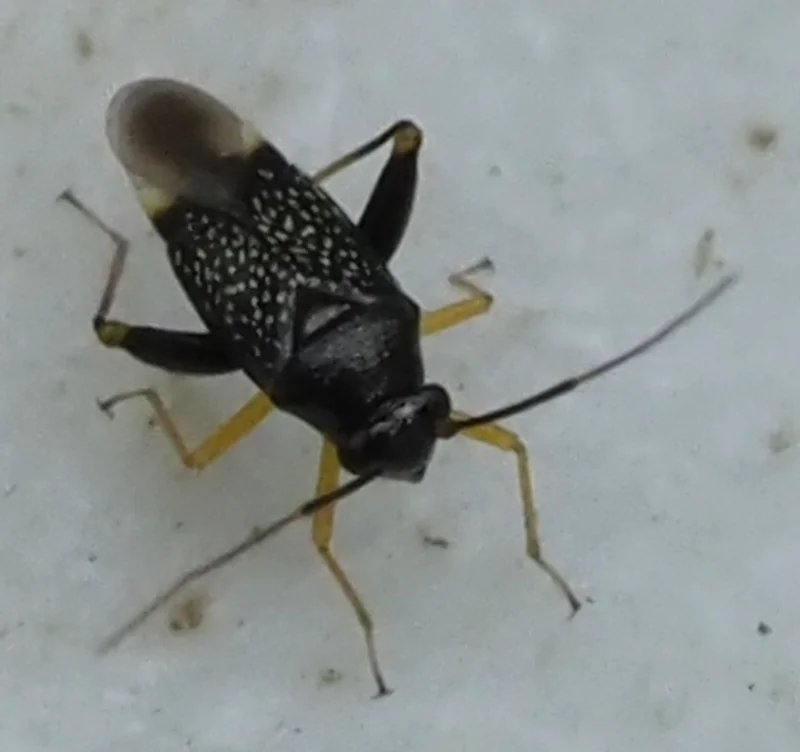
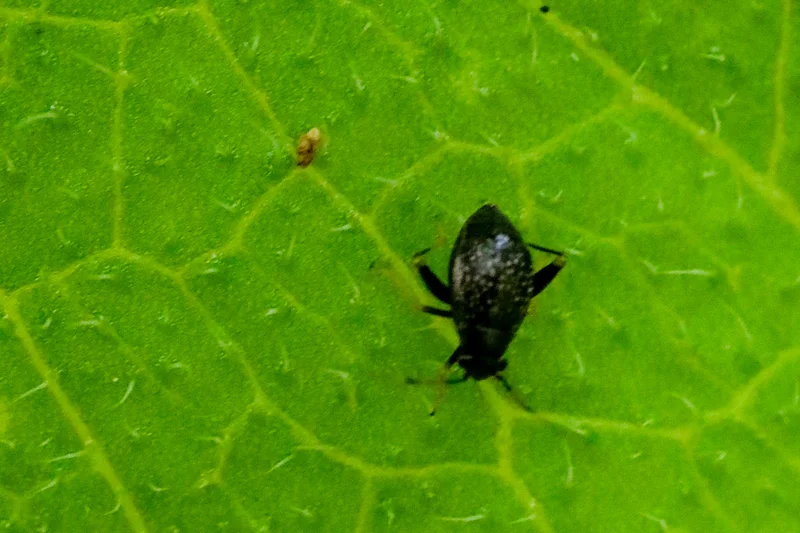
Garden fleahoppers are tiny garden pests found throughout North American gardens. Adults are only about 1.6 to 2.2 millimeters long, about the size of a pinhead. They have shiny black bodies with tiny pale spots on their wing covers that give them a speckled look. Their antennae and legs are yellow, which stands out against their dark bodies.
These bugs have large back legs that let them jump away quickly when disturbed, just like fleas do. This is how they got the name “fleahopper.” But they are not related to fleas at all. They are true bugs that feed on plants.
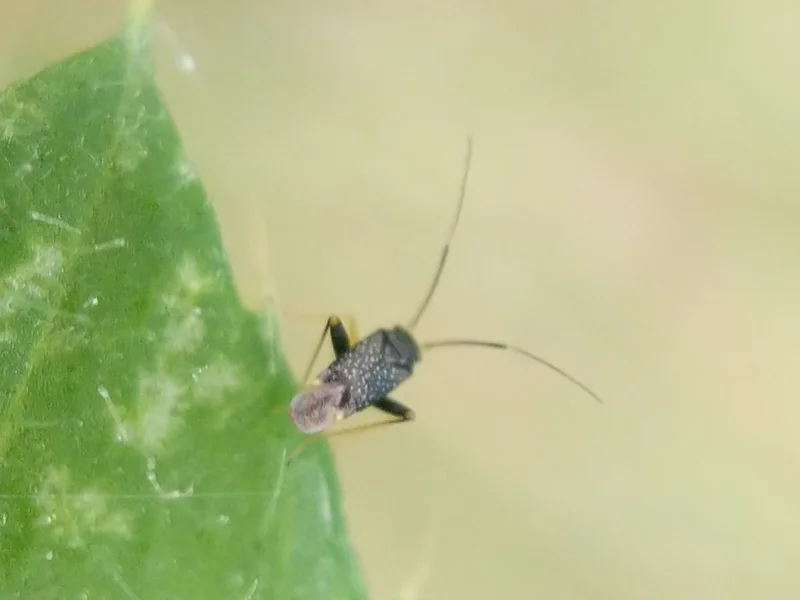
Garden fleahoppers use needle-like mouthparts to suck juices from plant cells. Their antennae are very long and extend past the length of their body. This helps tell them apart from flea beetles, which also jump but have much shorter antennae.
Adult fleahoppers come in three forms. Males have long wings and can fly well. Females come in two types: some have long wings and can fly, while others have short wings and do not fly much. All forms are black and can jump.
Young fleahoppers, called nymphs, look different from adults. They start out pale yellow to pale green. As they grow, they turn darker green. Nymphs that are almost adults have a black spot on each side of their body behind the head. Like adults, nymphs jump when you disturb them.
Garden Fleahoppers vs. Flea Beetles
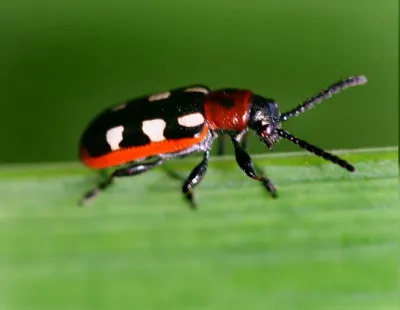
People often mix up garden fleahoppers with flea beetles. Both are small, dark bugs that jump when you touch them. But there are easy ways to tell them apart.
Flea beetles are true beetles that chew leaves and make small round holes. Garden fleahoppers suck plant juices and leave tiny pale dots on leaves instead of holes.
The best way to tell them apart is by looking at their antennae. Flea beetles have short antennae, less than half the length of their body. Fleahoppers have long antennae that extend past their body.
Garden Fleahopper Behavior and Biology A related species, Spittlebugs, shares similar characteristics.
Lifecycle and Reproduction A related species, Treehoppers, shares similar characteristics.
Garden fleahoppers survive winter as eggs. Females lay eggs in late summer and fall by tucking them into plant stems or leaves. Only the tip of each egg shows at the surface. One female can lay about 100 eggs in her lifetime. The eggs stay dormant all winter and hatch in early spring when it warms up.
After hatching, nymphs start feeding right away on the undersides of leaves. They go through five growth stages over 11 to 35 days, depending on how warm it is. Warmer weather speeds up their growth. Adults live one to three months.
In most areas, garden fleahoppers produce five or more generations each year. You can find all life stages during the growing season. Populations usually peak in May. The overlapping generations let their numbers grow fast when conditions are right.
Feeding Habits and Host Plants
Garden fleahoppers feed on many types of plants. Common vegetables they damage include beans, beets, cabbage, celery, corn, cucumbers, eggplants, lettuce, peas, peppers, potatoes, pumpkins, squash, and tomatoes. They also attack field crops like alfalfa and clover.
Many flowers and ornamental plants are hosts too. Fleahoppers often build up on weeds first, then move to garden plants. Common weed hosts include plantain, fleabane, and goldenrod.
Both adults and nymphs feed by poking their mouthparts into plant cells and sucking out the contents. This kills the cells, which show up as tiny pale spots on leaves. As more cells die, the spots grow together into larger pale or yellow areas. Plants with heavy infestations develop yellowed leaves that may die and fall off.
Fleahoppers also leave small black spots of droppings on leaf undersides. This can make vegetables and flowers less attractive for sale, even when the feeding damage is light.
Distribution
The garden fleahopper is native to North America. It lives throughout the eastern United States and Canada. You can also find it west to the Rocky Mountains, but it is less common in the Great Plains. This pest also lives in the Caribbean and south through Central America to Brazil.
Treatment Methods for Garden Fleahoppers
Controlling garden fleahoppers takes a mix of good garden practices, regular checks, and treatments when needed. Since these bugs often build up on weeds first, keeping weeds under control around your garden is an important first step.
Cultural Controls
- Weed removal: Pull weeds in and around your garden. Fleahoppers often breed on weeds before moving to your vegetables and flowers.
- Plant health: Keep plants healthy and well-watered. Strong plants handle some feeding damage better without losing much yield.
- Monitoring: Check your plants often during the growing season. Look at leaf undersides for nymphs. Watch for adults that jump when you touch the leaves.
Treatment Approaches
When fleahopper numbers get too high, treatments can help. Contact sprays made for aphids usually work well on fleahoppers too since these pests respond to similar products. The same insecticidal soaps and oils used for thrips and whiteflies are also effective. Eggs are tucked inside plant tissue, so they resist contact sprays. You may need a second treatment after eggs hatch.
Natural enemies help control fleahopper numbers in many cases. Tiny wasps attack both the active stages and eggs. Predatory mites and spiders eat fleahoppers too. This natural control may be why fleahopper numbers change so much from year to year.
Fleahopper problems on flowers and shrubs tend to come and go. One treatment often gives relief for a long time. For vegetables where looks matter less, you can wait longer before treating. Healthy plants can handle some feeding without losing much of their crop.
Prevention Tips
- Clear weeds from garden edges before the growing season starts
- Check plants weekly in spring and summer, looking at leaf undersides
- Treat early when you spot them since small problems are easier to fix
- Target treatments to affected areas rather than spraying the whole garden
References
Other Garden Pests
Explore other species in the garden pests family
Commonly Confused With
Garden Fleahoppers are often mistaken for these similar pests
Where Garden Fleahoppers Are Found
Hover over states to see their names. Green regions indicate where garden fleahoppers have been reported.
Common Questions about Garden Fleahoppers
What do garden fleahoppers look like?
+
Garden fleahoppers are tiny insects measuring about 1/16 to 1/10 inch long. Adults are shiny black with some yellow coloring on their antennae and legs. They have enlarged hind legs that allow them to jump when disturbed, similar to fleas. Their antennae are longer than their body length, which distinguishes them from flea beetles.
What plants do garden fleahoppers damage?
+
Garden fleahoppers feed on a wide variety of plants including vegetables like beans, peppers, tomatoes, cucumbers, squash, lettuce, and potatoes. They also attack ornamental plants, legumes like alfalfa and clover, and many common weeds. Their feeding causes stippled, whitish spots on leaves.
Are garden fleahoppers harmful to humans?
+
No, garden fleahoppers do not bite humans or pets and pose no direct health risks. They are strictly plant feeders. However, they can cause significant damage to garden plants and crops when populations are high.
How do I know if I have a garden fleahopper infestation?
+
Look for tiny black insects that jump when you disturb plant foliage. Check the undersides of leaves for pale green to dark green nymphs. Damage appears as whitish or yellowish stippling on leaf surfaces, along with small black fecal spots on the undersides of leaves.
When are garden fleahoppers most active?
+
Garden fleahoppers are most active during the warm growing season from late spring through early fall. They overwinter as eggs and hatch in early spring. Peak populations typically occur in May and continue through summer, with multiple generations per year.
How can I prevent garden fleahopper damage?
+
Remove weeds near your garden since fleahoppers often build up on weed hosts before moving to garden plants. Keep plants healthy and well-watered to help them tolerate some feeding damage. Monitor plants regularly during the growing season so you can detect infestations early.
What is the difference between garden fleahoppers and flea beetles?
+
While both jump when disturbed, garden fleahoppers have piercing-sucking mouthparts and antennae longer than their body. Flea beetles have chewing mouthparts and short antennae less than half their body length. Fleahopper damage appears as stippling while flea beetles create small holes in leaves.

With five years of hands-on experience in the pest control industry, George Schulz is a registered technician with the Virginia Pest Management Association and a proud third-generation professional in a family business that's been protecting homes for over 57 years. He manages and trains a team of service pros while also leading internal research efforts—recently spearheading a deep-dive review of thousands of documents on pest control materials to hand-pick the most kid and pet friendly, most effective solutions tailored specifically for homes in the DC metro area.