Cucumber Beetles Identification Guide
Acalymma vittatum / Diabrotica undecimpunctata
Cucumber beetles are small, brightly colored garden pests that feed on cucurbit crops and spread bacterial wilt disease. The striped and spotted species are the most damaging cucumber pests across North America.
Taxonomy
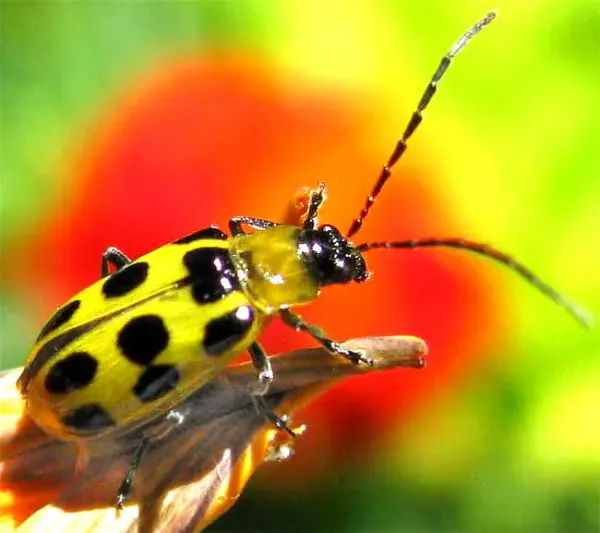
Cucumber Beetles Coloration
Common color patterns to help identify cucumber beetles
Cucumber Beetles
Seasonal Activity
When cucumber beetles are most active throughout the year

Where Cucumber Beetles Are Found
Hover over states to see their names. Green regions indicate where cucumber beetles have been reported.
Cucumber Beetle Identification Guide
Cucumber beetles are some of the worst pests of cucurbit crops in North America. These small, brightly colored beetles are found in gardens and farms from southern Canada through Mexico. They hurt plants in two ways: by chewing on leaves and fruit, and by spreading bacterial wilt. Bacterial wilt can kill cucumber and melon plants in just a few days.
Physical Characteristics
Cucumber beetles are small, oval-shaped beetles that measure 4 to 7mm long, or about 1/4 inch. They have hard wing covers, long thin antennae, and six legs. Adults can fly and walk. They move easily between plants and garden plots.
Key features to look for:
- Small oval body, about 1/4 inch long
- Bright yellow, yellowish-green, or green wing covers
- Either three bold black stripes or 11-12 black spots on the wing covers
- Black head with long, slender antennae
- Six legs with the ability to fly short distances
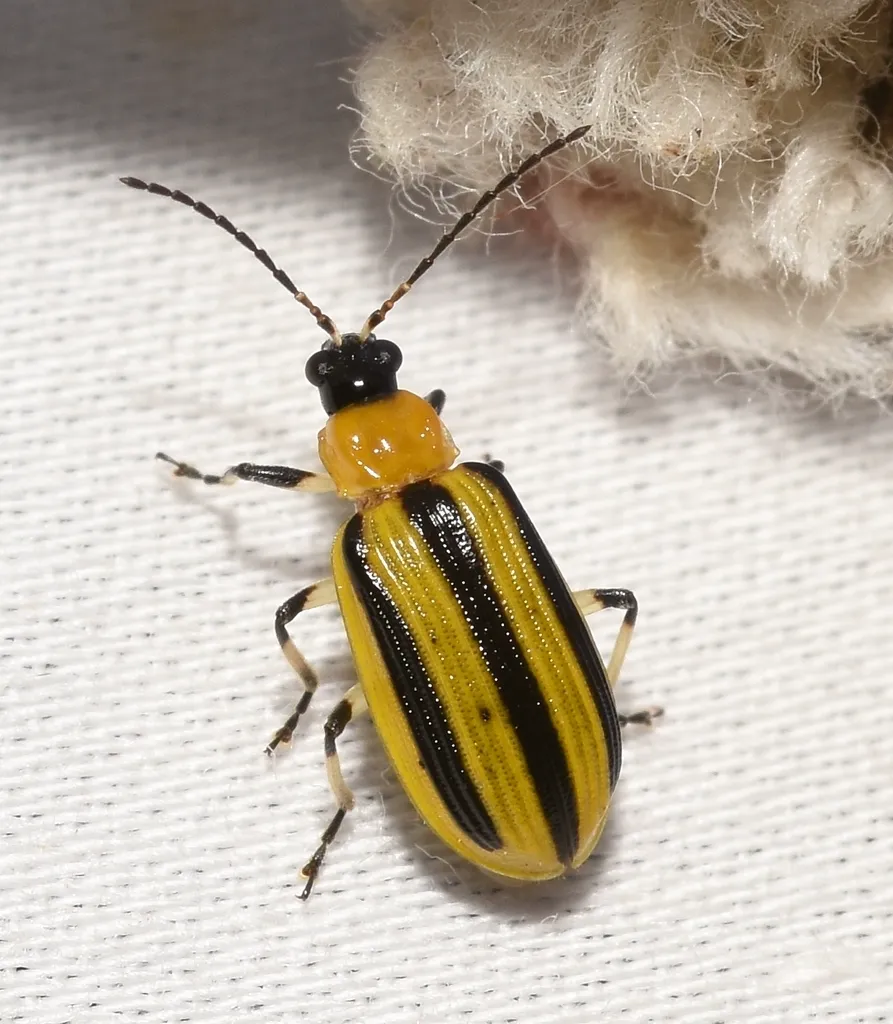
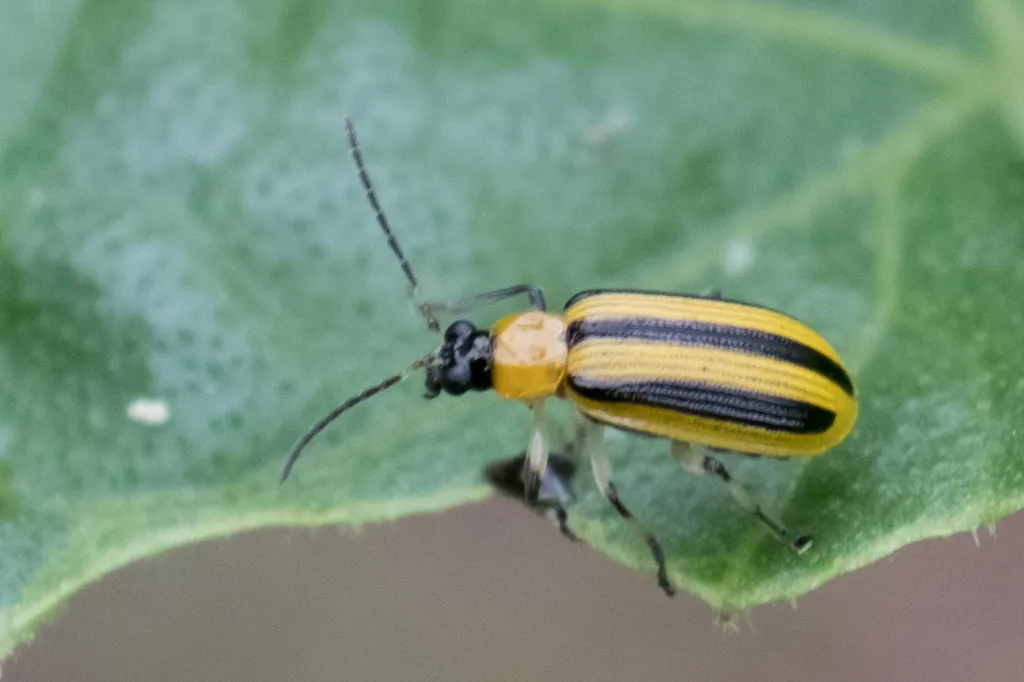
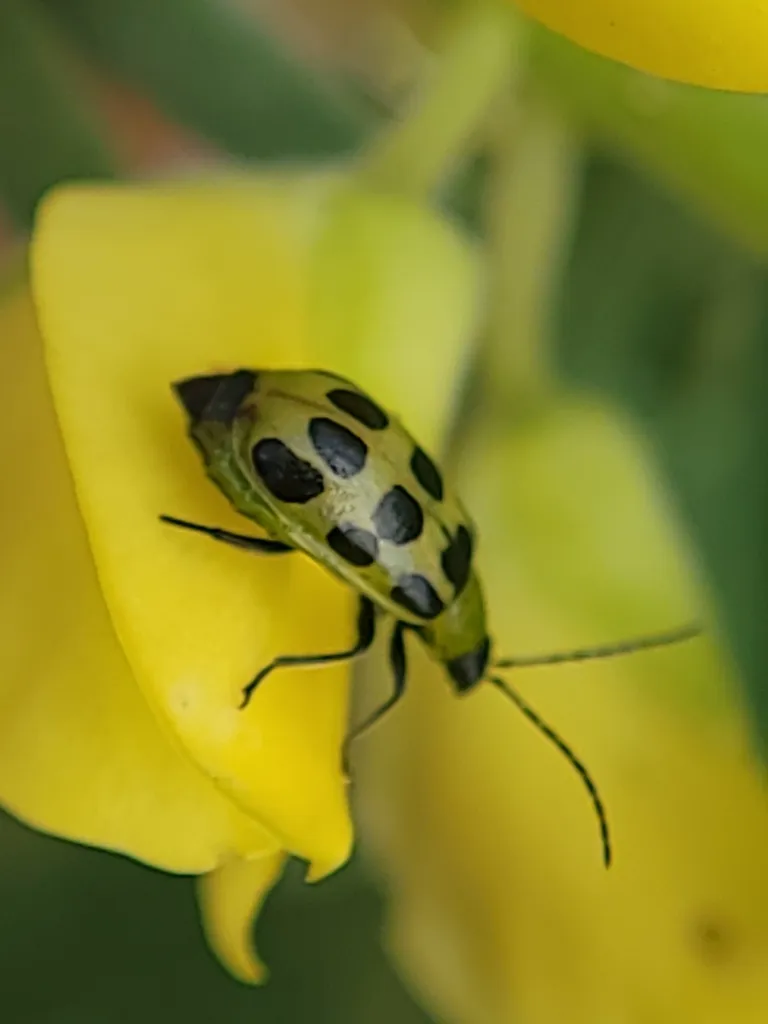
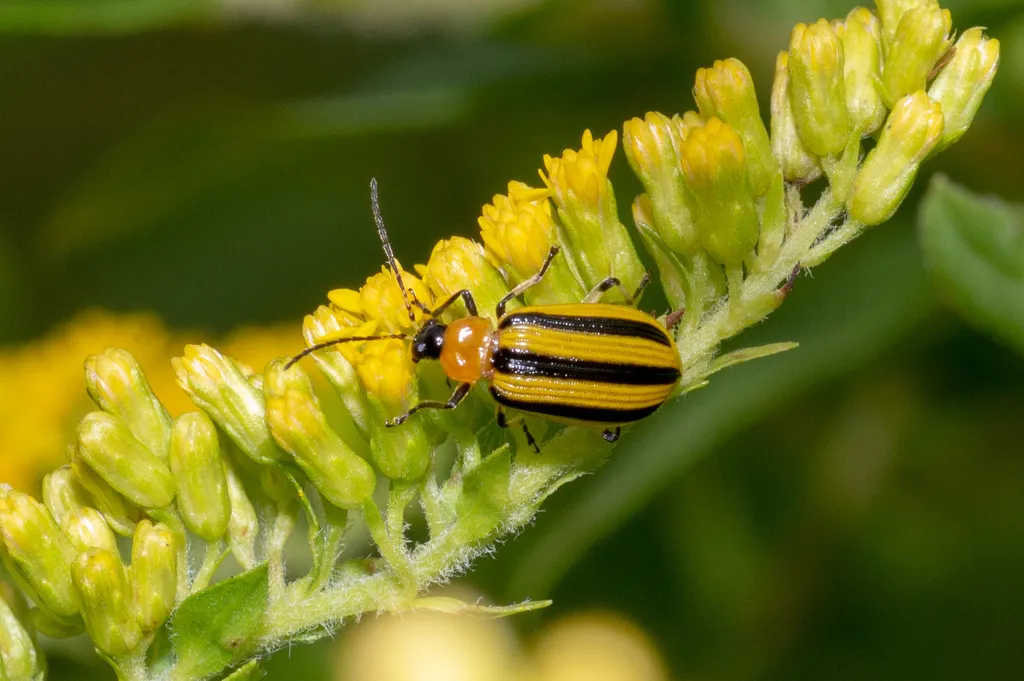
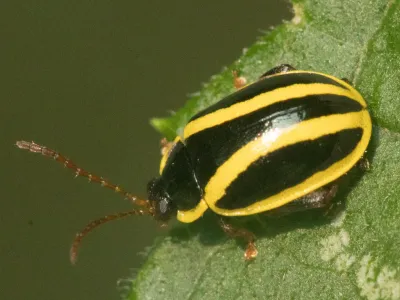
The two main types are easy to tell apart. Striped cucumber beetles have yellow wing covers with three black stripes. Spotted cucumber beetles have green or yellowish-green wing covers with black spots.
Common Species in North America
Striped Cucumber Beetle (Acalymma vittatum) is the most common species east of the Rocky Mountains. Adults are about 5mm long with bold yellow and black stripes. They strongly prefer cucurbit crops. This species is the main carrier of bacterial wilt disease in the eastern United States and Canada.
Western Striped Cucumber Beetle (Acalymma trivittatum) takes the place of the eastern species west of the Rockies. It looks very similar and causes the same type of damage to cucurbits.
Spotted Cucumber Beetle (Diabrotica undecimpunctata) is found across the United States. Adults are about 6mm long with yellowish-green wing covers and 11 black spots. This species feeds on over 200 types of plants. Its larvae feed on corn roots underground, which is why they are also called southern corn rootworms.
Banded Cucumber Beetle (Diabrotica balteata) is found mainly in the southern United States and Mexico. It has greenish wing covers with three green bands and feeds on many crops.
Telling Them Apart from Similar Pests
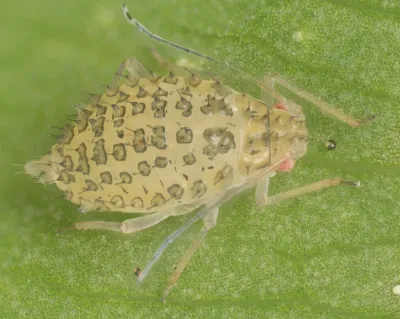
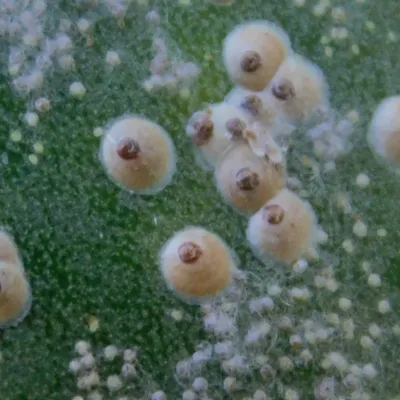
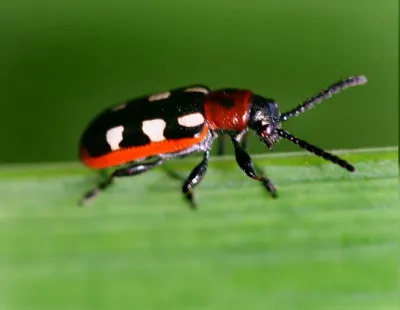
Several other beetles can be confused with cucumber beetles. Here are the key differences.
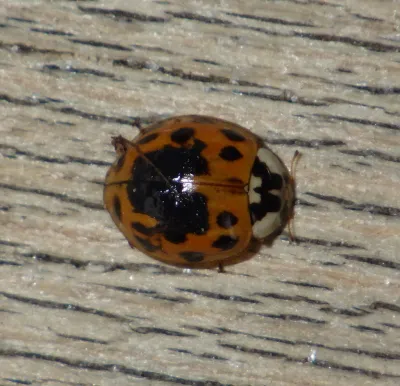
Asian lady beetles have a similar spotted look but are rounder with very short antennae. Lady beetles eat other insects. Cucumber beetles eat plants. The round vs. oval body shape is the fastest way to tell them apart.
Colorado potato beetles have black and yellow stripes but are much larger, rounder, and heavier. They feed mostly on potato and nightshade family plants, not cucurbits.
Flea beetles are much smaller and jump like fleas when disturbed. Cucumber beetles are larger, do not jump, and have more obvious stripe or spot patterns.
Cucumber Beetle Behavior and Biology
Lifecycle and Development
Cucumber beetles go through four life stages: egg, larva, pupa, and adult. Most species produce one to two batches per year. Warmer areas may see more.
Adults spend the winter hiding in leaf litter, garden debris, tall grass, and along field edges. They come out in spring when soil warms above about 55 degrees Fahrenheit. After feeding and mating, females lay clusters of tiny orange-yellow eggs in the soil near host plants.
Eggs hatch in about one to two weeks. Each female can lay a few hundred eggs in her lifetime.
Larvae are small, white grubs with brown heads. They live in the soil and feed on plant roots. Root damage weakens plants, but it is harder to spot than the leaf damage adults cause. Larvae grow for two to five weeks before turning into pupae in the soil.
Pupae form in small chambers in the soil. New adults come out after one to two weeks and start feeding on leaves and flowers. In northern areas, this group feeds until fall, then finds shelter for winter. In warmer areas, more groups may develop.
Feeding Behavior and Damage
Adult cucumber beetles chew ragged holes in leaves, flowers, stems, and fruit. Heavy feeding on seedlings and young transplants can kill plants. On older plants, you will see holes in leaves and scars on fruit.
The bigger threat is disease. Cucumber beetles carry bacterial wilt (Erwinia tracheiphila). The bacteria live in the beetle’s gut. When a beetle feeds on a plant, the bacteria enter through the wound. Once inside, they block the plant’s water flow. The plant wilts and dies. Cucumbers and muskmelons are hit hardest. There is no cure once a plant is infected.
Some spotted cucumber beetle species also spread squash mosaic virus and other plant diseases as they move from plant to plant.
Habitat and Host Plants
Cucumber beetles show up wherever their host plants grow. You can find them in home gardens, community plots, and large farms. Different species go after different plants:
- Cucurbits (cucumbers, squash, pumpkins, melons, watermelons): all cucumber beetle species
- Corn: spotted cucumber beetle larvae feed on roots (southern corn rootworm)
- Beans, peas, and other legumes: spotted and banded species
- Nightshades (tomatoes, peppers, potatoes): spotted species now and then
- Flowers: spotted species sometimes feed on rose petals, sunflowers, and other blooms
Adults are most active on warm, sunny days. They gather on flowers and young growth. Cool, cloudy, or rainy weather slows them down.
Treatment Methods for Cucumber Beetles
Cucumber beetles can be hard to manage. They fly in from nearby areas, and even small numbers can spread bacterial wilt. The best results come from using several methods together.
Physical and Cultural Controls
Good garden habits are the first step in keeping cucumber beetles away:
- Floating row covers placed over plants right after planting block beetles from reaching young seedlings. This is one of the most effective methods. Remove covers when plants begin to flower so they can be pollinated.
- Transplants instead of seeds give plants a head start. Bigger plants handle beetle feeding much better than small seedlings.
- Trap cropping means planting attractive varieties like Blue Hubbard squash around the edges of your main crop to draw beetles away. When beetles gather on the trap crop, you can treat just that area.
- Fall cleanup means removing leaf litter, spent vines, and garden debris where adults hide for winter. This cuts down on the number of beetles near your garden the next spring.
- Crop rotation breaks the cycle of beetles building up in one spot. Avoid planting cucurbits in the same place two years in a row.
Chemical Treatment Options
When beetle numbers get high enough to threaten young plants, these treatments can help:
- Kaolin clay sprayed on leaves creates a white film that keeps beetles from feeding. It works best when applied before beetles show up.
- Spinosad kills cucumber beetles on contact. It breaks down in sunlight and should be reapplied after rain.
- Pyrethrin-based sprays give fast results but do not last long. You will need to reapply after rain.
- Neem oil works as a repellent that keeps beetles from feeding. It must go directly on leaf surfaces.
The University of Minnesota Extension suggests treating when you find an average of one beetle per plant on seedlings of cucumbers and melons. You can wait a bit longer for tougher crops like squash and pumpkins.
Time any sprays for early morning or late evening to reduce impact on other insects in your garden.
Prevention Tips for Homeowners
You can reduce cucumber beetle problems before the growing season starts:
- Start cucurbit seedlings indoors and transplant them when they have several true leaves
- Choose wilt-resistant varieties when you can (some squash and watermelon types hold up well)
- Mulch around plants to create a barrier between the soil surface and stems
- Plant strong-scented herbs, radishes, or tansy nearby, which may push some beetles away
- Scout plants daily in spring, checking the undersides of leaves and inside flowers for beetles
- Remove and destroy any wilting plants promptly to prevent bacterial wilt from spreading
References and Further Reading
Other Garden Pests
Explore other species in the garden pests family
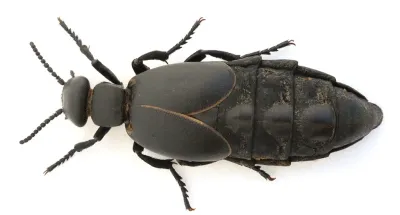
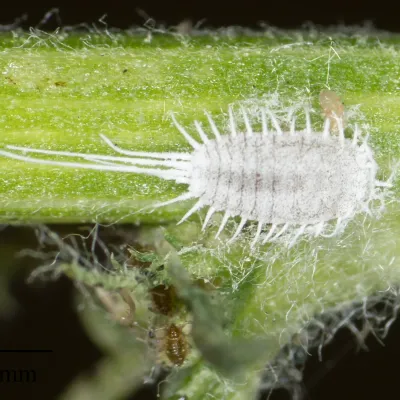
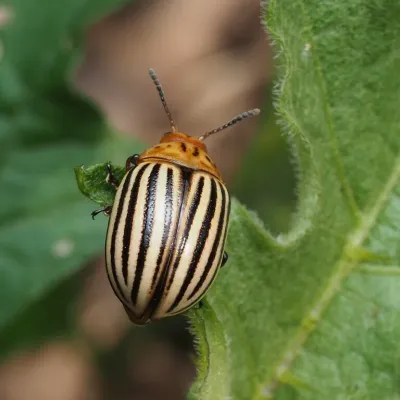
Commonly Confused With
Cucumber Beetles are often mistaken for these similar pests
Where Cucumber Beetles Are Found
Hover over states to see their names. Green regions indicate where cucumber beetles have been reported.
Common Questions about Cucumber Beetles
What do cucumber beetles look like?
+
Cucumber beetles are small, oval beetles about 4-7mm long (roughly 1/4 inch). The two most common types are easy to tell apart. Striped cucumber beetles have yellow wing covers with three black stripes running lengthwise. Spotted cucumber beetles have yellowish-green wing covers with 11 or 12 black spots. Both types have black heads and long, thread-like antennae.
Do cucumber beetles bite humans?
+
Cucumber beetles do not bite or sting humans. They feed only on plant tissue. While they pose no direct health risk to people, they can cause serious damage to garden crops, especially cucumbers, squash, melons, and pumpkins.
What plants do cucumber beetles attack?
+
Cucumber beetles mainly go after cucurbit crops like cucumbers, squash, melons, pumpkins, and watermelons. Some species also feed on beans, corn, potatoes, and other vegetables. Spotted cucumber beetles eat over 200 plant species. Striped cucumber beetles stick mostly to cucurbits.
Why are cucumber beetles so harmful to gardens?
+
Cucumber beetles cause damage in two ways. First, adults chew holes in leaves, flowers, and fruit. This weakens plants and scars produce. Second, they spread bacterial wilt disease. Bacterial wilt can kill cucumber and melon plants within days. There is no cure once a plant is infected. Stopping beetle feeding is the best way to prevent this disease.
When are cucumber beetles most active?
+
Cucumber beetles are most active from late spring through midsummer, usually May through July. Adults come out of hiding when soil warms above 55 degrees Fahrenheit. They feed hard on young seedlings and transplants, so early protection is key.
How do I protect my garden from cucumber beetles?
+
Floating row covers placed over young plants right after planting are one of the most effective barriers. Remove covers when plants begin to flower so they can be pollinated. Other strategies include planting trap crops like Blue Hubbard squash to draw beetles away, removing plant debris in fall to reduce overwintering sites, and using transplants instead of seeds so plants are larger and stronger when beetles arrive.
Are spotted and striped cucumber beetles the same species?
+
No, they are different species. The striped cucumber beetle is Acalymma vittatum. The spotted cucumber beetle is Diabrotica undecimpunctata. Both are leaf beetles in the family Chrysomelidae. They cause similar damage and you can manage them the same way, but they look different and feed on different plants.

With five years of hands-on experience in the pest control industry, George Schulz is a registered technician with the Virginia Pest Management Association and a proud third-generation professional in a family business that's been protecting homes for over 57 years. He manages and trains a team of service pros while also leading internal research efforts—recently spearheading a deep-dive review of thousands of documents on pest control materials to hand-pick the most kid and pet friendly, most effective solutions tailored specifically for homes in the DC metro area.