Colorado Potato Beetles Identification Guide
Leptinotarsa decemlineata
Colorado potato beetles are one of the most destructive pests of potato crops in North America. These round, yellow-and-black-striped leaf beetles can defoliate entire potato plants and have developed resistance to many common insecticides.
Taxonomy
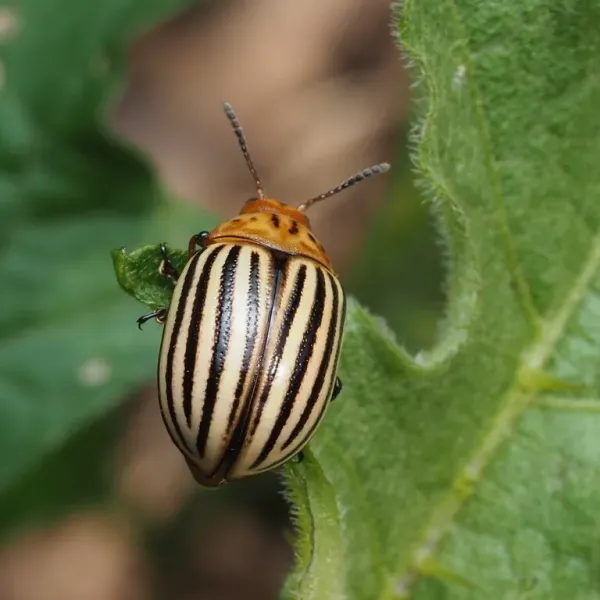
Colorado Potato Beetles Coloration
Common color patterns to help identify colorado potato beetles
Colorado Potato Beetles
Seasonal Activity
When colorado potato beetles are most active throughout the year

Where Colorado Potato Beetles Are Found
Hover over states to see their names. Green regions indicate where colorado potato beetles have been reported.
Colorado Potato Beetle Identification Guide
Colorado potato beetles are one of the most well-known garden pests in North America. They were first found in the Rocky Mountain region in the 1820s. As potato farming spread east across the country in the 1800s, these beetles followed. Today they live in nearly every potato-growing area of the United States and Canada. They are one of the most studied crop pests in the world. This is mainly because they become resistant to pesticides so fast.
Physical Characteristics
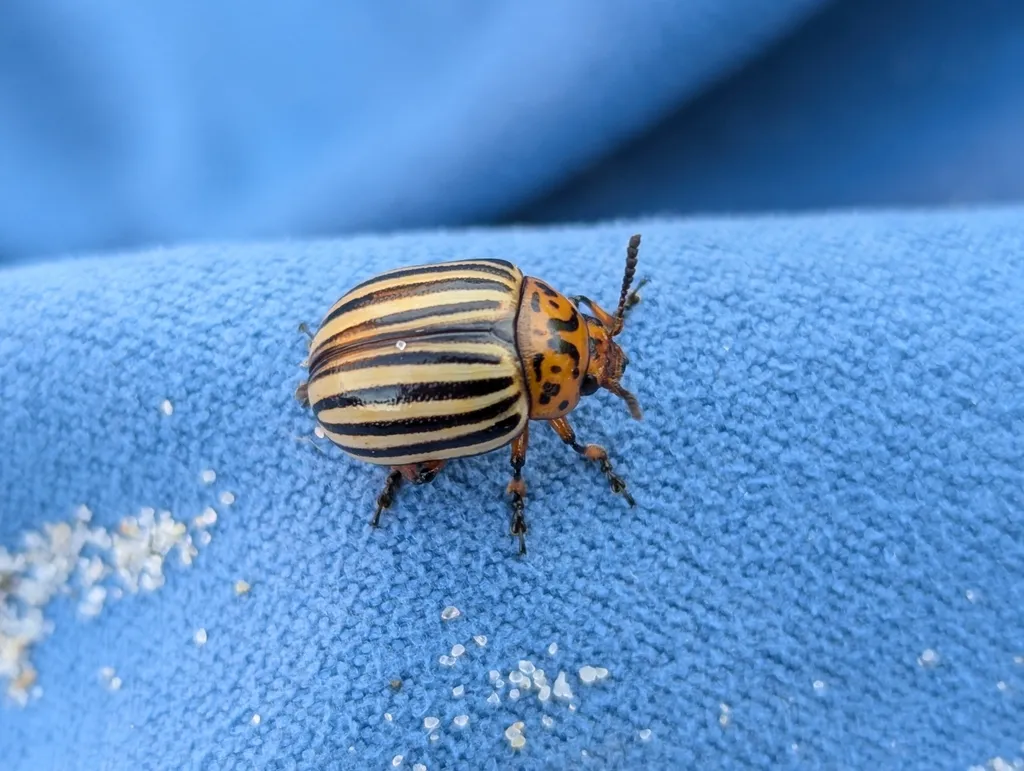
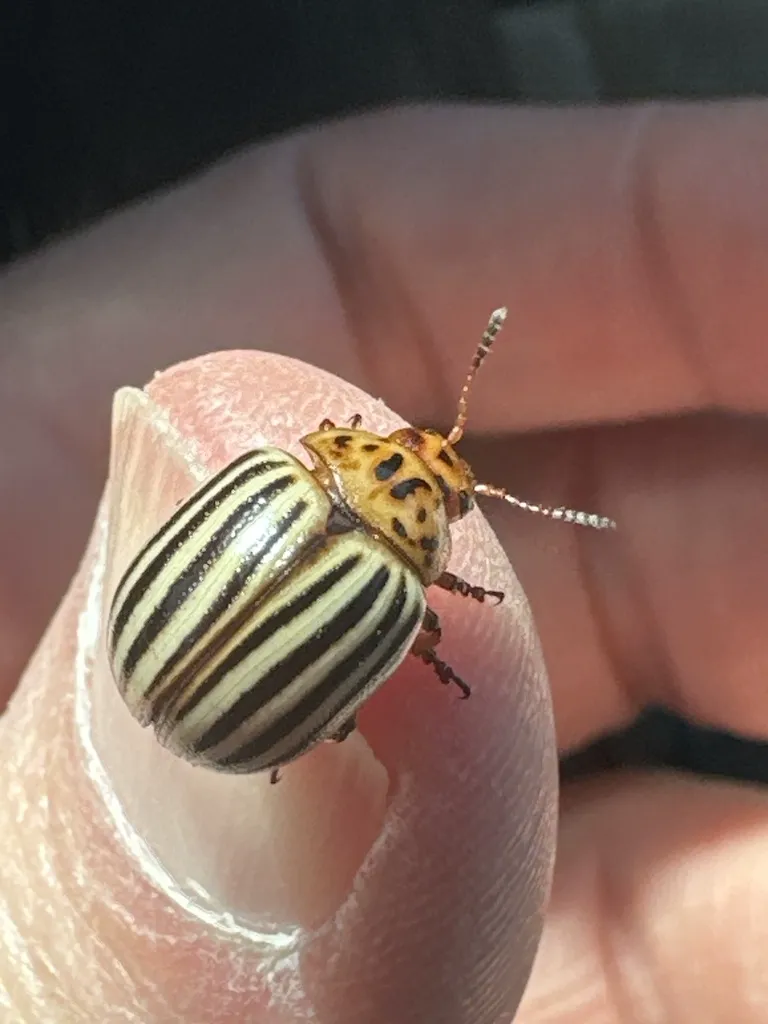
Adult Colorado potato beetles are round and dome-shaped. They measure about 9 to 12mm long, or roughly 3/8 to 1/2 inch. The most obvious feature is the ten black stripes running down their yellow to yellowish-orange wing covers. Some people call them “ten-striped potato beetles” for this reason.
Key features to look for:
- Round, dome-shaped body
- Five black stripes on each wing cover on a yellow or pale orange background
- A yellowish-orange plate behind the head with black spots, often in a V-shape
- Orange-brown head with black spots
- Six orange-brown legs
- Short, clubbed antennae
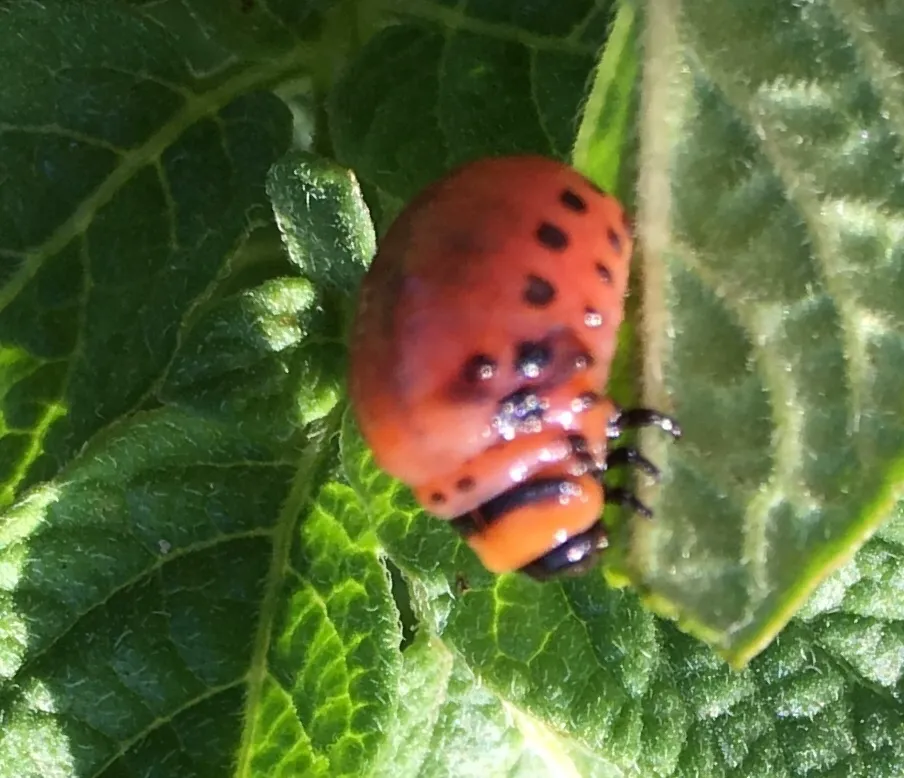
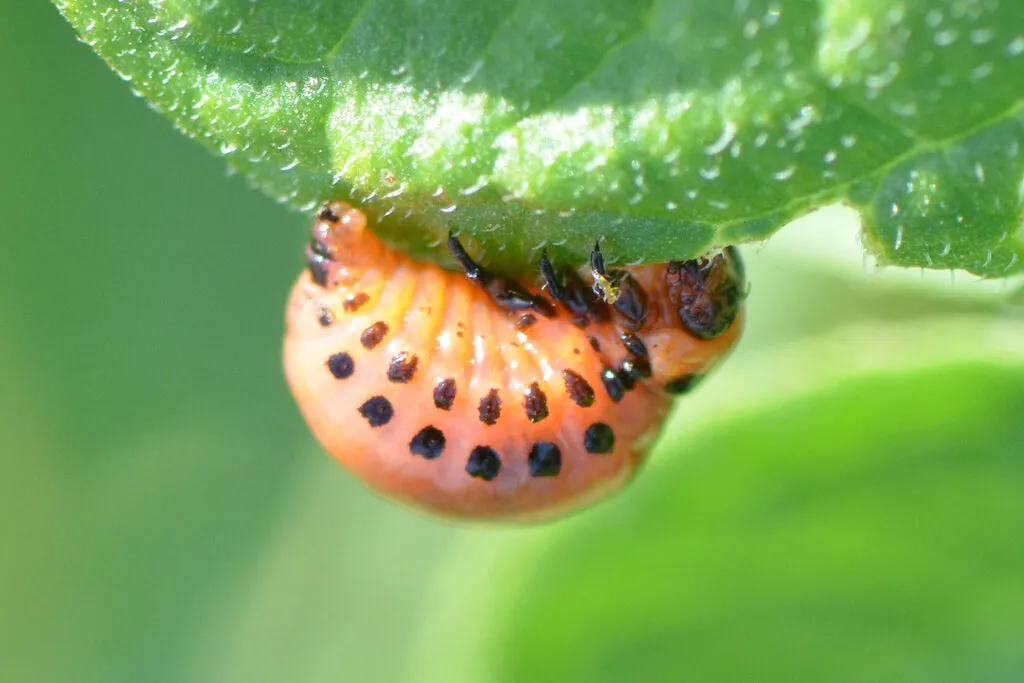
The eggs are bright yellow to orange. Females lay them in neat groups of 10 to 30 on the bottom sides of leaves. The larvae are soft, humpbacked grubs. Young larvae are dark brick-red. Older larvae turn orange-red. All stages of larvae have two rows of black spots along each side of the body.
Common Look-Alikes
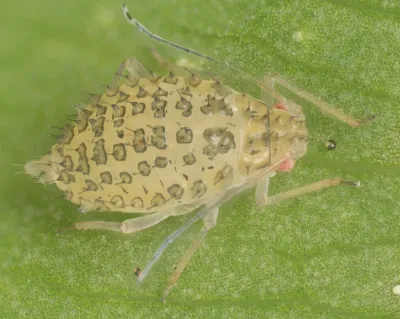
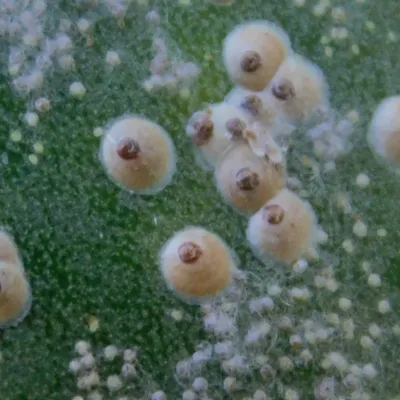
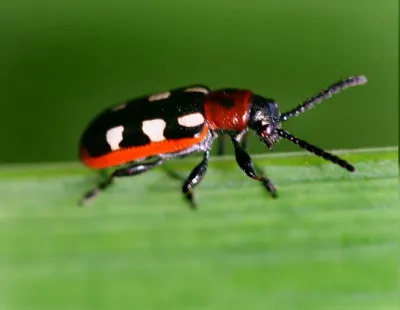
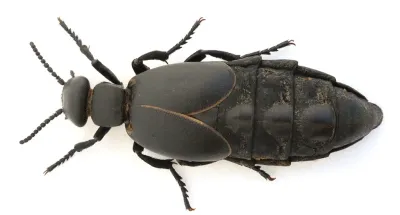
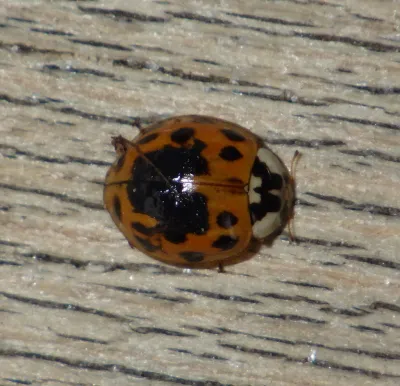
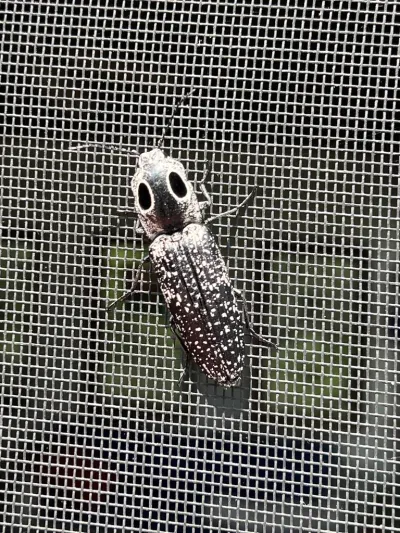
Colorado potato beetles can be confused with other striped or spotted beetles. The false potato beetle (Leptinotarsa juncta) looks the most similar, with a nearly identical size and stripe pattern. Look at the markings on the plate behind the head to tell them apart. Asian lady beetles share the orange and black colors but are much smaller and rounder. Blister beetles show up in the same garden settings but have long, narrow bodies instead of round ones. Click beetles are much thinner overall.
Colorado Potato Beetle Behavior and Biology
Lifecycle and Development
Colorado potato beetles go through four life stages: egg, larva, pupa, and adult. They need warm weather and host plants to complete their lifecycle.
Overwintering. Adults spend the winter buried a few inches deep in the soil. They usually stay in or near the same fields where they fed the year before. Shorter days and cooler fall temperatures trigger them to go dormant.
Spring emergence. When the soil warms up in late spring, adults crawl out and start walking or flying short distances to find plants. In the Mid-Atlantic, this usually happens in May or June.
Egg laying. Females start laying eggs within days of finding a host plant. They place clusters of 10 to 30 bright yellow-orange eggs on the bottom sides of leaves. One female can lay 300 to 800 eggs over several weeks.
Larval feeding. Eggs hatch in 4 to 10 days, depending on the temperature. Larvae go through four growth stages over two to three weeks, eating leaves the entire time. The final stage eats more than all the earlier stages put together.
Pupation. Full-grown larvae drop off the plant and dig into the soil to pupate. New adults come out about 10 days later. In the north, one generation per year is normal. In warmer areas, two or three generations can happen in a single season.
Feeding Habits and Habitat
Both adults and larvae eat the leaves of plants in the nightshade family. Their main targets include:
- Potatoes (their top choice)
- Tomatoes
- Eggplant
- Peppers
- Wild nightshade and horse nettle
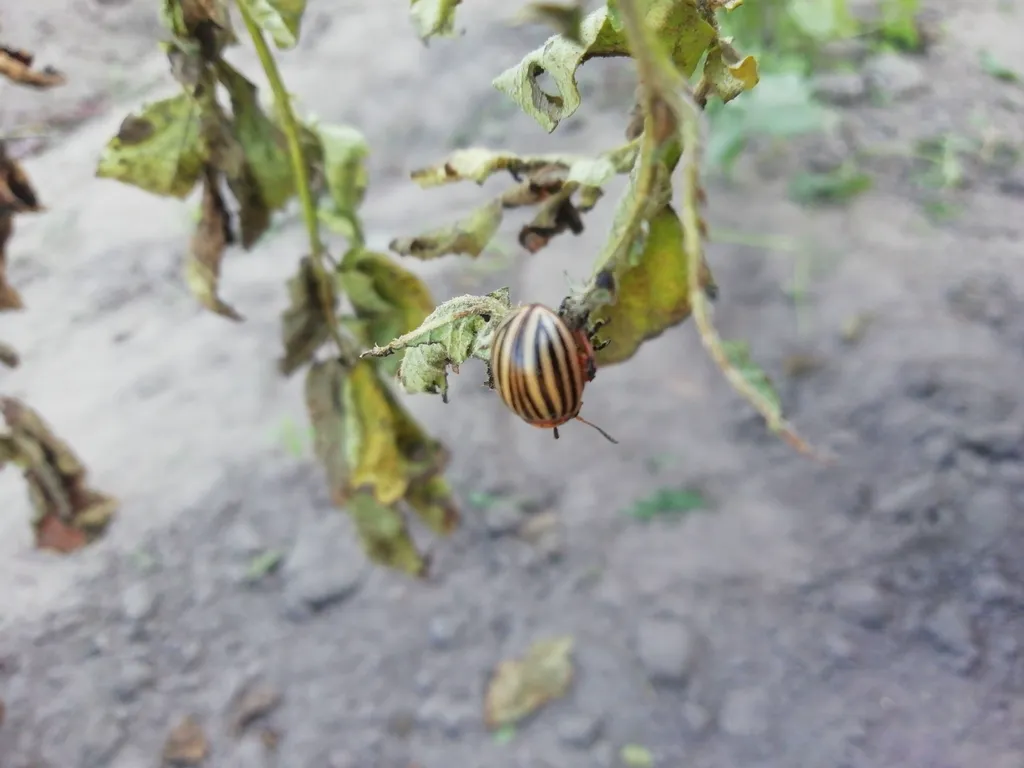
Damage starts as small holes in the leaves. It can lead to total leaf loss when beetle numbers are high. Heavy leaf loss early in the growing season can cut potato yields by half or more. The larvae cause the most harm because they feed nonstop and in large groups.
These beetles do well in home gardens, small farms, and large fields. They show up wherever nightshade-family crops grow. Fields that held potatoes last year are at the highest risk. The adults that spent the winter in the soil come out right next to their food.
Insecticide Resistance
Colorado potato beetles are famous for how fast they stop responding to chemicals. Since the 1950s, they have become resistant to more than 50 different active ingredients. This covers every major type of insecticide. Chemicals alone will not solve the problem. A mix of control methods gives the best results.
Treatment Methods for Colorado Potato Beetles
Getting Colorado potato beetles under control takes a mix of good habits, hands-on removal, biological products, and targeted spraying. No single method works well on its own. These beetles resist too many pesticides for any one approach to be enough.
Prevention and Cultural Controls
Good prevention starts before beetles show up:
- Rotate crops away from potatoes each year. Even moving the planting spot a short distance forces the adults to travel farther in spring.
- Pull out wild nightshade and horse nettle near your garden. These weeds give beetles an early food source.
- Cover young potato plants with row covers to keep adults off the plants when they first emerge in spring.
- Spread straw mulch around plants. Studies show that mulched plots attract fewer beetles. The mulch may hide the smell of the plants.
- Choose early-maturing potato types so the crop finishes before beetle numbers peak.
Physical and Mechanical Controls
In home gardens and small plots, hands-on methods work well:
- Pick off adults and larvae by hand and drop them into a bucket of soapy water. Check plants every few days during the growing season.
- Crush or remove egg clusters on the bottom sides of leaves. The bright yellow-orange groups are easy to spot.
- Place a drop cloth under plants and shake the stems to knock beetles off for easy collection.
- Dig a shallow trench lined with plastic around garden beds to trap adults as they walk out of the soil in spring.
Biological Control Options
Several biological products can cut down Colorado potato beetle numbers:
- Bacillus thuringiensis var. tenebrionis (Btt) is a bacterial product that kills young larvae. It works best when applied while larvae are still small.
- Beauveria bassiana is a fungus that infects and kills beetles. It performs best in humid weather.
- Spinosad is a naturally sourced insecticide that controls both larvae and adults well.
- Other insects like lady beetles, lacewings, and ground beetles feed on Colorado potato beetle eggs and larvae. These can help lower beetle counts in the garden.
Chemical Control Considerations
When beetle numbers get too high for other methods to handle, insecticide treatments may be needed:
- Switch between different chemical types with each application to slow resistance buildup. Do not rely on one product all season.
- Treat when larvae are still young since small larvae are easier to kill and have done less damage.
- Follow all label directions for application rates, timing, and waiting periods before harvest on food crops.
- Check with your local extension office for current resistance reports in your area, since resistance patterns differ by region.
- Only spray when scouting shows a real problem. Do not spray on a set schedule.
References and Further Reading
Other Garden Pests
Explore other species in the garden pests family
Commonly Confused With
Colorado Potato Beetles are often mistaken for these similar pests
Where Colorado Potato Beetles Are Found
Hover over states to see their names. Green regions indicate where colorado potato beetles have been reported.
Common Questions about Colorado Potato Beetles
How do I get rid of Colorado potato beetles?
+
Start by hand-picking adults and larvae from plants and dropping them into a bucket of soapy water. Remove and destroy any bright yellow egg clusters found on the undersides of leaves. For larger infestations, Bacillus thuringiensis var. tenebrionis (Btt) products work well against young larvae. Crop rotation, row covers, and straw mulch can also reduce beetle pressure. Rotate any chemical treatments between different modes of action to prevent resistance.
What do Colorado potato beetle larvae look like?
+
The larvae are soft, humpbacked grubs with a round, slug-like body. Young larvae are dark brick-red to reddish-brown, and older larvae turn orange-red. All larval stages have two rows of black spots running along each side of the body. They have three pairs of small legs near the head. You will often find them feeding in clusters on potato leaves.
What plants do Colorado potato beetles eat?
+
Colorado potato beetles feed primarily on plants in the nightshade family (Solanaceae). Potatoes are their preferred host, but they also attack tomatoes, eggplant, and peppers. They will feed on wild nightshade weeds as well. Both the adults and larvae eat the leaves and can completely strip a plant if left unchecked.
Are Colorado potato beetles harmful to humans?
+
No, Colorado potato beetles are not harmful to humans. They do not bite, sting, or carry diseases. Their damage is limited to garden and agricultural crops. The main concern is the economic and garden harm they cause by defoliating potato plants and related crops, which can significantly reduce yields.
When are Colorado potato beetles most active?
+
Colorado potato beetles are most active from late spring through summer. Overwintered adults emerge in May or June when soil temperatures rise, and peak feeding and egg-laying occurs through June, July, and August. In warmer southern regions, they may produce two or three generations per year, extending activity further into early fall.
Why are Colorado potato beetles so hard to kill with pesticides?
+
Colorado potato beetles are known for developing resistance to insecticides faster than almost any other pest. They have evolved resistance to more than 50 different active ingredients across every major insecticide class. This includes organophosphates, carbamates, pyrethroids, and neonicotinoids. That is why using multiple control methods and rotating chemical types between applications is so important.
How can I tell a Colorado potato beetle from a false potato beetle?
+
The two species look very similar. The key difference is on the pronotum, the shield-shaped plate just behind the head. The Colorado potato beetle has a distinct pattern of black spots or a dark V-shaped mark on the pronotum. The false potato beetle (Leptinotarsa juncta) has different pronotal markings and slightly different elytral stripe patterns. The false potato beetle also prefers horse nettle over cultivated potato.

With five years of hands-on experience in the pest control industry, George Schulz is a registered technician with the Virginia Pest Management Association and a proud third-generation professional in a family business that's been protecting homes for over 57 years. He manages and trains a team of service pros while also leading internal research efforts—recently spearheading a deep-dive review of thousands of documents on pest control materials to hand-pick the most kid and pet friendly, most effective solutions tailored specifically for homes in the DC metro area.