Stable Flies Identification Guide
Stomoxys calcitrans
Stable flies are biting flies that resemble house flies but have piercing mouthparts. They primarily attack livestock but will bite humans and pets, causing painful wounds.
Taxonomy
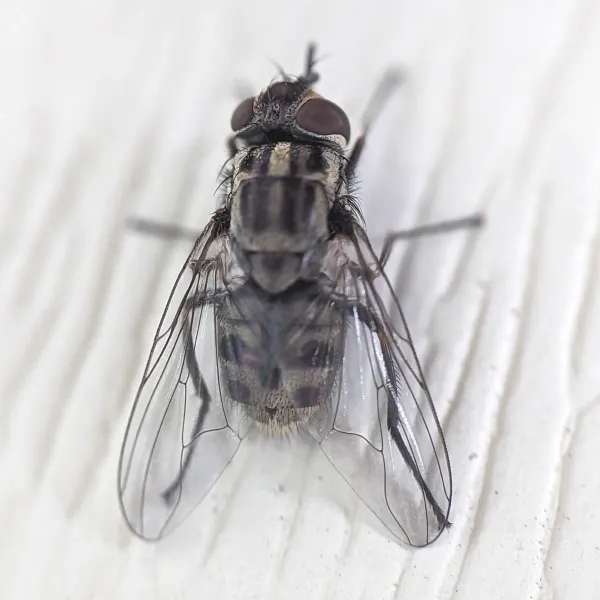
Stable Flies Coloration
Common color patterns to help identify stable flies
Stable Flies
Seasonal Activity
When stable flies are most active throughout the year
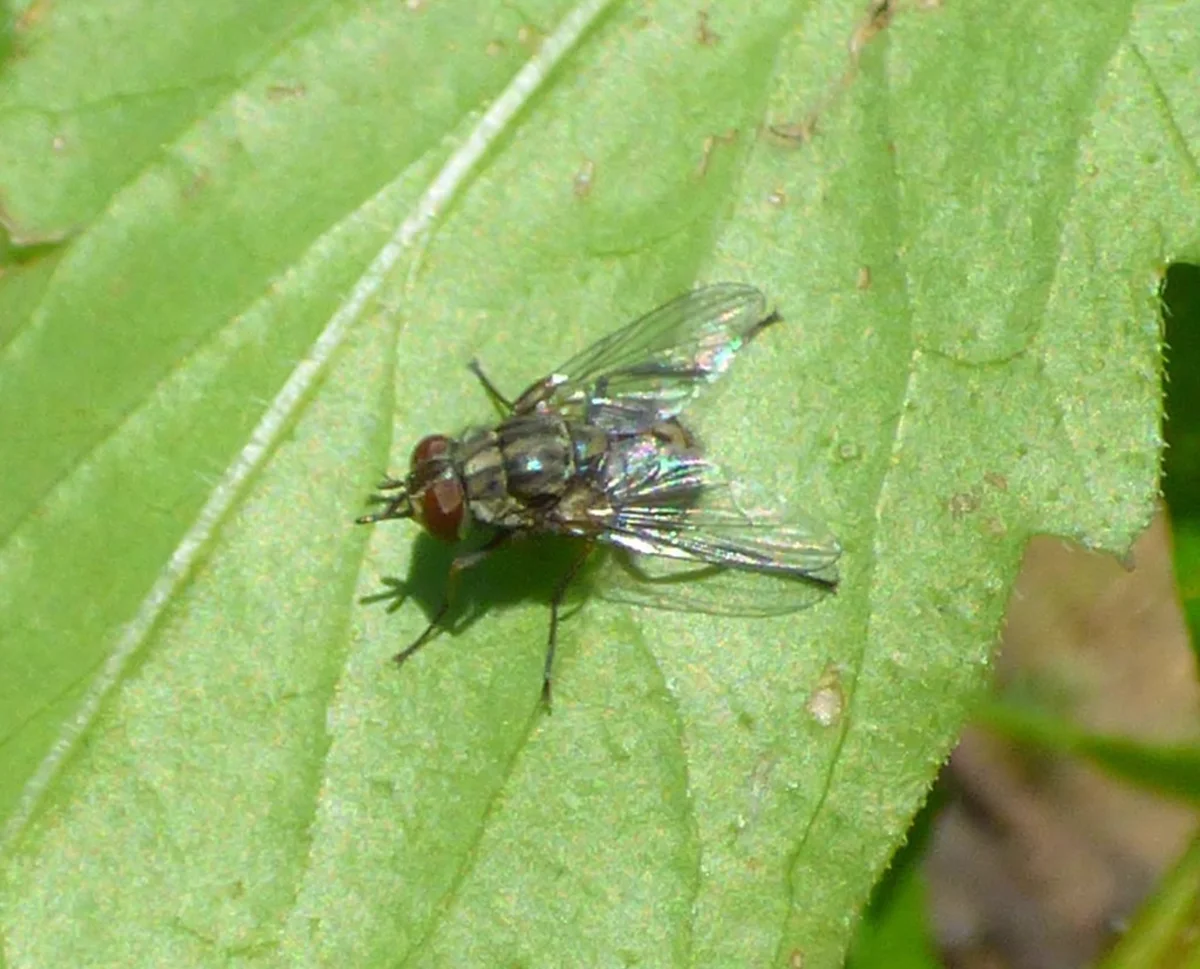

Where Stable Flies Are Found
Hover over states to see their names. Green regions indicate where stable flies have been reported.
Stable Fly Identification Guide
Physical Characteristics
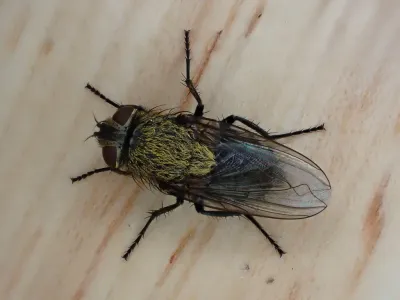
Stable flies (Stomoxys calcitrans) are medium-sized flies measuring 5 to 8 millimeters in length. That is about the size of a common house fly. At first glance, they look quite similar to house flies, but one key feature sets them apart: their mouthparts.
The stable fly has a long, rigid, bayonet-like proboscis that extends forward from the front of its head. This piercing structure allows the fly to cut through skin and feed on blood. House flies, in contrast, have soft, spongy mouthparts that do not stick out visibly. If you see a fly that looks like a house fly but has a noticeable needle-like projection from its head, you are likely looking at a stable fly.
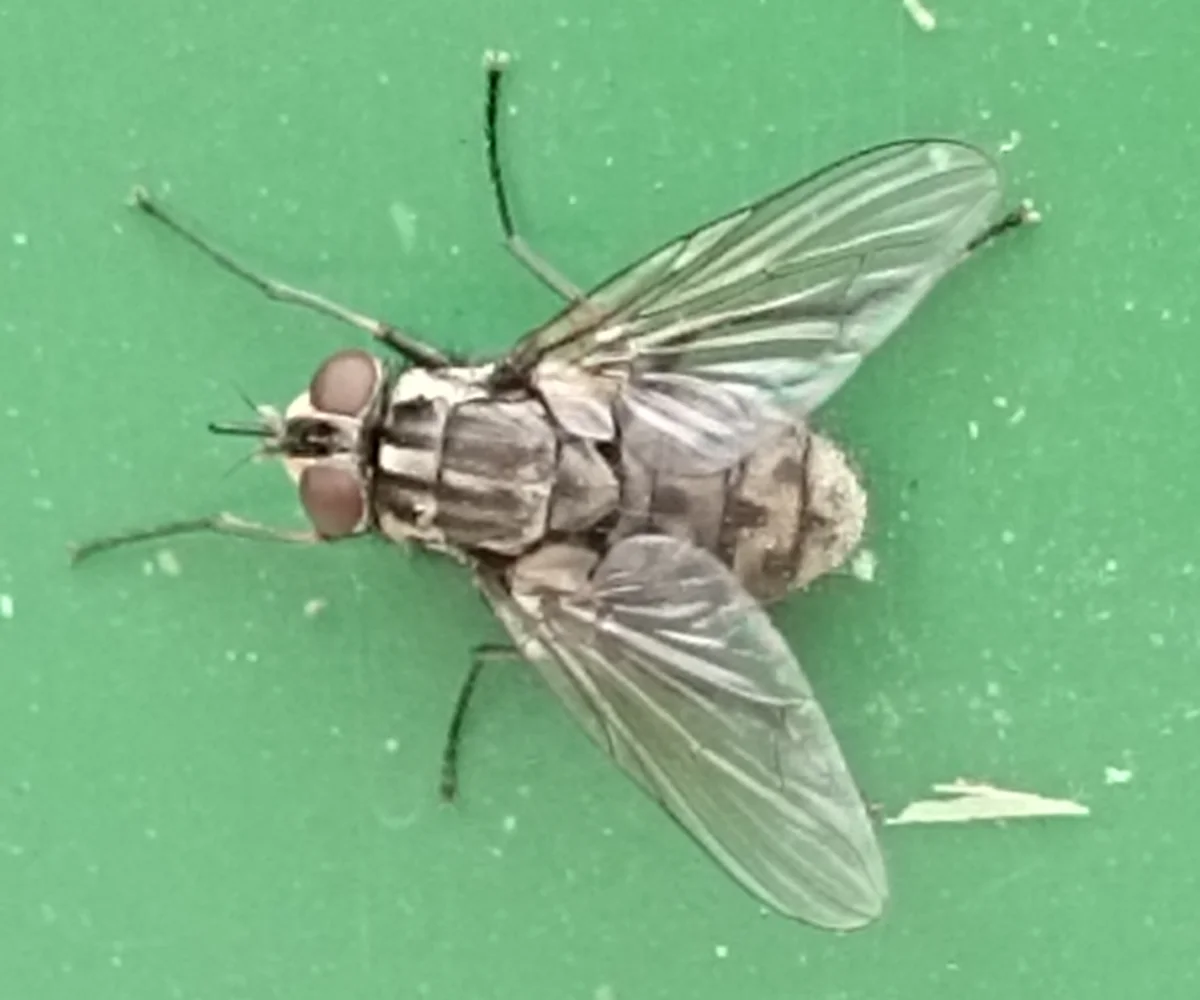
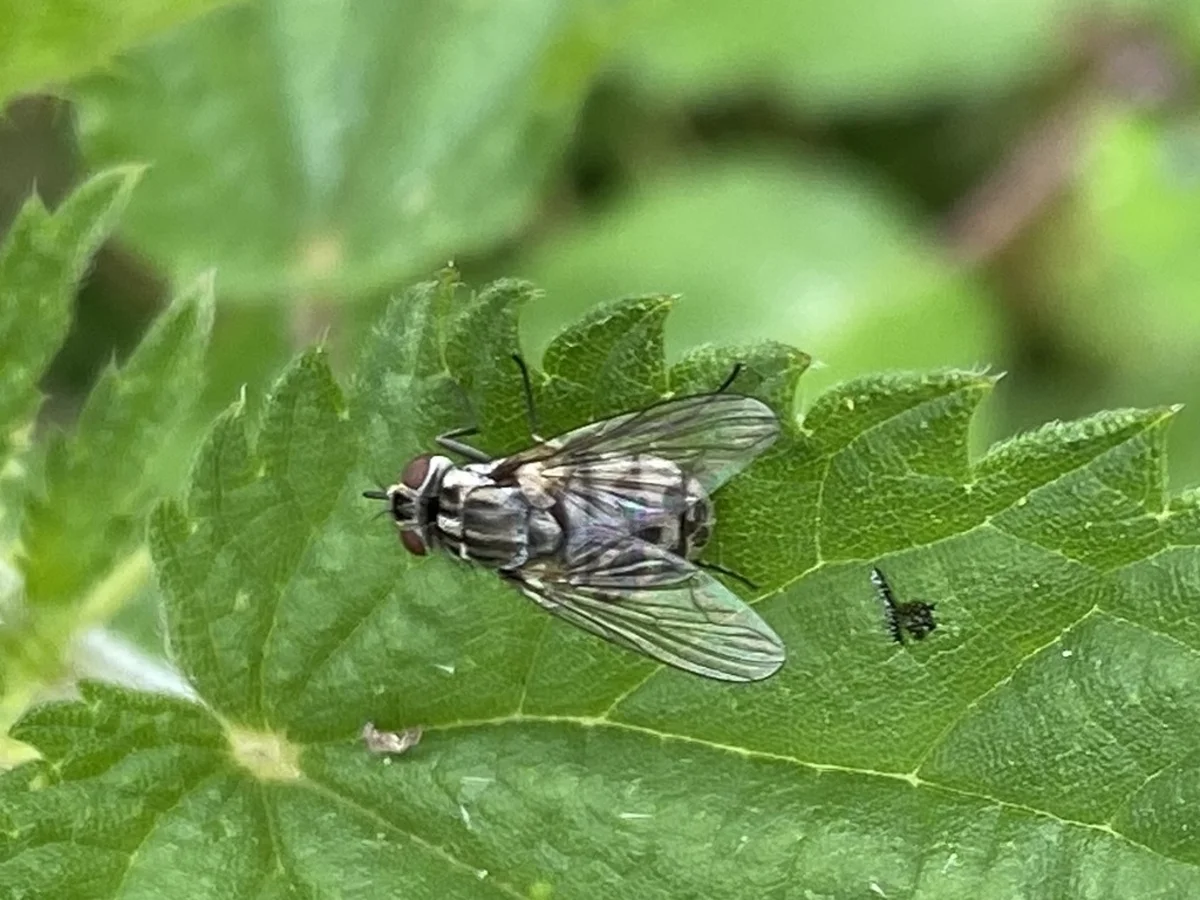
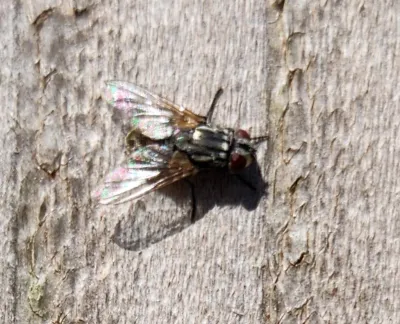
The body color is grayish with four dark stripes running along the thorax (the middle section behind the head). The abdomen displays a distinctive checkerboard pattern of dark spots on a lighter background. The wings are clear with a slight brownish tint and rest flat over the body when the fly is at rest. Like all true flies, stable flies have large compound eyes and short antennae.
Similar Species
Several flies can be confused with stable flies:
- House fly (Musca domestica): Similar size and coloring but lacks the prominent piercing mouthparts. House flies cannot bite.
- Horn fly (Haematobia irritans): Smaller at 3 to 5 millimeters. Also a blood feeder but stays on cattle almost constantly rather than visiting briefly.
- Face fly (Musca autumnalis): Looks like a house fly but primarily found around cattle. Feeds on secretions around eyes and nose rather than blood.
- Lesser house fly (Fannia canicularis): Smaller and thinner. Often flies in circles beneath hanging objects. Does not bite.
Like horse flies and deer flies, stable flies are blood feeders, but they are much smaller and use a different biting mechanism. Our horse fly vs house fly guide covers the differences between common large and small biting flies.
Stable Fly Behavior and Biology
Life Cycle
Stable flies go through four life stages: egg, larva (maggot), pupa, and adult. How fast they grow depends on temperature.
Female stable flies lay eggs in moist, decaying organic material. A single female can lay 500 to 600 eggs during her lifetime, depositing them in batches of 25 to 50. Eggs are white and banana-shaped. In warm conditions around 80 degrees Fahrenheit, eggs hatch within 12 to 24 hours.
The larvae are cream-colored maggots that go through three growth stages called instars. They feed on the microbes growing in the decaying matter rather than the material itself. Larval development takes 12 to 30 days depending on temperature and food quality. When ready to pupate, larvae move to drier areas near the surface.
The pupal stage lasts about 5 to 7 days in warm weather. Pupae are reddish-brown and barrel-shaped. Adult flies emerge by pushing through the top of the pupal case. The complete cycle from egg to adult ranges from about 3 weeks in summer to over 2 months in cooler conditions.
Adult stable flies live 2 to 4 weeks. Unlike many other blood-feeding flies, both males and females require blood meals. A female must feed several times before she can produce eggs.
Feeding Habits
Stable flies must have blood to survive and reproduce. They feed during the day, mostly in morning and late afternoon when temperatures are mild. On cooler days, they feed around midday instead.
When seeking a host, stable flies rely primarily on sight. They are attracted to large, dark objects that resemble cattle or horses. On livestock, they prefer to feed on the lower legs, flanks, and belly. On horses, they often target the legs, sides of the neck, and underbelly.
The bite is painful. The fly uses its sharp mouthparts to slice through skin, then laps up the blood that pools in the wound. A single feeding takes 2 to 5 minutes if undisturbed. However, stable flies are often swatted away before finishing, leading to multiple bites on the same host or different hosts. This interrupted feeding pattern increases their potential to spread disease.
After feeding, stable flies become sluggish and rest nearby on warm, sunny surfaces like fences, walls, and vegetation. They typically return to feed one or more times per day.
Breeding Sites
Stable flies do not breed in fresh manure alone, unlike house flies which readily breed in fresh waste. Stable flies require decaying plant material with the right moisture level and microbial activity. Common breeding sites include:
- Wet hay or straw mixed with urine and manure
- Grass clippings left in piles
- Silage and spilled animal feed
- Compost that is too wet
- Seaweed washed up on beaches
- Rotting vegetable matter in agricultural settings
Moisture, rotting plants, and warmth together create perfect conditions for larvae to grow. Even small piles of this material can produce many flies.
Seasonal Patterns
In most of North America, stable fly populations build through spring, peak during summer, and decline in fall. Cold winters greatly reduce populations in northern states and Canada. In southern regions with mild winters, stable flies can remain active year-round, though numbers are lower during cooler months.
Peak activity typically occurs from June through September. During this time, stable flies can become serious pests for anyone spending time outdoors, especially near farms, ranches, or coastal areas where seaweed accumulates.
Treatment Methods for Stable Flies
Good stable fly control combines three strategies: getting rid of breeding sites, lowering adult fly numbers, and protecting against bites.
Sanitation and Habitat Management
Getting rid of breeding sites or managing them well is the key to stable fly control:
- Grass clippings: Do not leave grass clippings in piles. Spread them thinly to dry or bag them for disposal. Wet, fermenting grass clippings are prime breeding habitat.
- Hay and straw: Store hay and bedding in dry areas. Clean up wet or spoiled material promptly. In barns, remove soiled bedding at least weekly.
- Compost management: Turn compost regularly and maintain proper moisture levels. Overly wet compost supports fly larvae. A properly managed pile heats up enough to kill eggs and larvae.
- Manure handling: While stable flies do not breed in fresh manure alone, manure mixed with bedding or spilled feed becomes suitable habitat. Clean livestock areas frequently and manage manure through composting, spreading, or removal.
- Spilled feed: Clean up spilled grain and other animal feed. Fermenting grain mixed with moisture attracts egg-laying females.
Research has shown that weekly cleaning of livestock areas significantly reduces stable fly production. Allowing organic matter to accumulate for longer periods gives larvae time to complete development.
Physical and Mechanical Controls
Several non-chemical methods can help reduce stable fly problems:
- Traps: Specialized traps designed to mimic cattle or horses can capture large numbers of stable flies. These traps use visual cues like shape, color, and movement rather than chemical attractants. Studies have shown some designs can catch over a pound of flies per day.
- Screens and barriers: Fine mesh screens on windows and doors keep stable flies out of buildings. This is especially useful for horse barns and similar structures.
- Walk-through traps: For livestock operations, walk-through traps installed in high-traffic areas can remove flies from animals as they pass through.
Biological Control
Natural enemies can help suppress stable fly populations:
- Parasitic wasps: Several species of tiny wasps attack stable fly pupae. These parasitoids lay their eggs inside developing flies, killing them before they emerge as adults. Commercial releases of parasitic wasps are available for agricultural operations.
- Predators: Certain beetles and other insects prey on fly larvae in manure and decaying matter. Poultry allowed to forage around livestock areas will eat fly larvae and pupae.
Chemical Options
Insecticides can provide temporary relief but are not a substitute for sanitation:
- Residual sprays: Products applied to surfaces where flies rest can kill adults on contact. These work best on shaded resting areas near livestock.
- Baits: Fly baits containing attractants and insecticides can reduce adult numbers when placed in areas of high fly activity.
- Animal treatments: For livestock, various pour-on products and sprays provide short-term protection from stable fly bites.
Chemical control has limits for stable flies. These flies only visit hosts briefly to feed, so they have little contact with treated animals. Stable flies can also build up resistance to common insecticides over time.
Prevention Tips for Homeowners
If stable flies are bothering you around your home:
- Keep grass cut short and avoid leaving clippings in piles
- Maintain compost bins properly with good drainage and regular turning
- Clean up fallen fruit and vegetable matter from gardens
- Store pet food indoors and clean up spills promptly
- Repair or install window and door screens to keep flies out of living spaces
- Consider using fans on porches and patios since stable flies are weak fliers in moving air
- Wear light-colored clothing outdoors, as stable flies are attracted to dark colors
References
Other Flies
Explore other species in the flies family
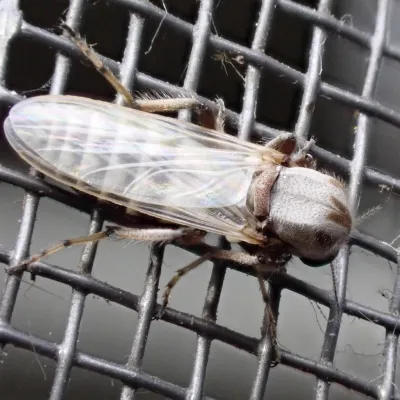
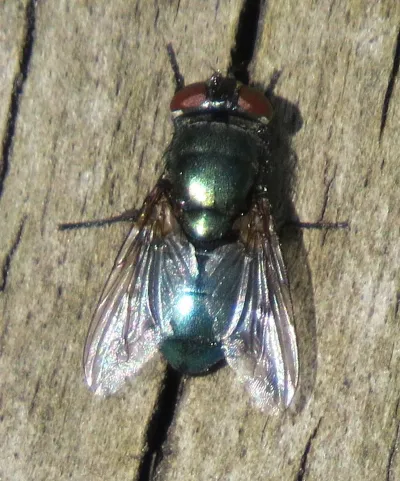
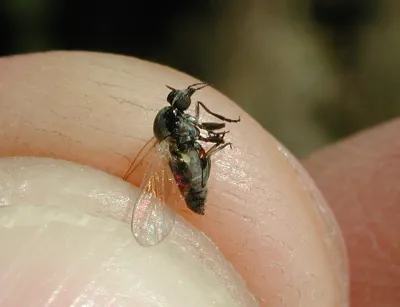
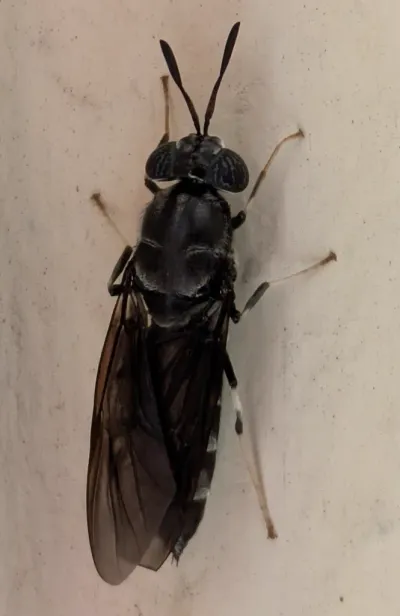
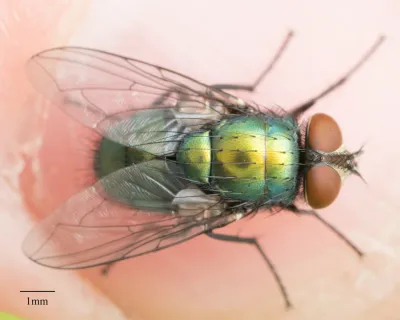
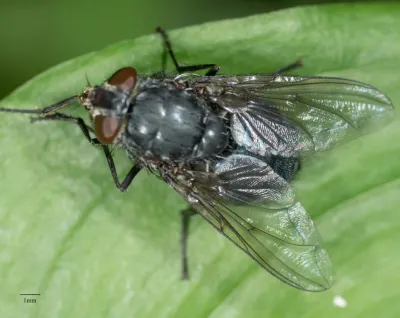
Commonly Confused With
Stable Flies are often mistaken for these similar pests
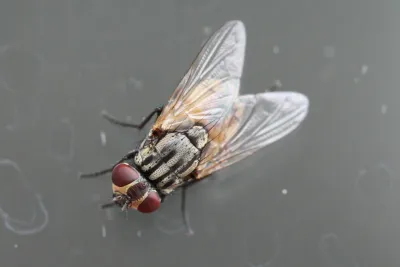
Where Stable Flies Are Found
Hover over states to see their names. Green regions indicate where stable flies have been reported.
Common Questions about Stable Flies
Do stable flies bite humans?
+
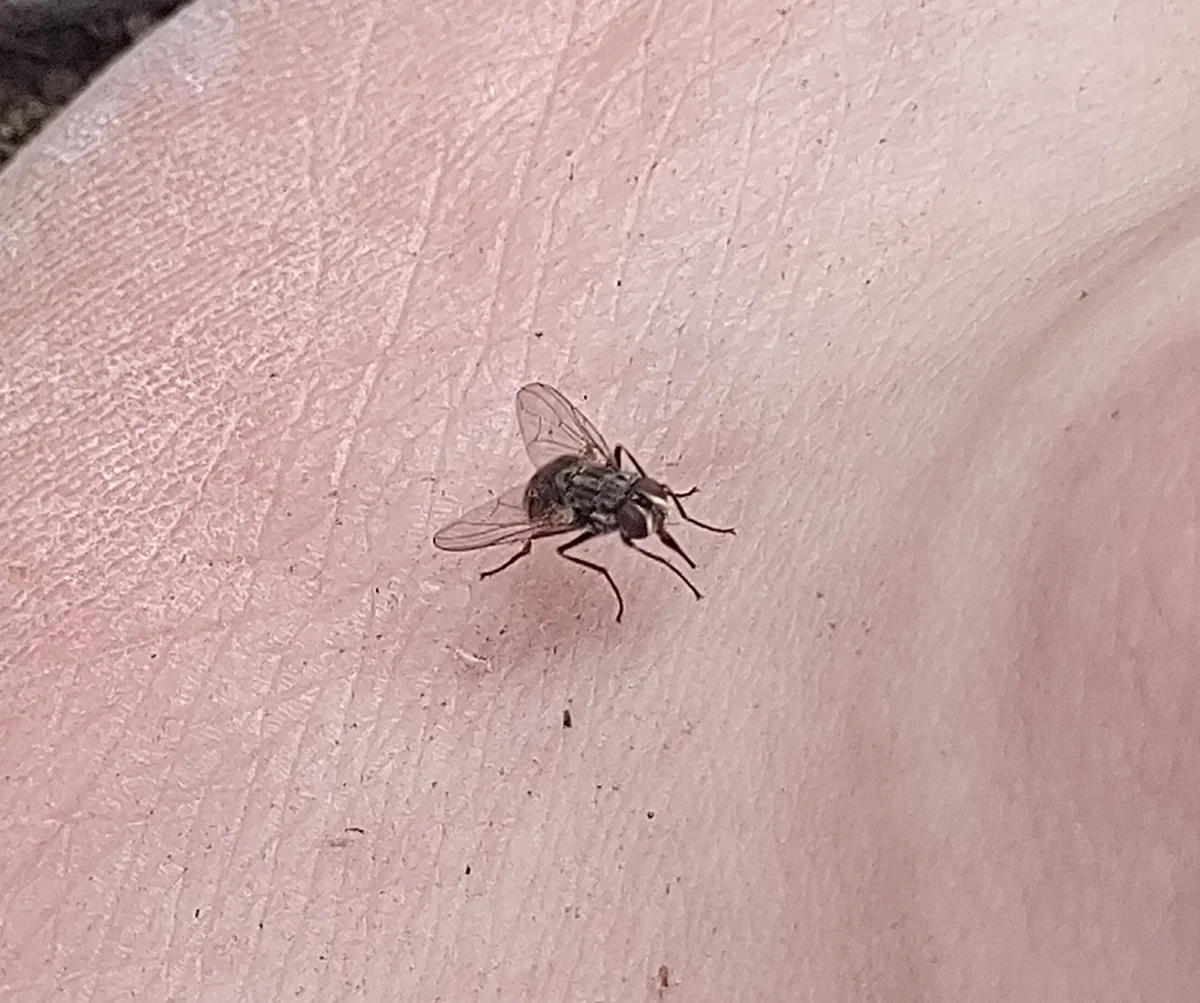
Yes, stable flies bite humans. Both male and female stable flies need blood meals to survive and reproduce. While they prefer livestock like cattle and horses, they will readily bite humans, dogs, and other animals when their preferred hosts are not available. The bites are painful and can leave red, itchy welts.
How can I tell a stable fly from a house fly?
+
The easiest way to tell them apart is by their mouthparts. Stable flies have a long, pointed, bayonet-like proboscis that sticks out in front of their head for piercing skin. House flies have spongy mouthparts that do not protrude noticeably. Both flies are similar in size and have gray bodies with dark stripes, but stable flies also have a checkerboard pattern of dark spots on their abdomen.
Where do stable flies breed?
+
Stable flies breed in moist, decaying organic matter. Common breeding sites include wet hay, straw, silage, grass clippings, compost piles, and manure mixed with bedding material. They do not breed in fresh manure alone but need decaying plant material mixed in. Rotting seaweed on beaches can also support large populations.
Why are stable flies attracted to my property?
+
Stable flies are drawn to properties with suitable breeding sites and hosts to feed on. Piles of wet grass clippings, poorly managed compost, spilled animal feed, or areas where organic matter accumulates can attract them. If you have horses, cattle, or other livestock nearby, stable fly populations may be higher in your area.
When are stable flies most active?
+
Stable flies are daytime feeders. They are most active during morning and late afternoon hours in warm weather. In cooler conditions, they tend to feed during the middle of the day when temperatures are highest. Activity peaks during late spring through early fall in most of North America.
Can stable flies spread disease?
+
Stable flies can act as mechanical vectors for certain pathogens. They have been associated with the transmission of anthrax, equine infectious anemia, and anaplasmosis in livestock. While disease transmission to humans is less common, their bites can become infected if scratched. The primary concern for most people is the painful bite itself. If you have concerns about a bite, consult a healthcare professional.
How far can stable flies travel?
+
Stable flies are strong fliers. They typically travel short distances of a mile or less between feeding and resting sites. However, they can fly much farther when carried by wind. Weather fronts have transported stable flies over 100 miles from inland agricultural areas to coastal beaches.
How do I get rid of stable flies?
+
The most effective approach is eliminating breeding sites. Remove or properly manage decaying organic matter like grass clippings, wet hay, and compost. Keep manure areas dry and clean them weekly. Physical barriers like screens can protect indoor spaces. Specialized traps designed to mimic livestock can help reduce adult populations in outdoor areas.

With five years of hands-on experience in the pest control industry, George Schulz is a registered technician with the Virginia Pest Management Association and a proud third-generation professional in a family business that's been protecting homes for over 57 years. He manages and trains a team of service pros while also leading internal research efforts—recently spearheading a deep-dive review of thousands of documents on pest control materials to hand-pick the most kid and pet friendly, most effective solutions tailored specifically for homes in the DC metro area.