Filth Flies Identification Guide
Diptera (Various Families)
Filth flies are a group of fly species that breed in decaying organic matter, garbage, and animal waste. This group includes house flies, blow flies, bottle flies, and flesh flies, all of which can spread disease-causing organisms.
Taxonomy
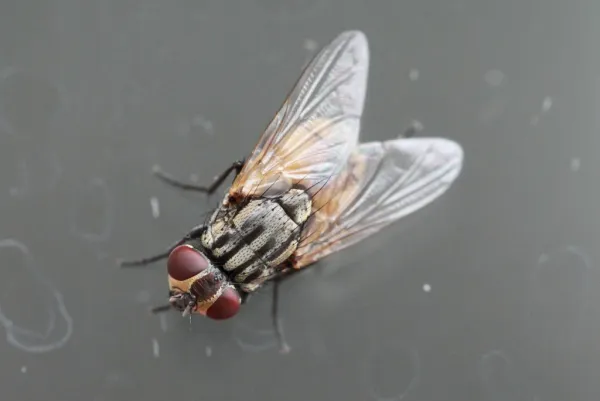
Filth Flies Coloration
Common color patterns to help identify filth flies
Filth Flies
Seasonal Activity
When filth flies are most active throughout the year

Where Filth Flies Are Found
Hover over states to see their names. Green regions indicate where filth flies have been reported.
Filth Fly Identification Guide
Physical Characteristics
Filth flies are a group of fly species that share one key trait: they breed in decaying organic matter. The term covers several fly families including house flies, blow flies, bottle flies, and flesh flies. Despite their differences, all filth flies pose similar health risks because they move between filth and food.
These flies range from 4 to 14 millimeters long. Like all true flies, they have one pair of wings. Their back wings have shrunk into tiny knobs called halteres that help them balance during flight. Filth flies have large compound eyes, short antennae, and sponging mouthparts designed for liquids.
Different filth fly species have distinct looks that help you tell them apart. Learning to identify the type of fly in your home can help you find the breeding source faster.
Common Filth Fly Types
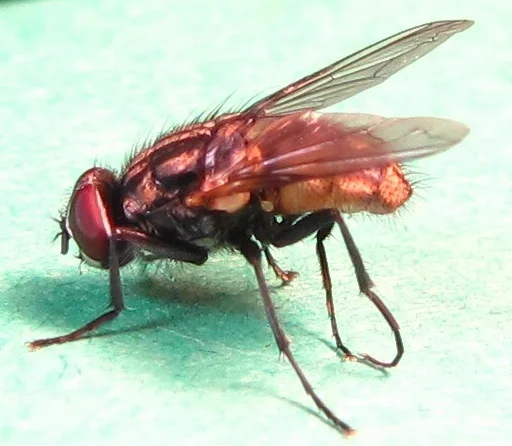
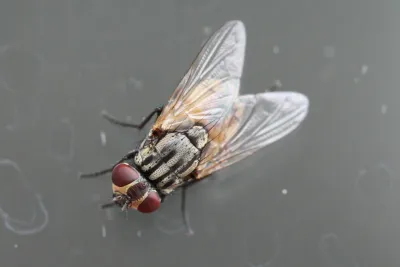
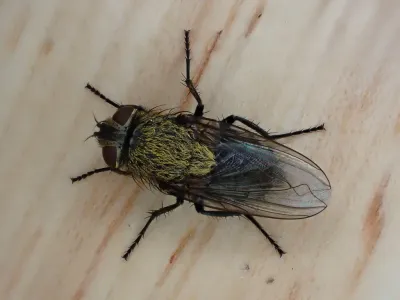
House Flies (Musca domestica): The most common filth fly. House flies are 4 to 8 mm long with dull gray bodies and four dark stripes on the upper body. They have reddish-brown eyes and are strong fliers. House flies breed in garbage, manure, and food waste.
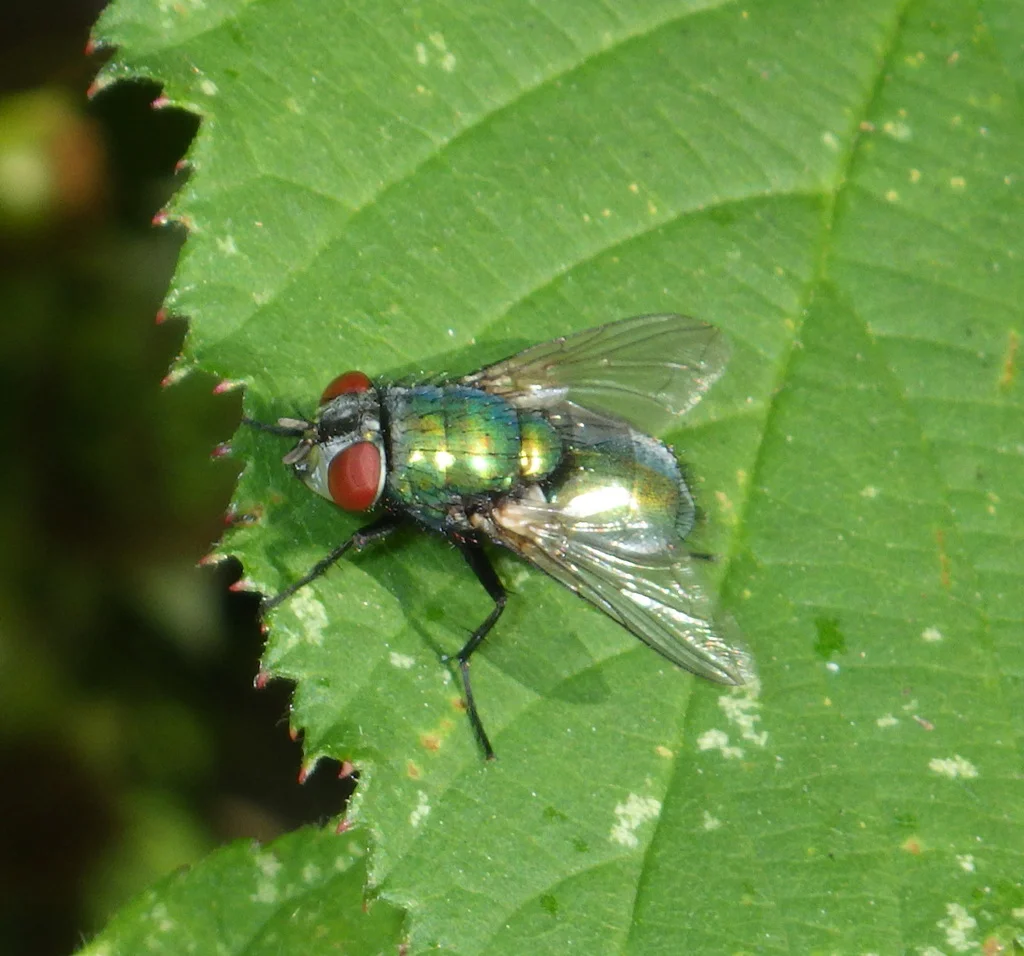
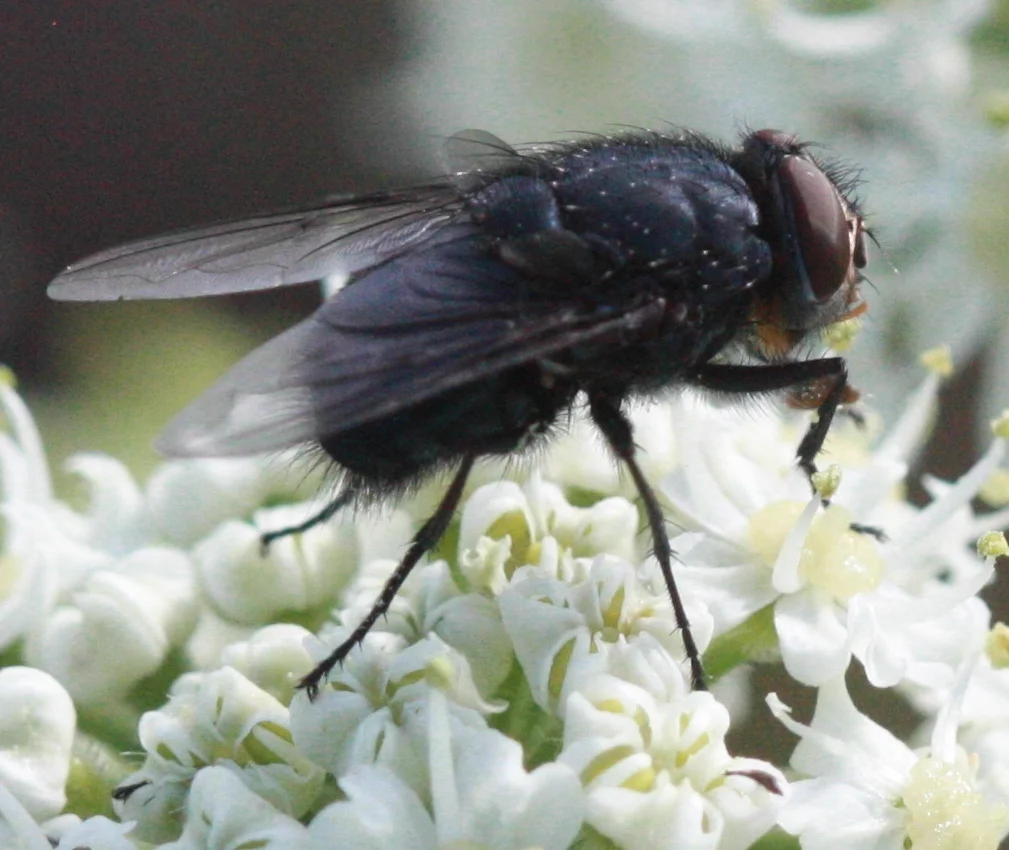
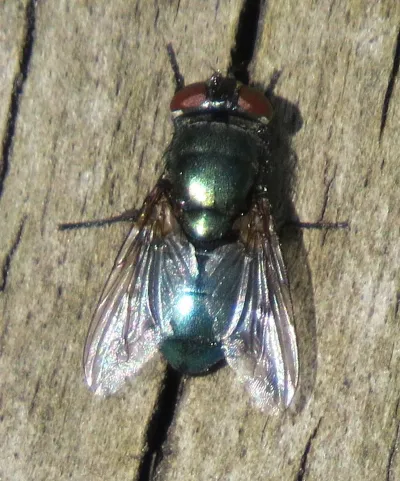
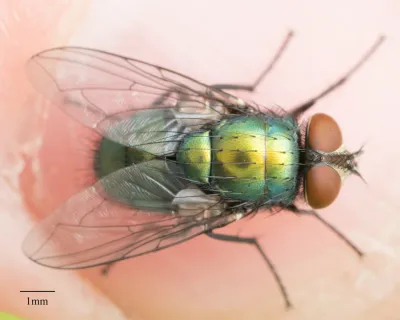
Blow Flies (Family Calliphoridae): Also called bottle flies, these are 6 to 14 mm long with shiny metallic bodies. Green bottle flies (Lucilia sericata) are bright metallic green. Blue bottle flies (Calliphora vomitoria) are metallic blue with gray upper bodies. Blow flies are attracted to dead animals and rotting meat.
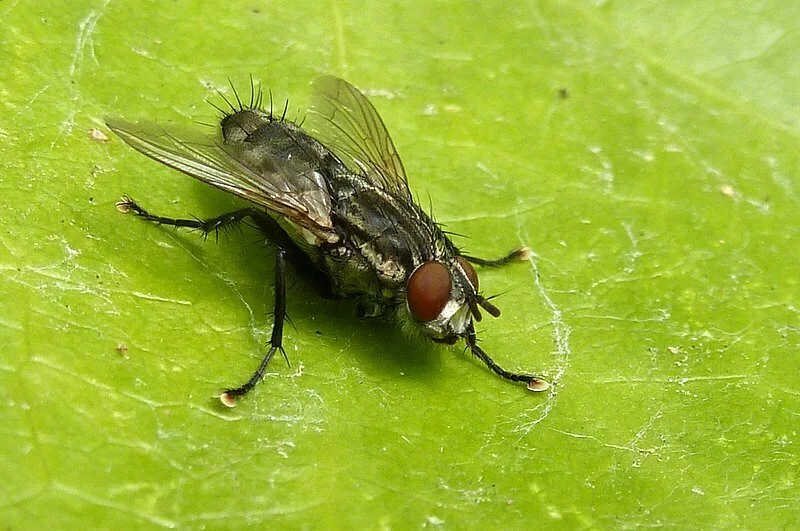
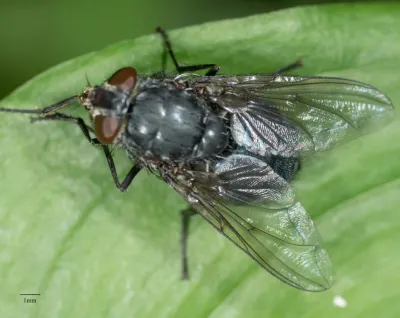
Flesh Flies (Family Sarcophagidae): Gray flies 10 to 14 mm long with three dark stripes on the upper body and a checkered gray pattern on the belly. Unlike other filth flies, flesh flies give birth to live maggots instead of laying eggs. They breed in dead animals, feces, and rotting meat.
Lesser House Flies (Fannia canicularis): Smaller and thinner than house flies at about 5 to 6 mm. You can spot them by their habit of flying in circles under lights or hanging objects. They breed in poultry manure and decaying plant matter. The closely related latrine fly and cheese skipper fly are also grouped among filth flies.
Filth Fly Behavior and Biology
Life Cycle
All filth flies go through complete metamorphosis with four life stages: egg, larva (maggot), pupa, and adult. The speed of this cycle depends on temperature. In warm weather (75 to 85 degrees), house flies can complete the cycle in just 7 to 10 days.
Female flies need protein from decaying matter before they can lay eggs. After feeding, they seek out moist organic material to deposit eggs. House fly females lay 75 to 150 eggs at a time, while blow flies may lay 150 to 200. One female can produce hundreds or even thousands of eggs in her lifetime.
Eggs hatch within 12 to 48 hours depending on species and temperature. The legless, cream-colored maggots feed on the rotting material around them. They go through three growth stages over 3 to 11 days. When ready to pupate, maggots move to drier ground and form brown, capsule-shaped pupal cases. Adults emerge after 3 to 10 days.
Adult filth flies live 10 to 30 days. They spend their time feeding, resting, and reproducing. Adults can fly several miles in search of food and breeding sites, though most stay near where they emerged if conditions are good.
Feeding and Disease Transmission
Filth flies cannot eat solid food. They spit digestive juices onto food to dissolve it, then sponge up the liquid. This feeding method is a major reason they spread disease.
When a fly lands on garbage, feces, or rotting matter, bacteria and other pathogens stick to its body and mouthparts. The fly then carries these germs to the next surface it touches. Studies have found that house flies can carry over 100 different disease-causing organisms. Pathogens linked to filth flies include:
- Salmonella (food poisoning)
- E. coli (intestinal infections)
- Shigella (dysentery)
- Vibrio cholerae (cholera)
- Various parasitic worms and protozoa
Research from the CDC on fly transmission has shown that flies can carry and transmit disease-causing organisms. Keeping flies away from food helps protect your family from illness.
Seasonal Activity
Filth flies are most active during warm months. Outdoor populations boom from late spring through early fall when temperatures support fast breeding. In the northern United States and Canada, fly numbers drop sharply in winter. In the South, flies may stay active year-round.
Indoor fly problems can happen any time of year. Heated buildings provide warmth, and food sources may be available regardless of season. A dead mouse in the wall during winter can bring blow flies into your home even when it is cold outside.
Treatment Methods for Filth Flies
Effective filth fly control focuses on finding and removing breeding sources. Killing adult flies without addressing the source gives only short-term relief. New flies will keep emerging as long as breeding sites remain.
Sanitation and Source Removal
The most important step in fly control is eliminating where flies breed:
-
Garbage management: Keep trash in containers with tight-fitting lids. Take garbage out regularly. Clean bins to remove residue and odors that attract flies.
-
Pet waste: Pick up dog waste from the yard daily. Keep cat litter boxes clean. Pet feces are major breeding sites for several filth fly species.
-
Dead animals: If blow flies or carrion flies appear suddenly indoors, check for dead mice, rats, birds, or squirrels in walls, attics, crawl spaces, and chimneys. Remove the carcass if you can reach it.
-
Compost: Turn compost piles regularly and cover them. Keep bins away from the house. Do not add meat or dairy products.
-
Food waste: Clean up spills promptly. Store food in sealed containers. Do not leave pet food out overnight.
Exclusion Methods
Keeping flies outside is the next line of defense:
- Install or repair window and door screens
- Add door sweeps and weatherstripping
- Seal gaps around pipes, vents, and utility lines
- Keep doors closed, especially during peak fly activity
Traps and Physical Controls
Various traps can help reduce fly numbers:
-
UV light traps: These attract flies with ultraviolet light and capture them on glue boards or electric grids. They work best indoors, placed away from competing light sources.
-
Baited traps: Outdoor fly traps use attractants to lure flies into containers where they cannot escape. These help reduce flies near buildings.
-
Sticky traps: Simple adhesive traps placed near windows can catch many flies.
Traps work best as part of a complete program that includes sanitation and exclusion. They cannot solve a fly problem on their own.
Chemical Control Options
Insecticides may help when sanitation alone is not enough:
-
Residual sprays: Applied to surfaces where flies rest. These kill flies that land on treated areas.
-
Fly baits: Products that combine food attractants with insecticides. They work well in areas where flies gather.
-
Space sprays: Aerosols that kill flying adults on contact. They provide fast knockdown but no lasting control.
Filth flies can develop resistance to insecticides over time. Rotating between different product types and combining chemical control with sanitation gives better long-term results.
Biological Control
In agricultural and commercial settings, biological control can supplement other methods:
-
Parasitic wasps: Tiny wasps in the family Pteromalidae attack fly pupae. They do not sting people and can reduce fly emergence when released regularly.
-
Predatory beetles: Hister beetles and other predators feed on fly eggs and larvae in manure and compost.
These methods require ongoing management and work best in situations where large amounts of organic matter make complete sanitation impractical.
References
Other Flies
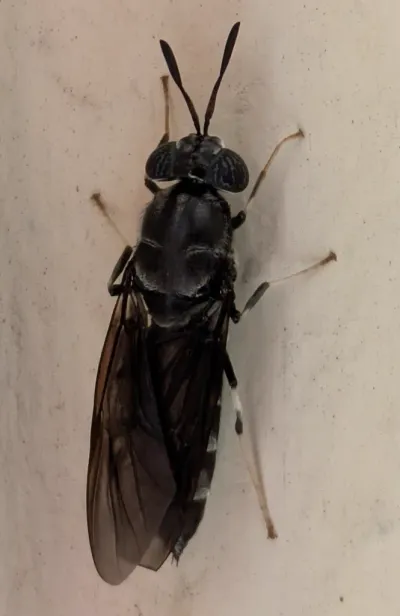
Explore other species in the flies family
Commonly Confused With
Filth Flies are often mistaken for these similar pests
Where Filth Flies Are Found
Hover over states to see their names. Green regions indicate where filth flies have been reported.
Common Questions about Filth Flies
What are filth flies?
+
Filth flies are a group of fly species that breed in decaying organic matter such as garbage, animal waste, and rotting food. The group includes house flies, blow flies, bottle flies, and flesh flies. They are called filth flies because of their habit of feeding on and breeding in unsanitary materials.
Are filth flies dangerous to humans?
+
Yes, filth flies can spread disease. They pick up bacteria and other pathogens from garbage, feces, and decaying matter, then transfer these germs to food and surfaces when they land. Diseases linked to filth flies include salmonella, E. coli, cholera, and dysentery.
Why do I suddenly have lots of flies in my house?
+
A sudden increase in flies usually means a breeding source is nearby. Check for forgotten garbage, pet waste in the yard, a dead animal in the walls, or rotting food that fell behind appliances. Filth flies breed fast in warm weather, so a small problem can grow quickly.
How do I get rid of filth flies?
+
The key to getting rid of filth flies is finding and removing their breeding source. Clean up garbage, dispose of rotting food, pick up pet waste, and check for dead animals. Once you remove what attracts them, the flies will leave. Traps and screens can help while you address the source.
What is the difference between filth flies and fruit flies?
+
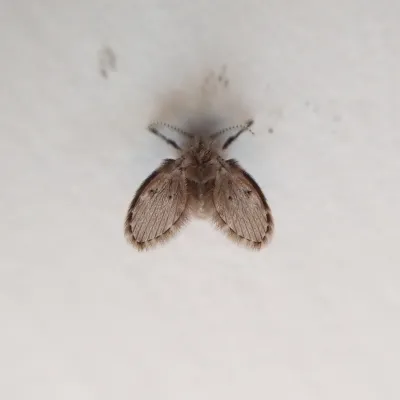
Filth flies like house flies and blow flies are larger (4-14 mm) and breed in garbage, waste, and decaying matter. Fruit flies are much smaller (2-4 mm), tan colored with red eyes, and breed in overripe fruit and fermenting liquids. Different breeding sites mean different control approaches.
How fast do filth flies reproduce?
+
Filth flies reproduce very fast in warm weather. House flies can complete their life cycle in as little as 7 to 10 days. A single female can lay 500 or more eggs in her lifetime. This rapid breeding is why small fly problems can become big infestations quickly.
Do filth flies bite?
+
Most filth flies do not bite. House flies, blow flies, and flesh flies have sponging mouthparts made for liquids, not biting. However, stable flies look similar to house flies but do bite and feed on blood. If flies are biting you, they may be stable flies rather than typical filth flies.
Where do filth flies come from?
+
Filth flies breed outdoors in garbage, animal waste, compost, and dead animals. They enter homes through open doors and windows, torn screens, or gaps around pipes. Their strong sense of smell helps them find food sources from far away. Indoor breeding can also occur in neglected trash or drains.

With five years of hands-on experience in the pest control industry, George Schulz is a registered technician with the Virginia Pest Management Association and a proud third-generation professional in a family business that's been protecting homes for over 57 years. He manages and trains a team of service pros while also leading internal research efforts—recently spearheading a deep-dive review of thousands of documents on pest control materials to hand-pick the most kid and pet friendly, most effective solutions tailored specifically for homes in the DC metro area.