Dog-Day Cicadas Identification Guide
Neotibicen spp.
Large, loud insects known for their distinctive buzzing call during the hottest days of summer. Unlike periodical cicadas, dog-day cicadas appear annually and are a defining soundtrack of mid-summer.
Taxonomy
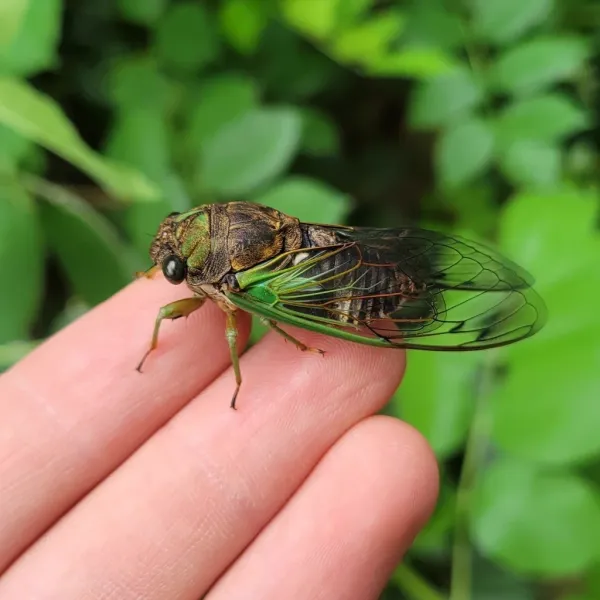
Dog-Day Cicadas Coloration
Common color patterns to help identify dog-day cicadas
Dog-Day Cicadas
Seasonal Activity
When dog-day cicadas are most active throughout the year

Where Dog-Day Cicadas Are Found
Hover over states to see their names. Green regions indicate where dog-day cicadas have been reported.
Dog-Day Cicada Identification Guide
Physical Characteristics
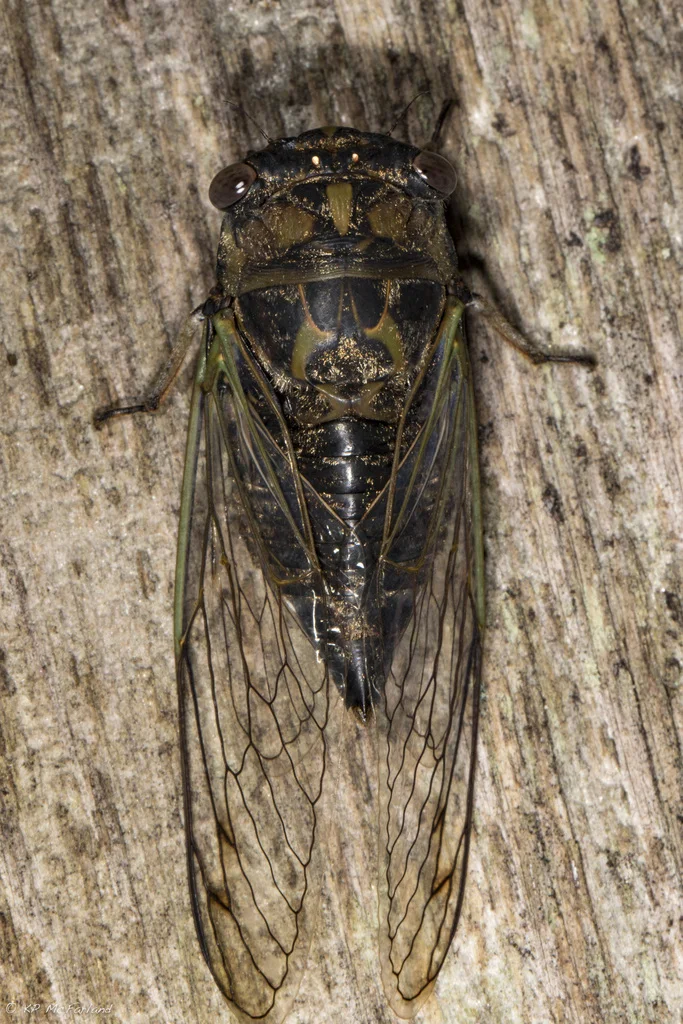
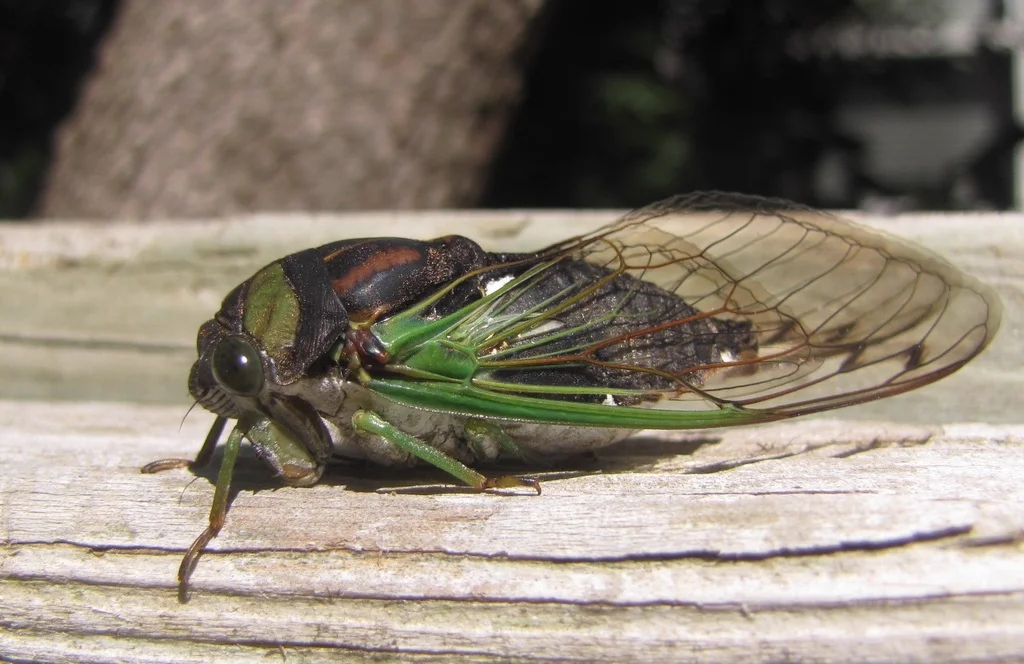
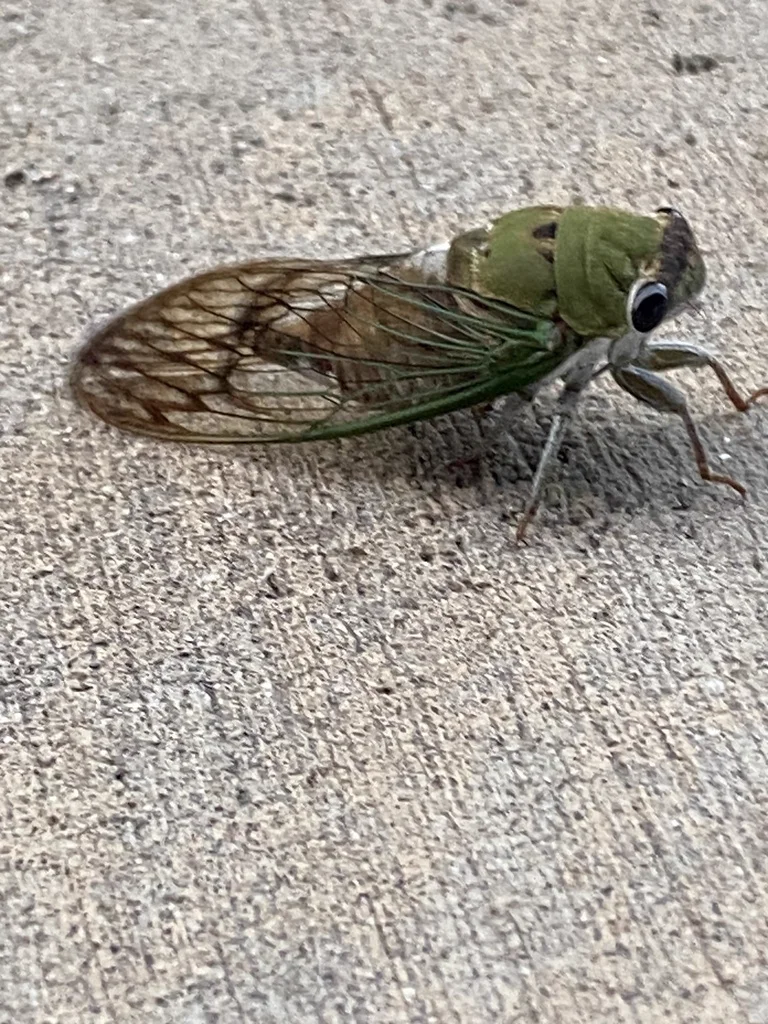
Dog-day cicadas are large insects that belong to the broader cicada family. They measure 27 to 45 mm long with wingspans up to 82 mm. Their bodies are dark brown to black with green or yellow-green markings on the head and thorax. The clear wings have green veins that stand out near the base. Their big, bulging eyes are dark colored. This sets them apart from periodical cicadas, which have bright red eyes.
The easiest way to spot a dog-day cicada is the golden or green “W” shape on its back, just behind the head. Their six legs have small claws that grip bark and branches. At rest, their wings fold like a tent over their body.
Common Species in North America
-
Northern Dog-Day Cicada (Neotibicen canicularis): The most common species. Found across the eastern U.S. and into Canada. Known for its high-pitched buzzing call.
-
Superb Dog-Day Cicada (Neotibicen superbus): A larger species found mainly in southern and southwestern states. Has more green coloring. Learn more about this pest family in our Cicada guide. Homeowners dealing with Dog-Day Cicadas may also encounter Wood Wasps, which can appear in similar environments.
-
Scissor Grinder Cicada (Neotibicen pruinosus): Named for its rhythmic call that sounds like a scissors grinder. Common in the Midwest and eastern states.
-
Swamp Cicada (Neotibicen tibicen): Lives in wetter areas across the eastern U.S. Has a very loud call.
Dog-Day Cicada Behavior and Biology
Dog-day cicadas spend most of their lives underground. After hatching from eggs in tree branches, the tiny nymphs drop to the ground. They burrow into the soil and attach to tree roots. There they feed on plant fluids for 2 to 5 years. They molt several times as they grow.
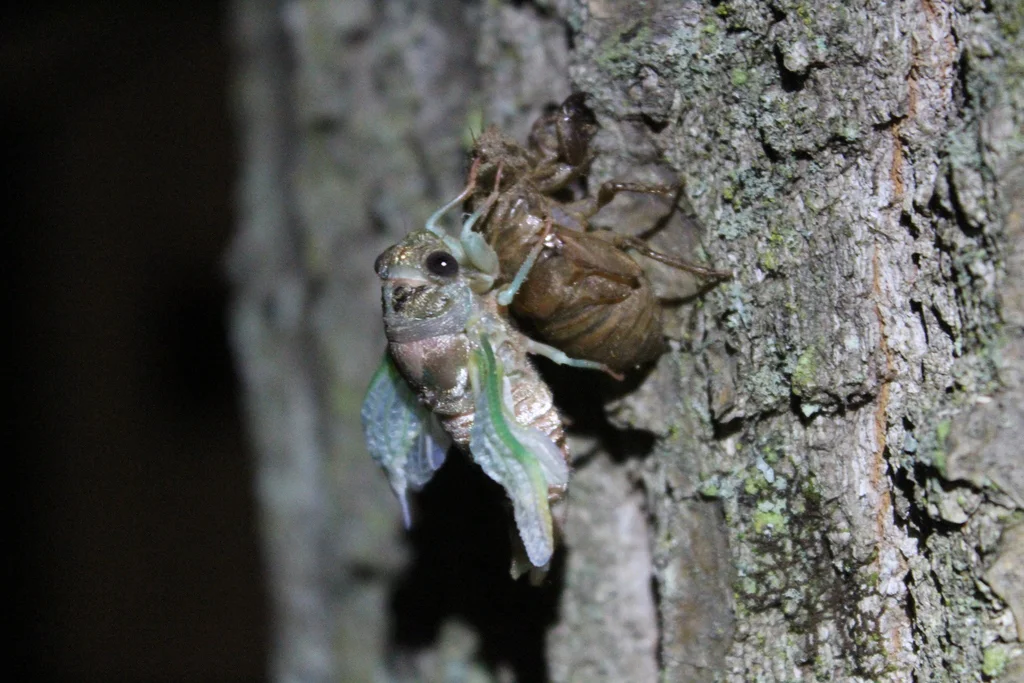
When the soil warms to about 65 degrees in mid-summer, the nymphs tunnel up. They usually come out at dusk or night. They climb onto trees, posts, or walls and shed their skin one last time. The adult cicada comes out pale and soft. It darkens and hardens over several hours before flying away. The brown shell it leaves behind often clings to surfaces.
Male cicadas start calling a few days after they emerge. Each species has its own song. They make sound by flexing organs called tymbals on the sides of their body. Air sacs make the sound louder. This creates the loud buzzing that marks summer. Males call from trees during the hottest hours. Females are silent. They respond to calls by approaching males and flicking their wings.
After mating, females cut slits into young tree branches. They lay 20 to 30 eggs per slit. Each female can lay several hundred eggs total. About six weeks later, the eggs hatch and the cycle starts over.
Managing Cicada Activity
Cicadas do not damage homes, bite, sting, or spread disease. Their size and loud sound can be startling, but they pose no real threat. The twig damage from egg-laying rarely harms healthy trees.
For young or new trees during heavy emergence years, fine netting or mesh can protect branches from egg-laying damage. Like other pests in this group, Daddy Long Legs are sometimes found in the same habitats.
Cicadas sometimes land on people or fly into homes through open doors. They will not stay or breed indoors. You can simply catch them and release them outside. People often confuse cicadas with locusts due to their loud calls and large numbers. Our cicada vs locust comparison explains the key differences.
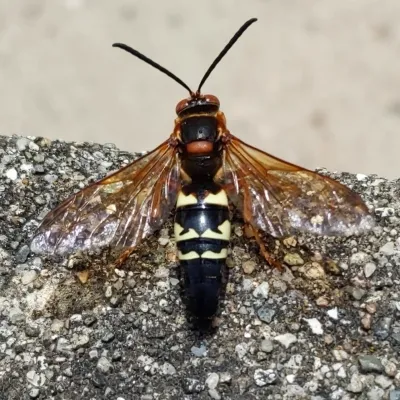
The large cicada killer wasps that show up alongside dog-day cicadas hunt them to feed their young. These wasps look scary but are not aggressive toward people. They usually ignore humans unless grabbed.
References
Other Cicadas
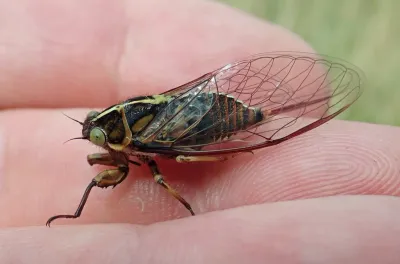
Explore other species in the cicadas family
Commonly Confused With
Dog-Day Cicadas are often mistaken for these similar pests
Where Dog-Day Cicadas Are Found
Hover over states to see their names. Green regions indicate where dog-day cicadas have been reported.
Common Questions about Dog-Day Cicadas
Why are they called dog-day cicadas?
+
Dog-day cicadas get their name from their peak activity during the 'dog days' of summer, typically late July through August. This period coincides with the time when Sirius, the 'dog star,' rises with the sun, historically associated with the hottest days of the year.
Are dog-day cicadas the same as periodical cicadas?
+
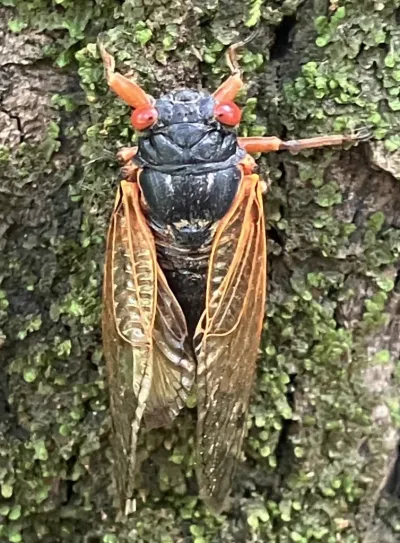
No. Dog-day cicadas are [annual cicadas](/pests/cicadas/annual-cicadas/) that appear every summer due to overlapping generations. [Periodical cicadas](/pests/cicadas/periodical-cicadas/) emerge in massive broods every 13 or 17 years. Dog-day cicadas are also larger and have green wing veins, while periodical cicadas have red eyes and orange wing veins.
Do dog-day cicadas damage trees?
+
Adult cicadas cause minimal damage. However, females make small slits in tree branches to lay eggs, which can cause minor twig dieback called 'flagging.' Healthy, mature trees easily recover from this damage.
Why are cicadas so loud?
+
Male cicadas produce their distinctive sound using specialized structures called tymbals located on their abdomen. They flex these ribbed membranes rapidly to create the buzzing sound, which can reach up to 100 decibels. The sound attracts females for mating.
How long do dog-day cicadas live?
+
Dog-day cicadas spend 2 to 5 years underground as nymphs feeding on tree roots. Once they emerge as adults, they live only 4 to 6 weeks, during which they mate and lay eggs before dying.
Do cicadas bite or sting?
+
No. Cicadas do not bite or sting humans. They have no defensive mechanisms and are completely harmless. Their only defense is their loud sound and their ability to fly away.
What eats dog-day cicadas?
+
Cicadas have many predators including birds, squirrels, and cicada killer wasps. Cicada killer wasps are large solitary wasps that specifically hunt dog-day cicadas to feed their larvae.

With five years of hands-on experience in the pest control industry, George Schulz is a registered technician with the Virginia Pest Management Association and a proud third-generation professional in a family business that's been protecting homes for over 57 years. He manages and trains a team of service pros while also leading internal research efforts—recently spearheading a deep-dive review of thousands of documents on pest control materials to hand-pick the most kid and pet friendly, most effective solutions tailored specifically for homes in the DC metro area.