Warehouse Beetles Identification Guide
Trogoderma variabile
Warehouse beetles are small dermestid beetles that infest stored foods like grains, cereals, and pet food. Their hairy larvae contaminate products and can survive months without feeding.
Taxonomy
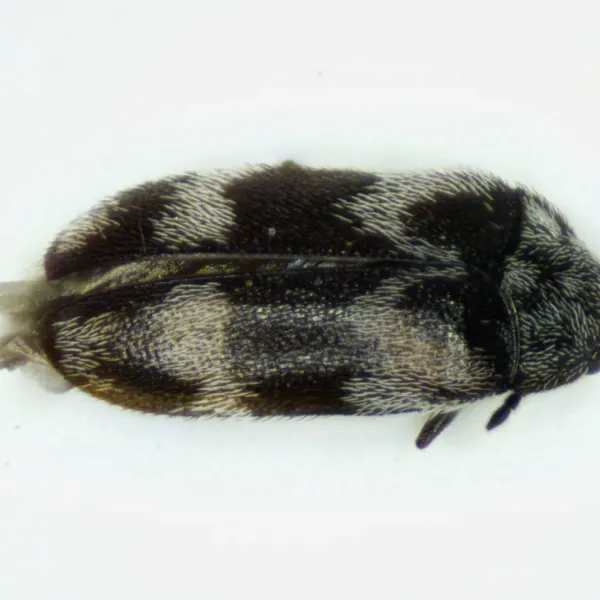
Warehouse Beetles Coloration
Common color patterns to help identify warehouse beetles
Warehouse Beetles
Seasonal Activity
When warehouse beetles are most active throughout the year
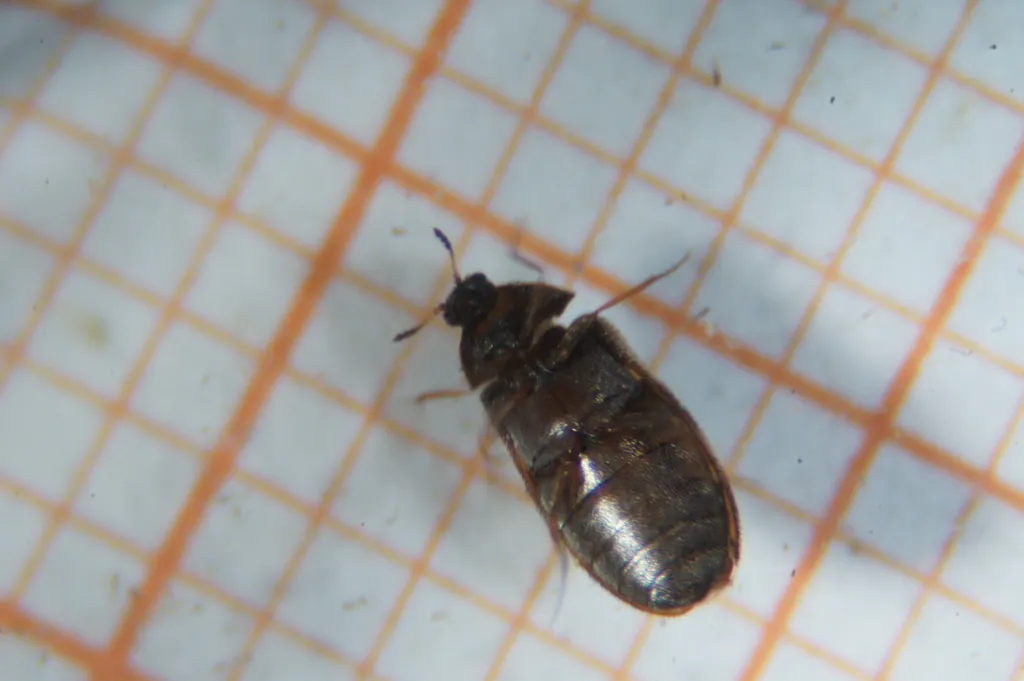
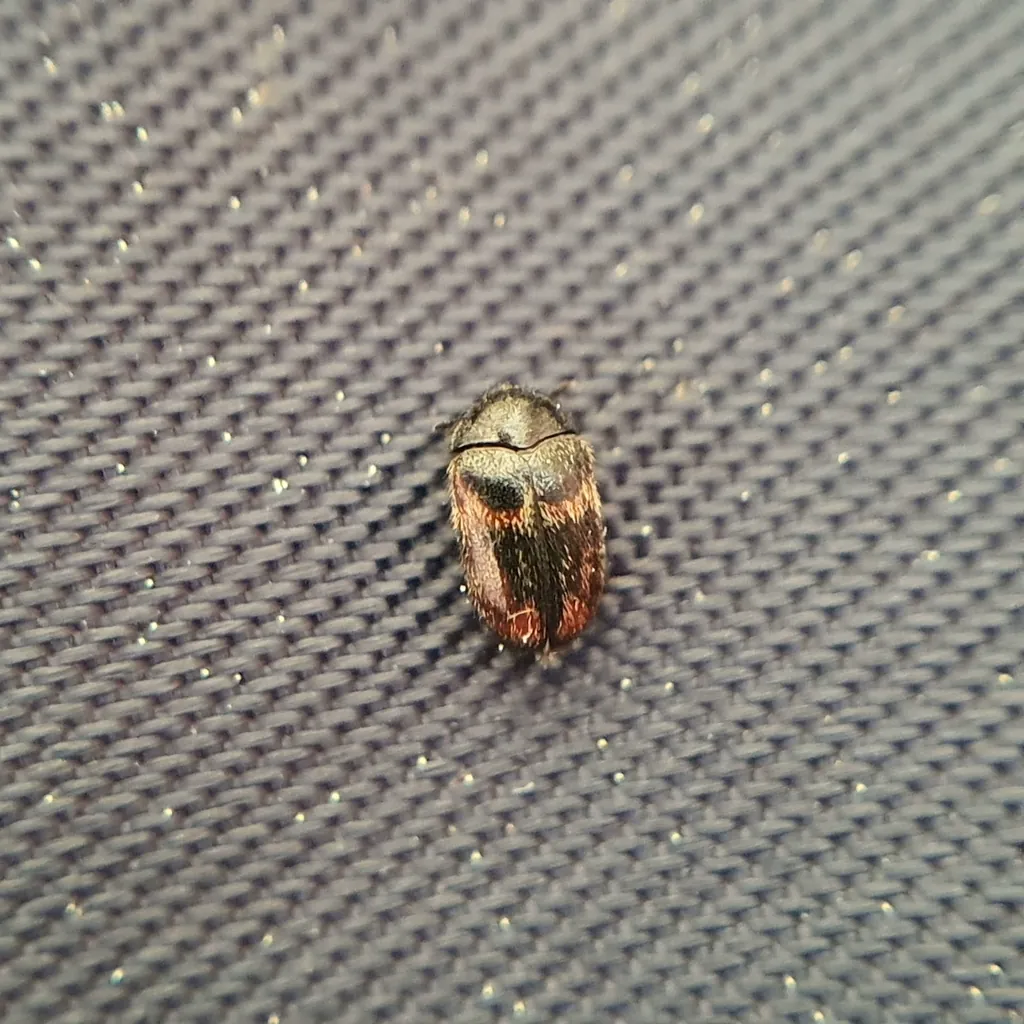
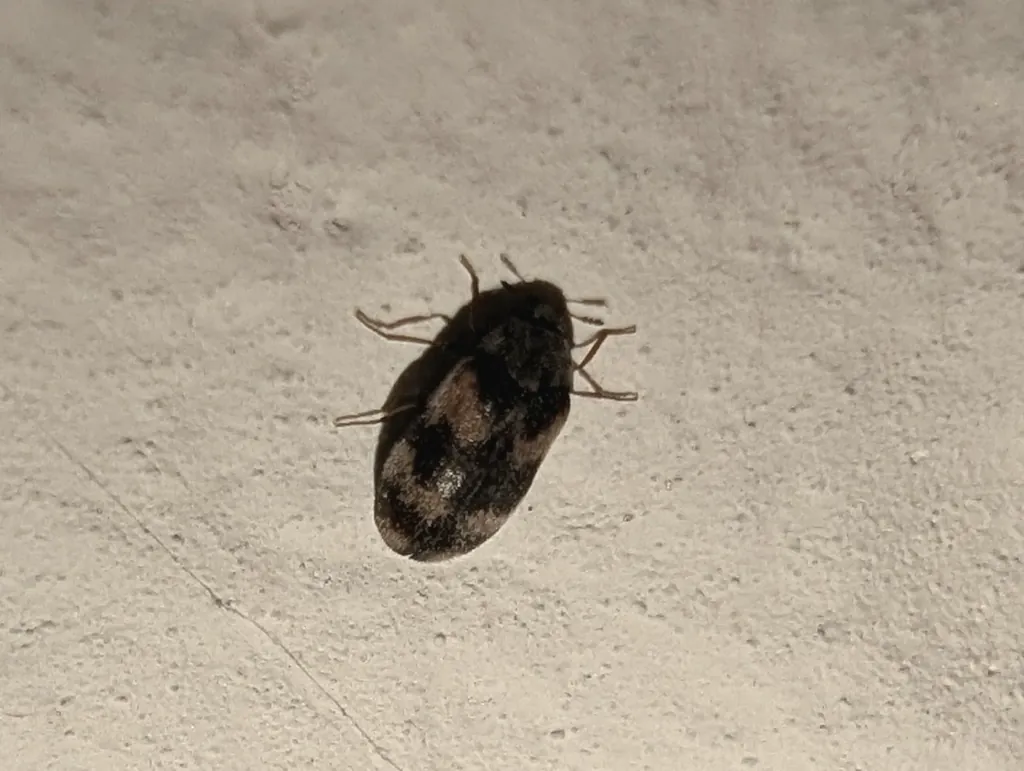

Where Warehouse Beetles Are Found
Hover over states to see their names. Green regions indicate where warehouse beetles have been reported.
Warehouse Beetle Identification Guide
Physical Characteristics
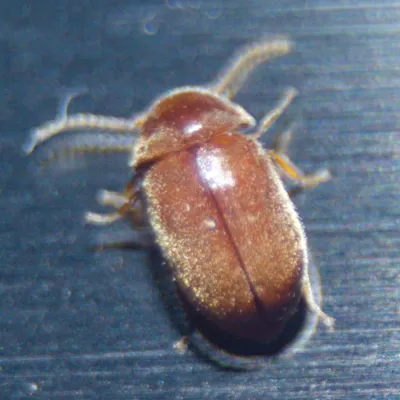
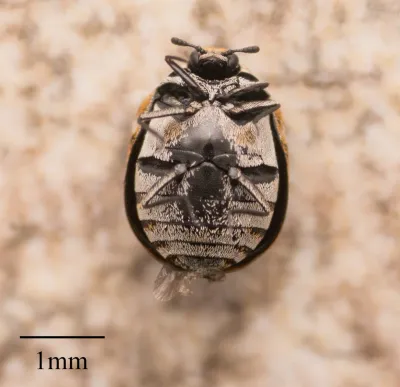
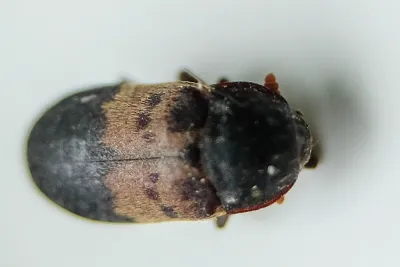
Warehouse beetles (Trogoderma variabile) are small, oval beetles in the dermestid beetle family. Adults are 2 to 5 mm long, about the size of a sesame seed. They are dark brown to black. Three faint, wavy bands of lighter brown or reddish scales cross the wing covers. These bands can be hard to see without a magnifying glass.
Key features to look for:
- Clubbed antennae with 11 segments that tuck into grooves under the body
- Oval body shape that is slightly raised when viewed from the side
- Fine hairs or scales covering the body surface
- Six legs held close to the body when at rest
- Males have longer antennal clubs than females
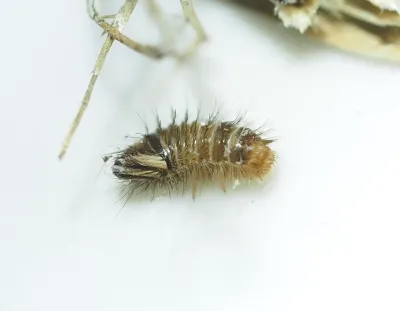
Warehouse beetle larvae look very different from the adults. They are long and covered in thick, bristly brown hairs. Full-grown larvae are about 6 mm long. You can spot them by a thick tuft of barbed hairs at the tail end. These barbed hairs can cause skin rashes in some people. Young larvae are cream-colored. They turn brown as they grow.
Related Species
The warehouse beetle belongs to the genus Trogoderma. Several related species also infest stored products in North America:
- Khapra beetle (Trogoderma granarium) is closely related and a major quarantine pest. It does not live in North America but is sometimes found at ports. Only an expert can tell it apart from the warehouse beetle.
- Tricolored carpet beetle (Trogoderma sternale) is native to North America. It can also get into stored products but shows up less often in homes.
- Cabinet beetle (Trogoderma inclusum) is another species that feeds on stored foods, animal products, and museum items.
Warehouse Beetle Behavior and Biology
Life Cycle
Warehouse beetles have four life stages: egg, larva, pupa, and adult.
Eggs are tiny, white, and hard to see. Females lay them on or near food sources. A single female can lay up to 90 eggs. The eggs hatch in about one week when conditions are warm.
Larvae are the only stage that causes damage. They shed their skin about six times as they grow. At room temperature, larvae turn into pupae in 30 to 45 days. Larvae can also go dormant when food runs low or the air is too cool. In this dormant state, they can live up to two years without eating.
Pupae form inside the last shed skin or in a small space near the food. This stage lasts two to three weeks. Many pest control products do not work well against pupae.
Adults are ready to mate within days of emerging. They live only two to four weeks. Adults can fly and are often drawn to light. You may find them on windowsills. Unlike the larvae, adults eat pollen and nectar rather than stored foods.
Habitat and Diet
Warehouse beetles live in areas with dry stored products. Larvae eat a wide range of foods:
- Whole grains, wheat, barley, and rice
- Flour, cereals, and grain products
- Pasta, cornmeal, and oatmeal
- Nuts, seeds, and dried fruit
- Pet food and birdseed
- Spices, cocoa, and dried herbs
- Fish meal and dried animal products
- Dead insects and museum specimens
You will most often find them in pantries, food storage areas, and warehouses. Larvae stay hidden inside food packages. They feed along seams and in cracks where food builds up. Their shed skins and hair bits get into the food even after the larvae move on.
How Infestations Start
Most home infestations start when you bring home food that already has eggs or larvae in it. Eggs and small larvae are too small to see. They can be inside sealed packages from the store. Adults can also fly into homes through open windows and doors during warm weather.
In stores and factories, warehouse beetles are a big problem. They get into grain bins, flour mills, and food plants. They handle low humidity well and can survive where other pests cannot.
Signs of a Warehouse Beetle Infestation
Watch for these common signs:
- Small beetles on windowsills or near lights trying to fly toward light
- Shed larval skins that look like tiny, hairy husks near food or on shelves
- Live hairy larvae in stored food, especially grain products
- Powdery dust or droppings in food packages or on pantry shelves
- Holes in packaging chewed by larvae
- Musty or stale odors from heavily contaminated food
Shed larval skins are often the first clue that something is wrong. Keep in mind that larvae can go dormant and hide in cracks for months. This means the problem can continue even after you throw out the infested food.
Treatment Methods for Warehouse Beetles
Good warehouse beetle control starts with finding the source. After that, cleaning and prevention keep the problem from coming back.
Finding the Source
The most important step is figuring out where the beetles are breeding. Go through all dried food in your pantry and storage areas. Look closely at:
- Flour, cereal, and rice
- Pet food bags and birdseed
- Spices, dried herbs, and baking mixes
- Nuts, seeds, and dried fruit
- Items that have sat unused for a long time
Check the seams and folds of packaging where larvae like to hide. Even unopened packages can have eggs in them.
Cleaning and Non-Chemical Control
Most pantry problems can be fixed with a good deep clean:
- Throw out all infested food and anything you are not sure about
- Vacuum shelves, cracks, and corners to pick up eggs, larvae, and debris
- Wipe all surfaces with soap and water to remove food residue
- Freeze items you want to save at 0 degrees Fahrenheit for seven days to kill all life stages
- Heat treatment at 130 to 140 degrees Fahrenheit for 30 to 60 minutes also works for small batches
- Put all dry goods in sealed containers made of glass, metal, or thick plastic
Professional Treatment
If cleaning does not solve the problem, a pest control company can help. Treatments often target cracks, shelves, and hidden spots where larvae survive. Growth regulators can stop larvae from turning into adults. Pupae can survive many products, so follow-up visits two to four weeks later help catch new larvae that hatch after the first round.
In larger buildings like mills and warehouses, fumigation and heat treatments of the whole building are common.
Prevention
Preventing warehouse beetles is easier than getting rid of them:
- Put all dried foods in sealed, airtight containers right after you buy them
- Use older food first and rotate your stock
- Clean up spills and crumbs right away
- Check new food before you add it to your pantry
- Do not buy damaged or open packages
- Keep pantry areas dry and well-aired
- Vacuum pantry shelves and corners on a regular basis
- Seal cracks and gaps around shelving and cabinets
Warehouse Beetles vs. Similar Pests
Warehouse beetles look like several other small beetles. Here is how to tell them apart:
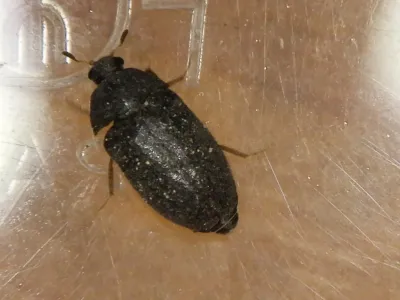
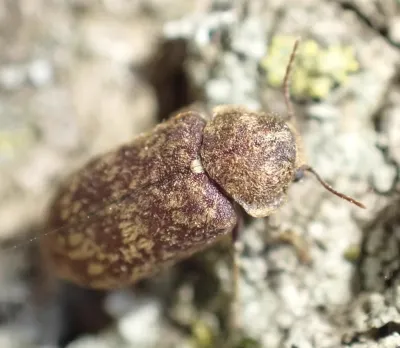
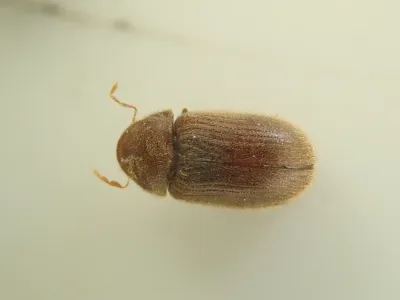
Drugstore beetles are all one color (reddish-brown) with rows of fine grooves on the wing covers. They do not have the wavy bands that warehouse beetles show. Their larvae are small, white, C-shaped grubs with no hair.
Cigarette beetles are light brown with smooth wing covers. Their antennae are saw-toothed instead of clubbed. They are about the same size but rounder and one solid color.
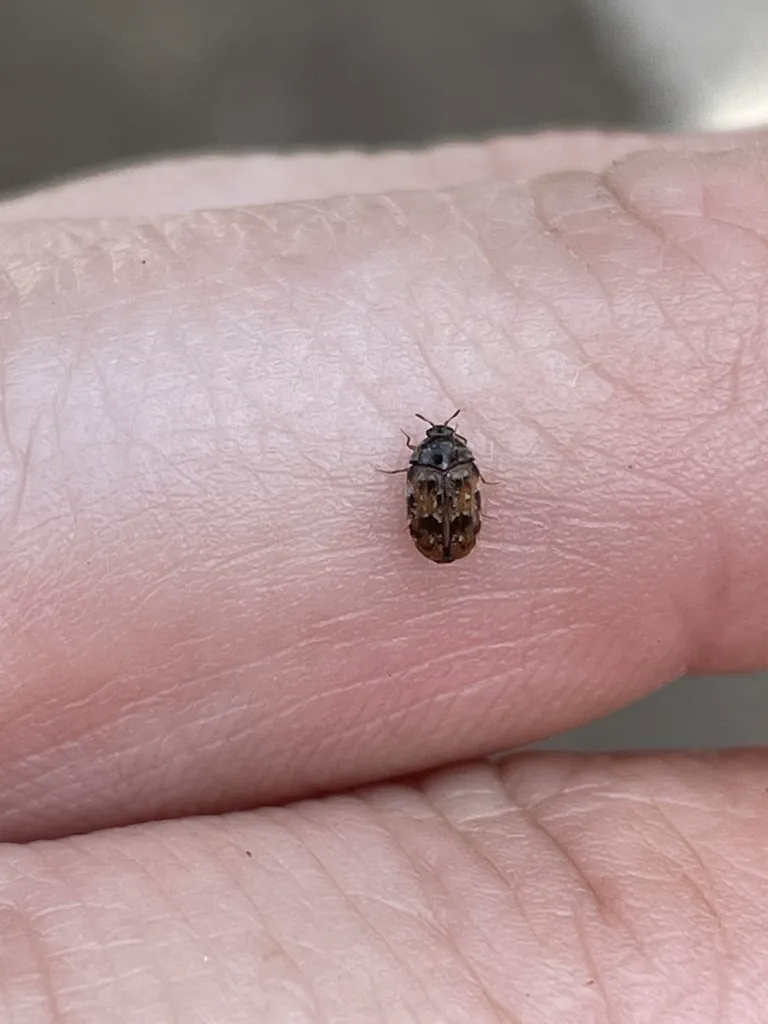
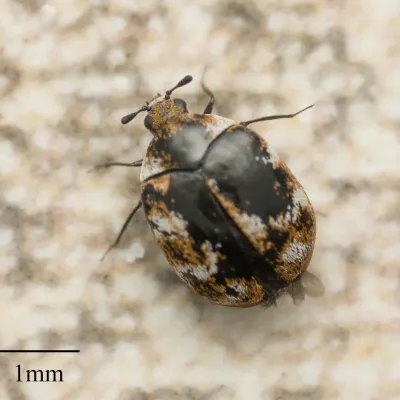
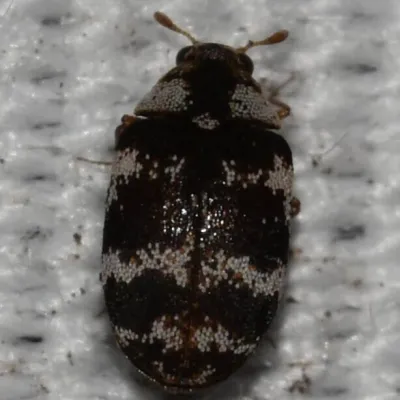
Varied carpet beetles are smaller and rounder with patches of white, brown, and yellow scales. Both are in the dermestid family, but carpet beetles mostly damage fabrics and natural fibers, not stored foods.
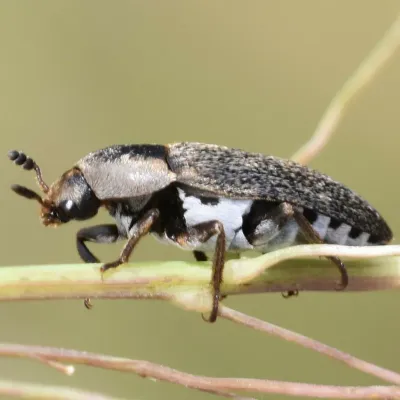
Larder beetles are bigger at 6 to 9 millimeters. They have a pale yellow band across the front of their wing covers. They go after dried meats, cheese, and animal products rather than grains.
Health Concerns
Warehouse beetles do not bite, sting, or spread diseases. Still, they can cause some health problems through food they contaminate:
- Skin rashes: The barbed hairs on larvae can irritate skin when touched. Some people get itchy bumps that look like bug bites.
- Breathing issues: Tiny hair fragments in the air can bother the lungs, especially for people with allergies or asthma.
- Stomach upset: Eating food with larval hairs and body parts in it may cause digestive discomfort.
Throw out any food you think may be infested. If you have ongoing skin or breathing problems that might be tied to a pest issue, talk to your doctor. This information is not a substitute for medical advice.
References and Further Reading
Other Carpet Beetles
Explore other species in the carpet beetles family
Commonly Confused With
Warehouse Beetles are often mistaken for these similar pests
Where Warehouse Beetles Are Found
Hover over states to see their names. Green regions indicate where warehouse beetles have been reported.
Common Questions about Warehouse Beetles
What do warehouse beetles look like?
+
Adult warehouse beetles are small, oval-shaped beetles about 2 to 5 millimeters long, roughly the size of a sesame seed. They are dark brown to black with three faint, wavy bands of lighter brown or reddish-brown scales across their wing covers. Their larvae are hairy and cream to brown in color, with dense tufts of bristles at the tail end.
What do warehouse beetles eat?
+
Warehouse beetle larvae feed on a wide range of dried stored products including grains, cereals, flour, cornmeal, pasta, rice, nuts, seeds, spices, dried fruit, pet food, and fish meal. They can also infest animal-based products like dried meats and museum specimens. Adults feed mainly on pollen and nectar.
Are warehouse beetles harmful to humans?
+
Warehouse beetles do not bite or sting. However, their larvae have barbed hairs called hastasetae that can cause skin irritation and allergic reactions in some people. If consumed in contaminated food, these hairs may cause gastrointestinal irritation. They are primarily an economic pest because of the food contamination they cause.
How do warehouse beetles get inside homes?
+
Warehouse beetles most commonly enter homes through infested food products purchased at the store. Dried goods like cereals, flour, pet food, and birdseed may already contain eggs or larvae when brought inside. Adults can also fly into homes through open windows and doors, especially during warm weather.
How long can warehouse beetle larvae survive without food?
+
Warehouse beetle larvae are remarkably resilient and can enter a dormant state called diapause. During diapause, larvae can survive without food for several months to over a year. This trait makes them especially difficult to eliminate, because larvae hidden in cracks and crevices can persist long after infested food has been removed.
How do I get rid of warehouse beetles in my pantry?
+
Start by inspecting all dried food products and discarding anything that shows signs of infestation such as live beetles, larvae, shed skins, or webbing. Thoroughly vacuum shelves, cracks, and corners. Clean surfaces with soap and water. Store remaining and new food in sealed, airtight containers made of glass, metal, or thick plastic. Monitor the area for several weeks to ensure the infestation has been eliminated.
What is the difference between warehouse beetles and drugstore beetles?
+
Warehouse beetles have faint wavy bands on their wing covers and hairy larvae, while drugstore beetles are uniformly reddish-brown with rows of fine grooves on their wing covers. Drugstore beetle larvae are small, white curl-grubs without the distinctive hair tufts found on warehouse beetle larvae. Both are stored product pests, but drugstore beetles also commonly infest spices and dried herbs.

With five years of hands-on experience in the pest control industry, George Schulz is a registered technician with the Virginia Pest Management Association and a proud third-generation professional in a family business that's been protecting homes for over 57 years. He manages and trains a team of service pros while also leading internal research efforts—recently spearheading a deep-dive review of thousands of documents on pest control materials to hand-pick the most kid and pet friendly, most effective solutions tailored specifically for homes in the DC metro area.